Category: Book Reviews

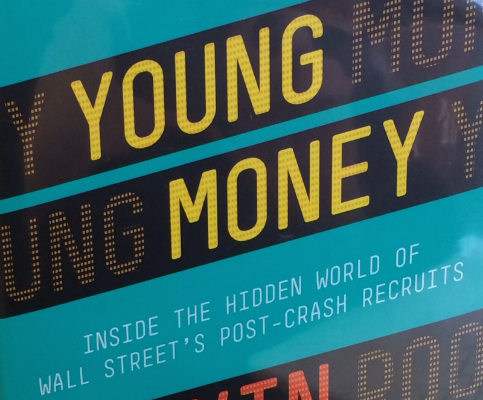
  • Book Review: “Young Money” by Kevin Roose

    Book Review: “Young Money” by Kevin Roose

    For three years New York’s Kevin Roose followed the careers of eight young Wall Street workers to research Young Money. According to the book’s marketing materials Roose created “the story of how the financial crisis changed a generation–and remade Wall Street from the bottom up.” Released last month, the book is many things: a look at the culture of Wall Street through the eyes of those at the bottom, an exploration into the decline of the industry’s esteem, and an 8 person character study. It isn’t however, as some reviewers have suggested, a new Liar’s Poker.

    It is a lazy cliché to compare any book remotely critical of Wall Street to Michael Lewis’ 1989 classic. Poker tells the story of an industry on crazy pills and absolutely shreds it. After majoring in Art History, Lewis get a job at Salomon Brothers and found himself handing out investment advice to seasoned investors despite not knowing a thing about the financial industry. “The whole thing still strikes me as preposterous,” he later wrote in a pseudo-epilogue.

    I don’t think Roose set out to write the next Liar’s Poker. If he did he would have spent more time analyzing how the industry’s incentive structure turns good people into amoral technocrats. [2. Roose briefly touches this at the end, but it doesn’t seem like enough.] He also would have called out the superficiality of many of the young analyst’s statements [3. This probably has more to do with Roose becoming friends with his subjects]. Instead he crafted a narrative around the psychological impact of working in a toxic industry on eight young people. “I have never seen more people disgusted to get their hands dirty in my entire life,” a young analyst told Roose after her Bank of America class was tasked with doing routine yard work for a few charities.  “There were like two hundred kids just standing there, looking at their BlackBerrys and being like, ‘I really want to get back to the office.’ I was like, ‘Are you guys kidding me? Is this a joke? You’re out in the sun, doing something good for the community, and all you guys want to do is go back and sit at your desks?’”

    That’s Wall Street culture in a nutshell. Given the chance to stay outside and help the community, they’d rather get back to their desks.

    Bottom Line: Young Money does not offer an in-depth description of the financial services industry or a grand explanation for its failings. Rather, it is a light and breezy look at the impact of the finance culture on the lives of eight young people.

  • Classic Reads: Simon Johnson’s “The Quiet Coup”

    Classic Reads: Simon Johnson’s “The Quiet Coup”

    In May 2009 The Atlantic Magazine published an article by Simon Johnson titled, “The Quiet Coup.” Today, “The Quiet Coup” stands as one of the watershed articles on the 2008 financial crisis. Johnson, the former Chief Economist of the IMF, argued that roots of the financial crisis was not interest rates or poor people taking out loans they could not afford, but that financially and politically the United States had more in common with Russia than Germany.  “Elite business interests,” he wrote, “played a central role in creating the [financial] crisis, making ever-larger gambles, with the implicit backing of the government, until the inevitable collapse. More alarming, they are now using their influence to prevent precisely the sorts of reforms that are needed…”

    To put this in entertainment terms, the closest thing to Johnson’s pronouncement would be if Meryl Streep suddenly gave up serious acting and began producing hard-core pornography.

    It is also the exact reason it is a classic article.

    (more…)

  • Charlie LeBuff, Detroit: An American Autopsy, and a New Business Model

    [drop_caps]I[/drop_caps] first found out about Charlie LeDuff when I saw him expose the decline of Detroit’s Meals on Wheels Program. Little did I know that he previously won a Pulitzer with the New York Times and followed it up with 2013’s Detroit: An American Autopsy.

    Detroit is an incredibly well written and heart felt exploration into the decline of one of America’s greatest cities. It details the ongoing legacy of racial tension that sparked 2 major race riots, but lacks a macro view of the policy crisis that led to a major American city losing over a million people in under a generation. LeDuff makes up for it with a detailed take down of local corruption and a nuanced report on the people who still call the Motor City home.

    One of the best parts of the book isn’t “ruin-porn” but comes from his description of the mortgage crisis (of which his brother was part of) [1. Although there is plenty, especially an infuriating story into why Detroit firefighters are using broken equipment, which eventually costs a man his life.]. His brother sold, “bullshit mortgages, subprime, negative amortization,” and admits, “A lot of people got fucked.” By now it is clear that mortgage fraud decimated the lives of millions of Americans and upended the structure of society, what LeDuff’s brother argues is that the whole thing was one big ploy. He describes:

    “You get the guy in a loan and then you call him 3 months later and tell him the loan he’s in–the loan you got him in–is a bad deal, and you sell him a different loan. It was a shell game. And the company pushed us to do it. We were making six points on every deal. Six! And nobody cared, ’cause everybody was getting what they wanted for free.”

    This business model is strikingly similar to the model that most major blogs operate on. That is, error is built into the business plan.

    Ryan Holiday, writing for The New York Observer explains

    Why do blogs publish hoaxes and hit pieces so often? So they can post “corrections” after benefiting from the rush of traffic from the sensational first draft. The upside is traffic, the downside is … more traffic. Take the recent Shell Oil Hoax, which was orchestrated by Greenpeace, and which Gawker Media fell for. Gizmodo, Gawker’s sister site, broke the fake story: “Malfunctioning Cake Ruins Party and Spews Liquor All Over Oil Tycoons” for a quick 30,000 pageviews. Later in the day, Gawker got around to debunking the story their sister site had created the market for with a post called “Viral Video of Shell Oil Party Disaster Is Fake, Unfortunately” that earned three times as many viewers.

    The cynic in me wants to say welcome to 2014, but the capitalist knows that firms that adopt this model will experience short term gains, only to fail spectacularly.