Category: Misc.

  • Where did Zoom come from?

    Where did Zoom come from?

    The general consensus is that seemingly overnight Zoom went from an unknown company to essential infrastructure. That’s not true.

    Prior to the coronavirus, it was a major player in enterprise communications.  The reason most people didn’t know about it, is that it was designed as a B2B company (business-to-business sales) rather than a B2C (business-to-consumer). The company had a $16 billion IPO in April of last year. Hard to argue that it’s a “surprise” success after that. For several reasons, B2B companies typically don’t generate the amount of hype consumer-facing firms do.

    To understand why Zoom is everywhere now, you need to understand that Zoom is really two businesses: software as a service and hardware.

    Software as a service

    This is the Zoom everyone knows about–video conferencing. Zoom offers this service through a freemium model. Basic service is free, and customers upgrade to paid tiers for additional features. This is a commodified industry. For the typical non-commercial user, there’s a limited difference between Zoom/Skype/Facetime/Google/Teams. The only major benefit for regular folks is that Zoom allows more than four people on a video screen at once. Zoom does offer benefits over the others for enterprise meetings (larger number of participants).

    Hardware

    Zoom became a viable business by concentrating on business communications. The following is a typical business situation that displays Zoom’s value.

    Imagine that you own a factory in Minnesota. All of the operations people work out of the Minnesota HQ (finance, supply chain, etc.). Meanwhile, you have ten salespeople selling your product throughout America. Every month you have a meeting to talk about the impacts of each function on sales. 15 HQ employees attend the meeting in person and the 10 salespeople call in. Prior to Zoom, the company was required to maintain a bunch of different systems to run this meeting.

    1. Room scheduling system to ensure the conference room is reserved
    2. AV system to display the presentation to the people in the room
    3. Screenshare system that ensures remote workers can see the presentation in real-time
    4. Conference call technology to ensure that everyone can hear everyone
    5. Audio system that captures all the conversation in the room
    6. Cameras in the room so that remote people can see speakers

    Zoom was the first one to provide all six in an integrated, easy-to-use offering.

    Here’s how the company describes the product in their recent 10k:

    Zoom Rooms is our software-based conference room system that transforms every room–from executive offices, huddle rooms, training rooms, to broadcast studios–into a collaboration space that is easy to use, simple to deploy, and effortless to manage.

    Designed to increase workforce collaboration across in-room and virtual participants, Zoom Rooms bring one-click to join meetings, wireless multi-sharing, interactive whiteboarding, and intuitive room controls for a frictionless Zoom Meeting experience.

    Zoom Rooms can leverage purpose-built hardware, such as Zoom Rooms Appliances, for a turnkey deployment, or customize room builds with Zoom’s open hardware ecosystem and professional audio/visual equipment, enabling organizations to build video conference rooms for any use case.

    Zoom took something that was fragmented and boring, and made it easy for IT people to manage. When the Coronavirus happened, Zoom was well positioned, because many tech-savy business were early adopters. This isn’t to say it has been painless. Here’s Zoom’s CEO talking in BusinessWeek about the growing pains of moving from a B2B company to B2C.

    Yuan argues that Zoom’s issues stem not just from its explosive growth but also from the new types of users flocking to it. “We built this as a platform for knowledge workers, for businesses with IT departments,” he says, sitting against a digital backdrop of the San Francisco hills that he obscures as he leans into his webcam. For Zoom users in nonpandemic times, he goes on, there would be a tech support person helping them set up their screen-sharing settings and reminding them to have a password.

    The whole article is worth a read.

    TL/DR – Zoom didn’t come from nowhere. It was a massively successful enterprise communication platform that is now used by regular consumers.


    Photo by Allie on Unsplash

  • It’s 2017 and the impossible has happened. I agree with Ross Douthat.

    It’s 2017 and the impossible has happened. I agree with Ross Douthat.

    It’s 2017 and the impossible has happened. I agree with Ross Douthat.

    Douthat is an op-ed writer for the New York Times. He shouldn’t be. He once argued that people waiting longer to have children is “a decadence that first arose in the West but now haunts rich societies around the globe.” He spent most of 2016 arguing that Trump would not be the Republican nominee, nor would he win the Presidency. After Donald Trump won the Presidential election and explicitly campaigned against Republican policies, Douthat thought to himself, “Democrats need to become more like Republicans.” He wrote anti-gay marriage columns as recently as 2013. For some reason, people take him seriously.

    Today he told a Friedman-esq story about a friend’s theory on Trump shaming businesses into not leaving.

    (more…)

  • Change Management is the tactical implementation of strategy

    Change Management is the tactical implementation of strategy

    Change Management is a vague concept. It has been around for about fifty years, but there it lacks an 100 percent agreed upon definition. A cynic would say it’s almost like people built an entire industry without fully understanding what it is they were claiming to do.  John Kotter, who popularized the term, originally considered it an 8-step linear process. PROSCI, the largest and most well known change management firm, defined it as “the discipline that guides how we prepare, equip and support individuals to successfully adopt change in order to drive organizational success and outcomes.”

    These are partially correct, but holistically wrong. Change Management is just the tactical implementation of strategy. (more…)

  • The Dangers of Data Journalism

    The Dangers of Data Journalism

    I like Catherine Rampell. I can’t say that I am a regular reader, but every time I am forwarded something she wrote I normally read it. That being said, this week wasn’t a good week to be Catherine Rampell. She inadvertently made a case study in the dangers of data journalism.

    (more…)

  • To Hate or to Adhere

    To Hate or to Adhere

    Why does language evolve the way that it does?

    I stumbled upon a passage written about John Adams by Thomas Jefferson. Adams was a notoriously jealous and petty. He earned the nickname “His Rotundity” for being obese and arguing that everyone should refer to George Washington as “His Majesty the President.” Jefferson was a cool guy. A philosopher and statesmen that shared the opinion that most reasonable, fun loving people of the era had: Adams was a jerk. After learning that Adam’s official notes from the Treaty of Paris were “a display of his vanity, his prejudice against the French court and his venom against Dr. Franklin.” I found Jefferson’s reply interesting. He simply wrote, “[Adams] hates Franklin, he hates [John] Jay, he hates the French, he hates the English. To whom will he adhere?”

    This begs the questions: Why, 232 years later, do we say we hate things, but not adhere them?

  • And We Wonder Why the GM Recall is a Diaster

    And We Wonder Why the GM Recall is a Diaster

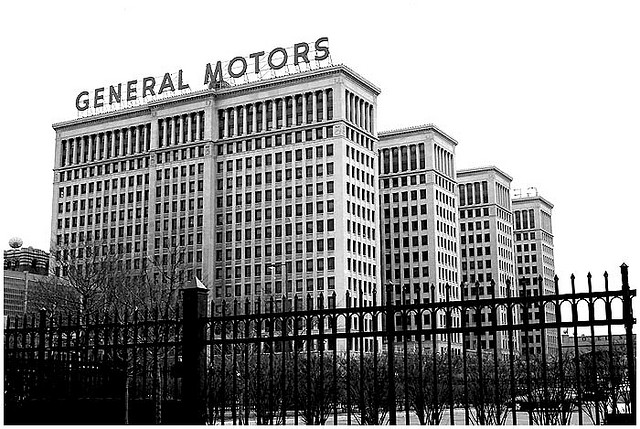
    On July 22, 2014 General Motors announced they would recall an additional 800,000 cars, bringing their annual total to 29,000,000. According to The New York Times the cars have been called back for a number of problems including: “seats, air bags and turn signals, parts that may not have been welded together properly, and a loss of power steering.” General Motors knew about the problems since at least 2004. They did nothing. In fact, they threatened consumers who asked questions about malfunctions after their spouses and friends died driving the cars. 13 deaths have been linked to GM’s failure.

    Pundits everywhere are talking about the value of leadership at GM, if there’s any question about the value of their leadership please, do yourself a favor and read this article from 2012. GM’s answer to declining millennial sales was to hire a Marketing Director whose solution was to “infuse itself” with the same insights that “made MTV reality shows like “Jersey Shore” and “Team Mom” breakout hits”.

    Translated: Someone in GM thought it was a good idea to copy television shows that are universally regarded as absolute shit, the scorn of the nation, an embarrassment to everyone involved. 

    Look on the bright side people. Millennials may be driving a $16,000 death trap, but at least it looks great in “techno pink,” “lemonade” and “denim.”

    This seems relevant:

    A corporation ages like a person. As the years go by and the founders die off, making way for the bureaucrats of the second and third generations, the ecstatic, risk-taking, just for the hell of it spirit that built the company gives way to a comfortable middle age…If the business is wealthy and strong, the executives who come to power in these later generations will be characterized by the worst kind of self confidence: they think the money will always be there because it always has been.
    Rich Cohen, The Fish that Ate the Whale

  • The Problem with Thought Leadership

    With shrinking tenure rates the impact that higher education has on the intellectual landscape of America is uncertain. What’s even more petrifying is it’s replacement. Ann Friedman’s “All LinkedIn with Nowhere to Go” is one of my favorite articles of the year, precisely because what it questions and addresses one of the problems of one of the largest social networking sites on the internet.

    What the hell use is it?

    “If the poor, as John Steinbeck once observed, see themselves as temporarily embarrassed millionaires,” she writes, ” it seems fair to assume that on LinkedIn, followers see themselves as temporarily embarrassed thought leaders.”

    Generally speaking LinkedIn sucks, despite their promises most jobs are still filled by personal connections, but what struck me was how dead on Ann Friedman was with her attack on the current state of thought leadership. The problem with thought leadership today is a mixture of inverse incentives and lack of heft.

    She writes

    A post by “Technology Futurist, Innovation Expert, Business Strategist, Bestselling Business Author, Keynote Speaker” Daniel Burrus instructs would-be Steve Jobses to “take the time to think both short-term and long-range. Build your future by competing on things other than price, and by asking the right questions, especially when it comes to consumers.” Never mind that Burrus hasn’t built an Apple-like company; such perorations are like the incantation of a devotional prayer: they call down the mercies of a remote techno-deity in order to ritually cleanse the grubbier aspirations of the business-strategizing, keynote-speaking class. And in the same circular fashion, the point of encouraging users to connect and follow and exchange points of view on LinkedIn is to marshal those users behind the simple, world-conquering faith in networked connectivity. The thoughts that lead the LinkedIn experience, in other words, are usually subtle advertisements for the LinkedIn experience. Or not-so-subtle come-ons: one post promises to help people answer the question “What should I do with my life?” in three steps—by using LinkedIn.

    In short, we have an army of “thought leaders” who haven’t had an original thought.

    Source: Ann Friedman – All Linked in With Nowhere to Go

  • Mangini’s Mess – Or How Not to Manage

    As a defensive assistant Eric Mangini won three Super Bowls with Bill Belichek’s New England Patriots. In 2006 he became the youngest Head Coach in the NFL. By 2013 he has a reputation for being an incredible asshole–and this article does nothing to dispell the notion. In fact, it reads a how to run a poor organization handbook. Micromanagement was ripe. Players became assets.

    Nate Jackson played over half a decade in the NFL, and after 5 years with the Denver Broncos he signed with the Cleveland Browns and the recently hired Eric Mangini. He walked into an organization defined by mistrust and micromanagement. Over the course of 2 seasons Mangini complied a .313 winning percentage. He was prompty fired. “Being a head football coach is not about being a strategic genius,” Jackson wrote. “Every coach in the NFL knows football strategy. It’s about leading a group of grown men toward a tangible goal and treating them with the respect their sacrifice deserves.”

    Jackson then details how and what went wrong.

    Source: Nate Jackson – Cleveland Scene

  • Leadership Lessons from Robert Oppenheimer

    In 1941 J. Robert Oppenheimer started work on the Manhattan Project. Less than a year later he was running a secret weapons program with the sole purpose of developing nuclear weapons. In August 1945 his team did the impossible, they conquered the atom and the Japanese cities of Hiroshima and Nagasaki found themselves elevated from footnotes to the front page of history.

    Freeman Dyson’s illuminating profile of Oppenheimer not only unmasks the mystique of one of America’s greatest scientific tragedies (Oppenheimer was stripped of his Security Clearance due to the Red Scare) but outlines the leadership mistakes that led to his unfortunate demise. “He always wanted to be at the center” wrote Dyson, “He paid too much attention to famous people working on fashionable topics.” In Dyson’s opinion Oppenheimer had the potential to become the next Einstein or Bohr, but instead known as the destroyer of worlds. ”For forty years he put his heart and soul into thinking about deep scientific problems,” wrote Dyson, but co-authored just one seminal paper (and never talked about the importance of the discovery while alive).

    This is ironic given that Oppenheimer talked a lot about science for science sake.

    Today when we talk about innovation we often talk about the promise of computer software. Have trouble reading- buy this app! Have trouble sleeping- buy this sleep measurement device! Can’t loose weight- buy a calorie counter! The answer to everything is just $9.99. In reality, the real answer is work. Hard work.  For all his genius Oppenheimer can be viewed as an underachiever. ”He could never sit still long enough,” said his former protegee, “to do a difficult calculation.”