Category: Weekly Reads

  • The 27 Best Articles I Read In 2014

    The 27 Best Articles I Read In 2014

    Why spend the time identifying the 27 best articles I read all year? The better question should probably be, “Why not?” I selected each article based on the following criteria:

    1. The work should most importantly be interesting
    2. The work should help explain the business, political and social world we live in.
    3. The work should provide historical context to the modern world.
    4. The work should make you laugh (See Jones, Jerry)

    Without further ado, here they are.

    (more…)

  • 5 Articles You Must Read About Martin Luther King Jr

    5 Articles You Must Read About Martin Luther King Jr

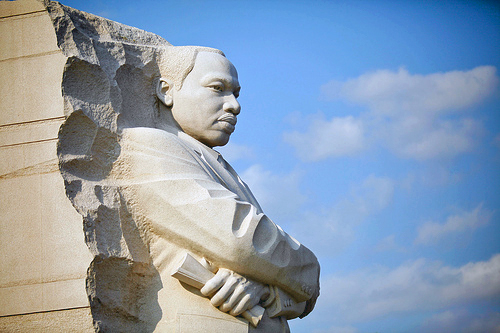
    Today marks the 46th anniversary of the assassination of Rev. Martin Luther King Jr. If Thurgood Marshall was the tactical leader of the civil rights movement, King was its spiritual. It is hard to imagine anyone accomplishing more in his or her life than King, who lead non-violent protest across America and won the Nobel Prize abroad. Legacy wise, nearly every constituency has attached themselves to King, even conservatives. This is ironic since most conservatives would disown King if they knew about his opposition to Vietnam and his dream to unite the labor and civil rights movements. I’m sure today there will be hundreds of superficial articles published King, but very few will address the context of his life. I’ve gone ahead and curated five articles that do just that.

    (more…)

  • 5 Articles That Explain the Ukrainian Revolution

    5 Articles That Explain the Ukrainian Revolution

    The world has been on high alert since Russian President Vladimir Putin threw caution to the wind and sent military troops to occupy Ukraine’s Crimean Peninsula. This act of aggression coincided with the defection of Ukrainian naval leadership and the seizing of parliamentary buildings by forces loyal to Russia. Many columnist and analysts are predicting a massive global conflict and a potential return to the Cold War era. What we aren’t seeing is a coherent narrative about how the conflict got to this stage. I’ve gone ahead and curated 5 great sources that paint an accurate narrative of the historical, political and strategic framework of the 2014 Ukrainian revolution.

    (more…)

  • Leadership Lessons from Robert Oppenheimer

    In 1941 J. Robert Oppenheimer started work on the Manhattan Project. Less than a year later he was running a secret weapons program with the sole purpose of developing nuclear weapons. In August 1945 his team did the impossible, they conquered the atom and the Japanese cities of Hiroshima and Nagasaki found themselves elevated from footnotes to the front page of history.

    Freeman Dyson’s illuminating profile of Oppenheimer not only unmasks the mystique of one of America’s greatest scientific tragedies (Oppenheimer was stripped of his Security Clearance due to the Red Scare) but outlines the leadership mistakes that led to his unfortunate demise. “He always wanted to be at the center” wrote Dyson, “He paid too much attention to famous people working on fashionable topics.” In Dyson’s opinion Oppenheimer had the potential to become the next Einstein or Bohr, but instead known as the destroyer of worlds. ”For forty years he put his heart and soul into thinking about deep scientific problems,” wrote Dyson, but co-authored just one seminal paper (and never talked about the importance of the discovery while alive).

    This is ironic given that Oppenheimer talked a lot about science for science sake.

    Today when we talk about innovation we often talk about the promise of computer software. Have trouble reading- buy this app! Have trouble sleeping- buy this sleep measurement device! Can’t loose weight- buy a calorie counter! The answer to everything is just $9.99. In reality, the real answer is work. Hard work.  For all his genius Oppenheimer can be viewed as an underachiever. ”He could never sit still long enough,” said his former protegee, “to do a difficult calculation.”