Category: Blog

  • Unilever, an Agile Supply Chain, and the decline of Scenario Planning

    Unilever, an Agile Supply Chain, and the decline of Scenario Planning

    Last month Unilever, the CPG giant, released its Q1 sales results. Unlike P&G, which saw an increase of about five percent, Unilever was relatively stagnant.

    According to Barrons:

    Sales of the company’s hygiene and cleaning brands, including Cif surface cleaners and Domestos bleach surged by double digits as consumers stocked up to clean their homes to fend off coronavirus. In-home food product sales also rose as shoppers loaded their trolleys.

    But ice cream sales and the company’s food service business, which sells ingredients to chefs and restaurants in 180 countries, were hit hard by the pandemic. The company, which also owns the Magnum brand, said it missed out on the start of the ice cream season in Europe, with outlets closed and distributors reluctant to buy stock with an “uncertain holiday and tourism season” ahead.

    All of this is understandable. As the table below shows, 79% of Unilever’s revenue comes from two categories: Beauty & Personal Care and Foods & Refreshment. Under COVID-19 quarantine people are spending less time doing their hair and make-up. They’re also eating out less. Packaged foods are flying off shelves, but unfortunately for Unilever, the bulk of its Foods & Refreshment margin comes from Ice Cream and Food Service—two categories crushed by social distancing.

    Its last category, Home Care, which includes cleaning solutions, is doing fairly well—but it’s also it’s smallest and least profitable. In 2019, it accounted for about 21% of Unilever’s overall business—but just 16% of operating profit. Meanwhile, Beauty and Personal Care accounted for 42% of sales and 52% of operating profit.

    CategoryRevenue% of Revenue% of Operating Profit
    Beauty & Personal Care21.9 billion Euros42% 52%
    Foods & Refreshment19.3 billion Euros37%32%
    Homecare10.8 billion Euros21%16%

    Unilever accelerates an agile supply chain to meet COVID-19 demands

    In my opinion, the most interesting tidbit from the earnings call had nothing to do with coronavirus. It had to do with an agile supply chain. When asked about how the pandemic changed the company’s operations, CEO Alan Jope responded:

    Earlier in the pandemic we changed our monthly operational forecasting cycle to a weekly basis so we can reflect the rapid changes in consumer demand. And we have been using people data centres to pick up the changing consumer sentiment early.

    Forecasting is a huge component on any CPG company’s supply chain. A company needs to not only know how much it plans to sell, but how much it needs to produce and accrue. A large CPG company will produce multiple forecasts, here’s just a small sample:

    ForecastDescription
    AccrualEvery CPG manufacturer pays retailers trade dollars—essentially a percentage of sales to ensure prime locations and promotional activity. Companies need to forecast this to ensure the end of month financials are correct.
    DemandA combination of Production, Sales and Supply Forecasts.
    ProductionHow much the company will need to manufacture to meet consumer demand.
    SalesHow much product retailers are going to buy.
    SupplyHow much raw material they’ll need to buy to make production goals.

    Most CPG products have relatively predictable demand. Forecasting is centralized at a corporate level and done at a monthly basis. Demand Planners and Forecasters will run through a handful of different business scenarios and develop a forecast. Given the mass uncertainty caused by covid-19, Unilever is increasing forecasting frequency. This gives them more information and enables quicker decisions—reducing stock-outs. This is interesting, but not particularly unique. Most CPG companies are doing so.

    What is interesting is something Alan Jope told Bloomberg Businessweek this month.

    We’re actually moving away from scenario planning and trying to focus on building agility and responsiveness into the company. And I don’t know that we should all be spending too much time locking in particular views or scenarios for the future, but rather unleashing the trapped capacity that most big organizations have by letting go and letting people close to the markets, close to the front line, exercise their judgment and their decision-making. We’ve discovered a new responsiveness in Unilever that I wish we had unlocked years ago, but it’s taken this crisis to do that.

    This is almost the definition of an agile, resilient supply chain. What does this mean in practice?

    Unilever is moving away from mass centralized forecasting and into a decentralized model—putting decision making power in the hands of the front line. Centralized planners won’t spend their time modeling various scenarios—the front-line worker will drive opportunities. It’s potentially a revolutionary change that requires flawless execution of technology and business process.

    Photo by Sean Biehle at Flickr

  • Walmart proves that omnichannel can compete with Amazon after COVID-19, but can others?

    Walmart proves that omnichannel can compete with Amazon after COVID-19, but can others?

    During the coronavirus pandemic, where decades of mismanagement and grift at major retailers led to accelerated bankruptcies, Walmart trended the other direction. Absolute dominance.

    Walmart, America’s largest retailer, saw overall revenue increase by 8.6% while maintaining higher operating margins. Online sales, arguably the most critical battleground in modern retail, grew 74%. “Our omnichannel investments have us in a unique position to serve customers in ways others can’t.” CFO Bret Biggs told investors. “Customers are gravitating towards store pickup and delivery, driving record demand for these services leading to triple-digit growth in U.S. eCommerce sales during peak periods.” 

    Barring any massive regulatory changes, Walmart is poised to continue to dominate a post-COVID-19 world. It raises two questions: How did Walmart get there, and what does it mean for others?

    Omnichannel—the holy grail of traditional retail

    There are a lot of different definitions of omnichannel. Truth be told, it has morphed into a buzzword over the last few years–partly due to the interest and the money companies are willing to invest to achieve it. Shopify, who offers a really competitive technology infrastructure for small firms, provides this definition:

    Omnichannel retailing is a fully-integrated approach to commerce, providing shoppers a unified experience across all channels or touchpoints.

    Omnichannel essentially means giving the customer the ability to buy whatever they want; however, they want it. Theoretically, it means that a customer can order ten items, pick up four at the store, get five delivered, and pick up the final item on their way to the destination. Branding and positioning should be the same throughout the entire transaction. 

    From a practical perspective, it means rethinking almost every aspect of a company’s supply chain to make life easier for consumers. This is both a technology and a business process problem.

    Clarkston’s Sean Burke explains the technology problem:

    There are likely technical challenges to achieving what the ultimate goal is – opening up inventory across the network to customers, regardless of where or how they are shopping. Real-time inventory is not widely accessible throughout these organizations and legacy systems are not equipped to handle the sophisticated routing necessary to make “ship from anywhere” an executable, cost-effective concept.

    He then explains how it relates back to the underlying business process:

    Opening up stores to operate as fulfillment centers is not simply a technology challenge. It can fundamentally challenge the way brands approach inventory management. If the ultimate goal is to have product available when, where, and how the customer wants it, then inventory needs to be staged in the network to make this a feasible goal. For brands that operate with lower inventory on the shelves and little back-room space, there won’t necessarily be the volume available to ship or for in-store pick up. The product mix at stores, along with the inventory levels available, could either drive the omnichannel strategy for a retailer, or need to be adjusted to allow for new functionality such as buy online, pick up in store. Simply plugging in the technology won’t boost the top line if the product isn’t there to be purchased to begin with.

    Walmart mastered omnichannel

    Based on Walmart’s results, and explanation, it’s pretty clear they solved both the process and technology hurdles associated with omnichannel. 

    CEO Doug McMillon explains:

    In the U.S., we quickly rolled out ship from store and we’re now temporarily fulfilling orders placed on walmart.com through about 2,500 of our stores. We also launched Express Delivery to provide customers the convenience of having their orders delivered to their door in under two hours. The Express Delivery is available at nearly 1,000stores today, and our goal is to be in around 2,000 stores by the end of June. 

    This transition is a real-life case study on how retailers don’t need to directly compete with Amazon. Walmart isn’t trying to offer everything and ship it from centralized distribution centers. It is using its existing decentralized infrastructure to service customer needs. 

    As I’ve written before:

    Through itself and third-parties, Amazon offers almost every single product on earth and has over 300 distribution centers that help turn a cost into a profit center. Walmart offers a fraction of the assortment in its 4,700 stores, and has just 20 distribution centers to fulfill them. It would years and billions of dollars to mimic Amazon’s network and business model. No traditional retailer has the time or the patient investors required. Basically, no traditional retailer can compete playing Amazon’s game.

    The Coronavirus forced Walmart to transition.

    What does it mean for others?

    Coronavirus has meant doom for most retailers. Prior to the pandemic, most were faced with competing against Amazon, a hybrid retailer, while dealing with legacy infrastructure and higher fixed cost. Covid-19 introduced several new variables into the mix—including store closures and additional cleaning costs.

    It’s not going to be easy for retailers. Transitioning to an omnichannel distribution scheme is costly, but those that unlock it might just survive.

    Photo by Fabio Bracht on Unsplash

  • Where did Zoom come from?

    Where did Zoom come from?

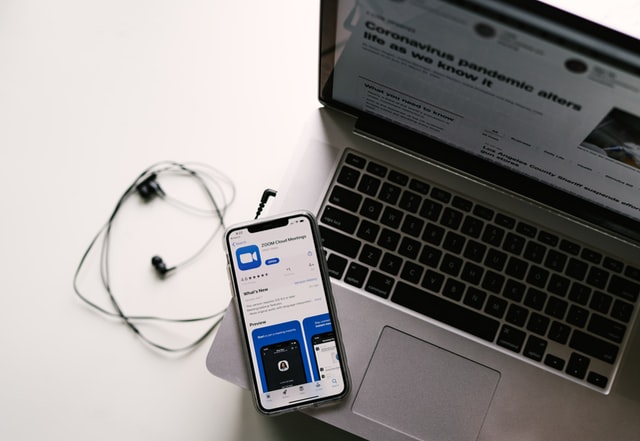
    The general consensus is that seemingly overnight Zoom went from an unknown company to essential infrastructure. That’s not true.

    Prior to the coronavirus, it was a major player in enterprise communications.  The reason most people didn’t know about it, is that it was designed as a B2B company (business-to-business sales) rather than a B2C (business-to-consumer). The company had a $16 billion IPO in April of last year. Hard to argue that it’s a “surprise” success after that. For several reasons, B2B companies typically don’t generate the amount of hype consumer-facing firms do.

    To understand why Zoom is everywhere now, you need to understand that Zoom is really two businesses: software as a service and hardware.

    Software as a service

    This is the Zoom everyone knows about–video conferencing. Zoom offers this service through a freemium model. Basic service is free, and customers upgrade to paid tiers for additional features. This is a commodified industry. For the typical non-commercial user, there’s a limited difference between Zoom/Skype/Facetime/Google/Teams. The only major benefit for regular folks is that Zoom allows more than four people on a video screen at once. Zoom does offer benefits over the others for enterprise meetings (larger number of participants).

    Hardware

    Zoom became a viable business by concentrating on business communications. The following is a typical business situation that displays Zoom’s value.

    Imagine that you own a factory in Minnesota. All of the operations people work out of the Minnesota HQ (finance, supply chain, etc.). Meanwhile, you have ten salespeople selling your product throughout America. Every month you have a meeting to talk about the impacts of each function on sales. 15 HQ employees attend the meeting in person and the 10 salespeople call in. Prior to Zoom, the company was required to maintain a bunch of different systems to run this meeting.

    1. Room scheduling system to ensure the conference room is reserved
    2. AV system to display the presentation to the people in the room
    3. Screenshare system that ensures remote workers can see the presentation in real-time
    4. Conference call technology to ensure that everyone can hear everyone
    5. Audio system that captures all the conversation in the room
    6. Cameras in the room so that remote people can see speakers

    Zoom was the first one to provide all six in an integrated, easy-to-use offering.

    Here’s how the company describes the product in their recent 10k:

    Zoom Rooms is our software-based conference room system that transforms every room–from executive offices, huddle rooms, training rooms, to broadcast studios–into a collaboration space that is easy to use, simple to deploy, and effortless to manage.

    Designed to increase workforce collaboration across in-room and virtual participants, Zoom Rooms bring one-click to join meetings, wireless multi-sharing, interactive whiteboarding, and intuitive room controls for a frictionless Zoom Meeting experience.

    Zoom Rooms can leverage purpose-built hardware, such as Zoom Rooms Appliances, for a turnkey deployment, or customize room builds with Zoom’s open hardware ecosystem and professional audio/visual equipment, enabling organizations to build video conference rooms for any use case.

    Zoom took something that was fragmented and boring, and made it easy for IT people to manage. When the Coronavirus happened, Zoom was well positioned, because many tech-savy business were early adopters. This isn’t to say it has been painless. Here’s Zoom’s CEO talking in BusinessWeek about the growing pains of moving from a B2B company to B2C.

    Yuan argues that Zoom’s issues stem not just from its explosive growth but also from the new types of users flocking to it. “We built this as a platform for knowledge workers, for businesses with IT departments,” he says, sitting against a digital backdrop of the San Francisco hills that he obscures as he leans into his webcam. For Zoom users in nonpandemic times, he goes on, there would be a tech support person helping them set up their screen-sharing settings and reminding them to have a password.

    The whole article is worth a read.

    TL/DR – Zoom didn’t come from nowhere. It was a massively successful enterprise communication platform that is now used by regular consumers.

    Photo by Allie on Unsplash

  • Reengineering Retail by Doug Stephens - A  review

    Reengineering Retail by Doug Stephens - A  review

    Reengineering Retail isn’t a bad book. It’s just…whatever. Written by Doug Stephens, Reengineering Retail tries to lay out a theory that encompasses the future of retail. The central idea is this. Digital technology has upended the traditional retail industry. The retail store is no longer a static distribution point for a product. Instead, Stephens, a self-proclaimed “consumer futurist”, sees them as “experiential media channels.” Now, throw in a bunch of business buzzwords, technology-centric case studies, and a weird 20-page diversion into innovation consulting, and you have successfully described Reengineering Retail.

    Now again, on the surface, there is nothing inherently wrong about Reengineering Retail. Retailers need to get leaner, they need to reevaluate how they use store space, and they need to focus on creating experiences rather than just transactions. There are a handful of case studies in the book that made me think. The case studies are also almost uniformly geared towards high-end lifestyle retailers. Stephens would probably recommend that every grocer in America turn itself into Eatily — despite the fact that dollar discount stores are the only reliable growth engine left in retail. But then again, dollar stores aren’t as fun or exciting as having a private chef teach cooking lessons to sell more cheese.

    I think that’s my biggest issue with the book. Reengineering Retail’s overall premise is probably true, but it spends the bulk of the time trying to make its’ case through buzzwords and glittering objects rather than the nuts and bolts of retail.

    Let’s take his discussion of “building a network.” Stevens argues that in the future, successful retailers will build networks, not empires. Now, he never actually defines what he means by a network. Instead, he gives a string of loosely collected buzzwords.

    Networks, on the other hand, are capital-light, structurally lean and able to scale rapidly. They operate on transparency and a sense of shared ownership with peer-to-peer trust and governance. Their success ultimately depends on a balanced scorecard of stakeholder interests, from shareholders to employees and network partners. They are more fluid, flexible and adaptable to change, in part because they offer an intrinsically broader collective market intelligence.

    First off, the “they operate on…” sentence is just describing joint business planning, a business function almost all retailers use to some extent. Secondly, “Intrinsically broader collective market intelligence…” Who is he kidding? I get what he’s probably trying to say. That the wisdom of the crowds is more significant than any one individual buyer. But how does that translate to brick and mortar retail? From a back-end operations perpsective it doesn’t.

    Retail is a complex operation. For manufacturers, sorry, partners, roughly speaking you have a team that creates a good, a procurement team that figures out a way to buy the raw materials, a supply team that figures out how much to make, a demand team that forecasts how much and when retailers will buy, a sales team that sells the product to retailers, a finance team that makes sure they make money, and a customer service team that handles any issues. The retailer then, has a similar organization, only on its side.

    How does this fit into Reengineering Retail’s network model? Well, it doesn’t. At least not to the extent that Stevens insinuates. A more rational future state would include major investments into warehouse management, inventory control, and trade planning software. The efficiencies gained from those could free up massive amounts of capital to invest in the “experiences” that Stevens suggest.

    But that’s not nearly as innovative as a network, now is it?

    Image via Flickr

  • Review: The Curse of Bigness by Tim Wu

    Review: The Curse of Bigness by Tim Wu

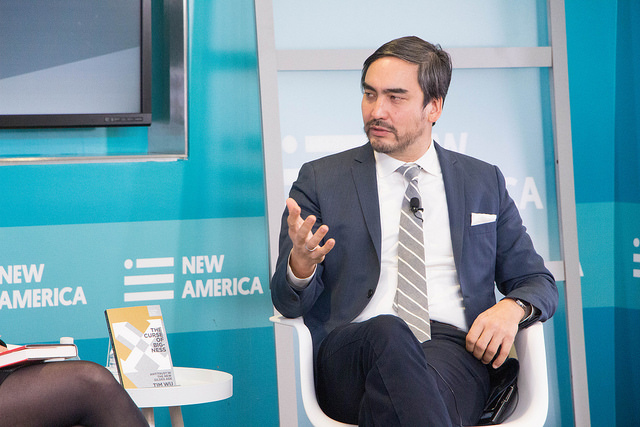
    Tim Wu, a law professor at Columbia University, spent the last decade establishing himself as one of the pre-eminent antitrust thinkers. In the Master Switch and The Attention Merchants, Wu used a wide-angle lens to examine the implications of the rising information cartels on American business and society. In The Curse of Bigness, Wu takes a magnifying glass to industrial concentration and the economic and political dangers it creates. The book succinctly distills a generation of research into one easily digestible volume. In this The Curse of Bigness Review, I summarize the main argument that Tim Wu’s central arguments

    (more…)

  • Review: The Fall of Wisconsin by Dan Kaufman

    Review: The Fall of Wisconsin by Dan Kaufman

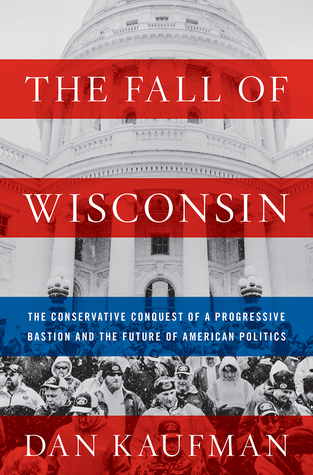
    The Fall of Wisconsin, a 2018 book by New Yorker’s Dan Kaufman, analyzes how conservatives utilized Dark Money, Gerrymandering, and Weak Democratic opposition to enact a radical and dangerous conservative agenda in Wisconsin. “(Their) devastating success has allowed for the transformation of Wisconsin into a laboratory for corporate interests and conservative activists,” Kaufman writes. Act 10 (rightly) receives the majority of the press, but it’s really one of many extreme changes the Republican Party brought to Wisconsin. In the last two years, the Republican-controlled Senate supported a bill to remove all of the state’s air-pollution regulations. This book review will outline Kaufman’s core thesis and help explain how three forces, Dark Money, Gerrymandering, and weak Democratic Opposition created a nightmare scenario.

    Dark Money fueled the Fall of Wisconsin

    The Citizen’s United decision effectively allowed corporations to launder political spending through non-profits. According to Issue One, a non-partisan campaign finance reform organization, just 15 groups have spent more than $600 million “in secret money” influencing our elections. In Wisconsin, no organization has been more potent than the Bradley Foundation. Initially established by a Milwaukee industrialist looking to avoid inheritance taxes, it initially focuses on area hospitals and universities. In the 1980s it transitioned into a weaponized conservative outlet—focusing on school vouchers, destroying unions, and promoting white supremacy masked in academic jargon. The foundation’s assets have ballooned to nearly $850 million.

    The Bradley Foundation’s most significant success has been Act 10—legislation that stripped collective bargaining rights from the state’s public workers (except police and firefighters—two groups who were neutral or supported Walker’s initial election). The legislation kick-started massive teacher protests, which Walker later compared to ISIS. The effects have been devastating for the state’s educational system. According to an analysis by the Milwaukee Journal Sentinel, Act 10 resulted in a 30% drop in state granted education degrees resulting in 25 percent of school districts reporting an “extreme shortage” of qualified applicants. “Teaching,” current Governor-elect Tony Evers remarked at the time, “no longer considered an attractive career path.”

    Perhaps the most insidious effect was villainizing teachers. The last thirty years left many Wisconsinites behind. Instead of asking “Why they no longer had health insurance,” people started asking “Why did teachers have it?” “A Wisconsin labor leader once told me that Act 10 succeeded,” said Kauffman. The leader’s answer is both telling and depressing. “Because Walker transformed the person who spent the day in a classroom teaching his child from “teacher” to “union member.”

    Gerrymandering

    Once in control over Wisconsin’s government, the Republican party launched a full-throated assault on voting rights in the state. They passed restrictive voter identification laws to suppress minority and student votes and cemented control by gerrymandering election boundaries. In the first election after the rigged voting maps, Republican received 175,000 fewer votes but ended the day with a 60-39 majority. This was a fundamental part of the Republican strategy. Restrict the rights of non-Republican voters, while reducing the impact of non-Republican votes. In 2018, after Governor Walker was surprisingly beaten by State Superintendent Tony Evers, Republicans began their second assault on Democracy and voting rights.

    Weak democratic opposition

    A portion of Republican success in the state is due to the Democratic party. Modern democrats had no interest in defending the average working person against the Republican onslaught. President Obama declined to even campaign in Wisconsin during the passage of the bill—creating a boom for Scott Walker. The book doesn’t dive into this, but in the mid-1990s, centrist Democrats began to move away from unions as a source of natural support. The transition started with Jimmy Carter but solidified itself after NAFTA. The logic was that for every union vote they lost, they’d make it up with the professional suburbs. Led by Bill Clinton, liberals began to abandon New Deal policies and adopt market “friendly” positions. The result was market deregulation and globalization—at the same time, Democrats reduced the welfare state. The result was two parties working against working people. This directly led to Donald Trump.

    Should you read The Fall of Wisconsin?

    The point of every review is basically, should I read this book? After I finished The Fall of Wisconsin, I would have said no. I didn’t really learn anything during it. However, I also live in Wisconsin and am active in Wisconsin politics. As I began writing my review, I realized that Kauffman did a solid job of distilling the state’s political revolution. If you don’t live here, you should absolutely read this book. The current state of Wisconsin is the nation’s fate if Progressives don’t start winning office and exterting political power.

  • Review: Hit Makers by Derek Thompson

    Review: Hit Makers by Derek Thompson

    In Hit Makers, Derek Thompson tries to explain why some ideas become popular and others fade away. It’s an important question and one facing every content creator in today’s hyper-competitive media landscape. Technology platforms like Spotify, Facebook, and Twitter have transformed media into a winner take’s all market. How does a new band break through on Spotify—when the top one percent of acts capture 80 percent of recorded music revenue? How can a television show break through hundreds of channels and streaming options? How can an unknown writer catch-on? Hit Makers claims to answer these questions. Unfortunately, Thompson fails to offer new insights to this question. Instead, Hit Makers is a book on how cultural hits are created, published in 2017, with arguments from 2010.

    (more…)

  • Nixonland: How a book about Richard Nixon helps explains Donald Trump

    Nixonland: How a book about Richard Nixon helps explains Donald Trump

    The central thesis of Nixonland, a sprawling look at the origin, rise, and decline of the Nixon administration, is that there was simmering white resentment underneath the optimism and change of the Kennedy Administration. Hidden behind the civil rights movement was a mass of unhappy middle-class white people. Nixon wasn’t the first politician to exploit white rage, that honor would go to Ronald Reagan. Nixon merely copied it, perfected it, and fractured the nation into Nixonland. Richard Nixon, Ron Perlstein writes, “so brilliantly co-opted the liberals’ populism.” Re-directing well-meaning reforms, “into a white middle-class rage at the sophisticated, the wellborn, the “best circles” — all those who looked down their noses at “you and me”…that sneered imperiously at the simple faiths of ordinary folk, their simple patriotism, their simple pleasures.”

    In 1964, Lyndon B. Johnson won 61.05 percent of the popular vote on a platform of expanding FDR’s New Deal to non-white Americans. Its sole goal was to eradicate poverty and racial injustice. He coined it the “Great Society.” When lighting the national Christmas Tree, President Lyndon Johnson described it as “the most hopeful times since Christ was born in Bethlehem.” Eight years later Richard Nixon won 60.67 percent of the vote on a platform of “Law and Order”; an ideological repudiation of the Great Society. Nixonland is fundamentally about this uniquely American transformation. How America went from believing civil rights law leveled the playing field to one that held it caused race riots. How it went from viewing welfare as help for the weakest to help for the laziest. How political dissent became tantamount to treason. Nixon was at the center of it all, weaponizing a white populace’s fears into an “us versus them” political revolution. “Far from becoming a great society,” Nixon wrote in Reader’s Digest leading up to his Presidential election, “ours is becoming a lawless society.” The underlying context was that only Richard Nixon, and people like him, could protect society from the hordes of others.

    Sound familiar?

    (more…)

  • Retailers should look to the past to compete against Amazon

    Retailers should look to the past to compete against Amazon

    Amazon has engulfed nearly every aspect of retail and is positioned for more. Its North American sales have quintupled since 2010. Between 2015 and 2016, Amazon captured well over a third of all American online retail sales—including 43 percent in 2016. Moves to vertically integrate its supply chain by solidifying an ocean freight license, marketing in-home deliver, and creating a $1.5 billion cargo airline would make the 1920s robber barons blush. Traditional retailers looking to compete against Amazon face even bigger obstacles: Amazon’s market capitalization. In the last 10 years, retailer mainstays Sears, JC Penny and Kohls lost an average of 82 percent of their valueAmazon gained 1,934 percent, allowing it access to the cheap capital the finances its growth.

    It isn’t just the company’s world-class logistics traditional retailers are facing—it’s the threat Amazon poses to different retail segments combined with its reputation among consumers. The recent Whole Foods acquisition instantly erased $12 billion in shareholder value from six major food retailers. Meanwhile, consumers love Amazon. It is one of the most trusted brands in America. It controls one of the world’s least exclusive clubs: in 2017, 80 million Americans were members of its Prime 2-day shipping and entertainment program (by contrast, France has a population of about 69 million people).

    How can retailers compete with Amazon? It’s an 800-pound gorilla that is beloved by consumers, with exceptional operations and a limitless pocketbook.

    This is an attempt to scratch the surface of the tactics and strategies that powered history’s Fortune 100 retailers. The analysis is based off a data set created from Fortune Magazine, industry publications, Capital IQ, and public financial documents. It was then organized across 10 industries, 22 supersectors, and 30 sectors through Russell’s Industry Classification Benchmark (ICB). Drawing on this data, six major insights emerged—each powering the eras’ greatest retailers. Some are obvious, some aren’t. All are required if modern retail executives want to compete against Amazon.

    (more…)

  • Review: Devil’s Bargain by Joshua Greene

    Review: Devil’s Bargain by Joshua Greene

    Joshua Greene’s Devil’s Bargain is ostensibly about Steve Bannon, arguably mainstream Democrats biggest boogeyman not named Vladimir Putin.

    The book, of course, covers his evolution from the Navy to Goldman Sachs, to World of Warcraft, to Hollywood, and to (supposedly) anti-Goldman right-wing crusader. However, the book is really about how three well-financed forces coalesced and resulted in the election of Donald Trump to President of the United States.

    (more…)