Category: Ideas

  • Retailer Shelf Space: Another potential loss for CPG Manufacturers

    Retailer Shelf Space: Another potential loss for CPG Manufacturers

    In theory, the relationship between CPG manufacturers and retailers is one of mutual interest and cooperation. A retailer needs healthy manufacturers to stock their stores with quality products that consumers want. One of the subtexts to my earlier article on Dean Foods is that retailer consolidation is weakening the power of manufacturers to the point where they are now at a significant disadvantage. This was the key section.

    Starting around the 1980s, the political economy of the United States became focused on one thing: lowering prices for consumers.

    It may seem like a small thing, but in reality, it drastically changed the power dynamic for every CPG firm. In the 1960s, the U.S. government blocked a grocery store merger because it would control 7% of the Los Angeles market. Today, Walmart controls 50% of the grocery market in 43 metro areas. This hands-off approach shifted the balance of power to retailers and large manufacturers. Consolidation was now the principal growth strategy for almost every actor. The bigger a company was, the more it can dominate negotiations.

    Manufacturers got bigger to counter strong retailers. Retailers got bigger to counter growing manufacturers. It was an arms race — only it favored stores. Manufacturers had to sell to retailers to reach consumers. Retailers didn’t have to buy from branded manufacturers. In fact, since antitrust enforcement declined, stores grew private labels to directly compete.

    Despite the arms race, it devolved into a cold war, because retailers relied on major manufacturers to plan their shelf offerings. Companies like Kraft or General Mills claimed expertise in consumer preferences and told retailers where to stock products within specific categories. Retailers listened because they could outsource the consumer research expense and charge manufacturers hefty slotting fees to enact the plans.

    This tactic arrangement hurt consumers because major manufacturers were often biased towards their own offerings at the expense of new upstarts. If a retailer wanted to stock more craft beer, a manufacturer typically suggested a craft brand it owned.

    A recent Wall Street Journal article shows how that’s changing:

    Retailers such as Kroger Co. and Walmart Inc. are using increasingly sophisticated software to decide where to place items and which products to shelve next to one another — factors that can move sales up or down several percentage points — according to food-industry executives. The software, which can incorporate video-surveillance and other data, helps them create so-called planograms of the products on their shelves.

    This is going to be a huge issue for large CPG companies. Despite facing seemingly insurmountable odds, manufacturers could still assert some pressure during negotiations because they had better data.

    Now, more and more retailers are foregoing slotting fees and stocking more store-brand and niche products. “Retailers began to realize that when they rely heavily on category captains, they are at a disadvantage because there’s an inherent bias,” said AlixPartners managing partner Jonathan Greenway, who consults for brands and retailers.

    When consumer preferences changed, it was the manufacturer, not the retailer, left holding the bag. Now they’re increasingly left without a say in what the preference is.

    At some level, it’s hard to feel bad for large manufacturers. The previous arrangement benefited them at the expense of small manufacturers. However, we’re entering into an era where manufacturers are going to be almost entirely commoditized. Barring some antitrust action, the only solution is for large companies to innovate their way out of it.

    Given large CPGs innovation track-record, I think we can expect a tidal wave of acquisitions in the next few years.

    Photo by Franki Chamaki on Unsplash

  • Revenue Growth Management: Coca-Cola profit rises investment pays off

    Revenue Growth Management: Coca-Cola profit rises investment pays off

    Coke announced it achieved or exceeded revenue and profits expectations for 2019. This came in stark contrast to 2017 when it looked like the Atlanta based fast-moving consumer product company faced an existential crisis over sugar. Consumers didn’t want to drink it anymore—bad news for a company whose portfolio revolved around sugary drinks. In two years, the company repositioned itself around sugar-free sodas and other healthier alternatives. It included the acquisition of Fair Life, a brand in the struggling dairy market, that was successfully integrated into the company’s distribution network. The result, according to CEO James Quincy, was growth “in a more sustainable way.” Despite the prevailing narrative, I don’t think it was just a transition to healthier products that drove results. It was also a successful execution of revenue growth management.

    What is Revenue Growth Management?

    The consumer goods value chain is broken down into three parts:

    1. Manufacturers
    2. Customers (Retailers)
    3. Consumers.

    Successful companies look to maximize their bargaining position between each part in the chain. The ideal position is a monopoly, but If that’s not possible, managers look to streamline and optimize each connecting point. The connecting point between Manufacturers and Retailers is called trade spend. Trade spend is a mixture of manufacturer to retailer pricing discounts and slotting payments to maximize the manufacturers position between Retailers and Consumers. It drives in-store pricing, shelf placement, and promotional activity (think buy-one-get one.) Revenue Growth Management is about optimizing trade spend between 1 and 2, to grow demand at 3.

    Here’s how Coca-Cola COO Brian Smith described Coke’s approach in 2019.

    It’s the ability to look at the total market, all of the offerings that are there, both ours and our competitors, and look at what consumers want, and to be able to then –with a lot of information, a lot of data, be able to figure out where the big opportunity areas are for us…

    Now, that’s a lot of information and it can be super complicated. And so, once you have that, you need to figure out within that how to sequence the things that you’re going to go after, based on what your system capability is, because you can’t necessarily do everything at once, but if you do that in an organized, disciplined fashion, then you begin to grab those opportunities and to drive your revenues and your profits.

    Basically, it’s the ability to analyze consumer consumption data against retailer activity to identify better opportunities for trade spend to “grab those opportunities and to drive your revenues and your profits.” It may sound simple, but it is incredibly complex. Coca-Cola sells to hundreds of thousands of retailers across the globe—each with a different product assortment and level of data sophistication. Coke must not only identify the opportunities but create the right mechanisms to ensure the company actually executes them with the retailer.

    In the most recent earnings call, Coke CEO James Quincey made it clear that Coke has laid a revenue growth management foundation. In fact, he gave a concrete example of it.

    Working with one of our European bottling partners, we added an incremental 100,000 transactions per week for one of our largest customers through insights driven by our RGM capabilities. This kind of collaboration helps drive results, leveraging the power of our consumer insights to support growth for us, our bottling partners, and our customers. It’s another example of how we create shared value for all who touch the Coca-Cola business. And we’re still in the early stages of building out these capabilities and see this as a source of growth for a long time to come.

    What’s really interesting, and exciting for Coca-Cola shareholders, is that there is a lot of low-hanging fruit here. The connecting point between manufacturers and retailers has long been relatively opaque. Trade spend has traditionally been viewed as a simple cost of doing business—not an opportunity to optimize a manufacturers return. With the advent of big data and cloud-based computing, it’s never been more affordable or practical for CPG manufacturers to maximize their trade spend through revenue growth management.

    Photo by Maximilian Bruck on Unsplash

  • Why did Dean Foods go Bankrupt? A Porter Model Analysis reveals the truth.

    Why did Dean Foods go Bankrupt? A Porter Model Analysis reveals the truth.

    In November 2019, during an economic expansion, Dean Foods declared bankruptcy. The nation’s largest dairy company, with the number one white and chocolate milk brand, could not make money. In January 2020, Borden Dairy followed suit. Most post-mortems dealt with the fact that both companies produced dairy — a product that fewer and fewer people consume. This is true. According to the USDA, from 2000 to 2017, per capita milk consumption in America declined 24 percent. Very few companies can survive a massive decline in their keystone product. But it’s not the full story.

    To understand how two of America’s largest dairy companies found themselves with hundreds of million in debt and few good options, you need to understand the competitive forces that drove the evolution of the dairy industry.

    The Five Competitive Forces that Shape Strategy

    The most common way to analyze industrial competition was first popularized in Michael Porter’s classic 1979 paper “The Five Competitive Forces That Shape Strategy.” According to Harvard Business School, Porter’s article has been cited over 6,000 times, making it arguably the most influential management paper of all time. The general crux of Porter’s argument is that five disparate forces drive competition within any industry. The forces continuously change based on advances in technology and policy. It is a manager’s job to position the company to compete where they are the weakest.

    In his 2008 update, Porter explained how the five forces drive profitability in the airline sector.

    1. Rivalry Among Existing Competitors: How incumbents compete. For the vast majority of consumers, airlines aggressively compete on price.
    2. Bargaining Power of Suppliers: There are only a few plane and engine manufacturers — giving each one additional leverage over airlines.
    3. Threat of New Entrants: It’s a high-profile industry that new flight providers continuously enter. Some succeed (JetBlue) and some fail (Virgin and Hooters)
    4. Threat of Substitute Products or Services: Train and car travel are always options
    5. Bargaining Power of Buyers: Limited customer loyalty (except business travelers).

    I would add a sixth driver to the list: political economy. Essentially, political economy is how the government decides to organize the economy. If you analyze the dairy industry from this modified Porter’s model, it becomes evident that changing customer tastes were not the primary cause of Deans or Bordens’ problems. Rather, the companies are caught in a vice from all sides, driven by longstanding government policy. The bankruptcies are a warning for all CPG manufacturers. To see why, you need to understand how political economy shaped the retail industry.

    A Brief History of Dairy Processing (1900–1950)

    Before the 1950s, dairy was an intensely local industry. That’s because dairy is a unique industry from an operational point of view. Raw milk supply is effectively constant. Unlike fruits or vegetables that have defined growing and harvesting seasons, cows must be milked every day. Once the raw milk is out in the world, it must be processed immediately, or it goes bad. Once it’s processed, milk must be delivered to consumers quickly for the same reason. The entire system operated under the threat of a couple week countdown. This led to an industry framework where dairy processors congregated outside of major metropolitan areas. Rural farmers provided raw milk to processors, who expanded the shelf-life via processing and distributed it to urban consumers.

    During this era, farmers (suppliers) had limited bargaining power with processors. Unlike farmers, dairy processors were well-capitalized, few in numbers, and could easily drive raw milk prices down by playing small farmers against each other. After years of predatory behavior by processors, the Federal government regulated the industry by prioritizing a co-op model. Essentially, farmers were encouraged to join together to negotiate better prices with dairy processors.

    A recent USDA report explains today’s processing market:

    Firms that produce fluid milk and dairy products are either dairy cooperatives or proprietary companies. Many of the proprietaries are large companies in themselves or are subsidiaries of some larger company. Dairy cooperatives are businesses owned by the farmers who supply them with milk. Farmer cooperatives range from very small, either by volume or membership criteria, to very large. Proprietary companies have gravitated toward the fluid milk and ice cream businesses, cooperatives have dominated butter manufacturing, and both have been important to cheese.

    Today, co-ops handle about 85% of consumer milk.

    From 1900–1950, a Porter’s model of the dairy industry would look something like this.

    • Rivalry Among Existing Competitors: Competed mostly on price and distribution networks. Distribution through a costly direct-to-consumer “milk-man” system.
    • Bargaining Power of Suppliers: Primarily small farmers with no individual bargaining power. Government intervention led to co-ops and greater equality between processors and suppliers.
    • Threat of New Entrants: Milk processing was a capital-intensive industry with high production and distribution costs. A perishability moat protected incumbents from geographic expansion. The primary threat was dairy co-ops transitioning from selling groups to processors.
    • Threat of Substitute Products or Services: Limited. Milk was a consumer staple.
    • Bargaining Power of Buyers: Buyers were primarily individual consumers. Limited leverage due to perishability, transportation issues, and small purchase size. A single consumer could not really play processors off each other.
    • Political Economy: Geared towards regulated competition. The government enforced anti-trust laws to ensure that dairy processors, farmers, and retailers shared an equitable balance of power.

    The model held until technological innovation drastically altered the playing field.

    Technical Disruption (1950s — 1980s)

    The dominance of local dairy processors unraveled in the 1950s. Driven primarily by technology, the industry progressed from a local industry to a regional industry and then finally national.

    The Congressional Research Service explains:

    However, throughout the second half the of 20th century, several factors combined to reduce the cost of moving milk from producers to consumers and ensuring a transition to what is now a national milk and dairy product market. These factors included improved roadways (e.g., the interstate highway system) and larger and faster trucks for bulk transport of milk (tanker trucks). By the 1970s, most retail milk was purchased in stores (or through food service), primarily in lightweight plastic or paper containers.

    Essentially, technology destroyed the perishability moat that protected small local dairy processors. There was now a massive incentive for processors to expand into new geographies — and building a regional brand was the best way to do so.

    At the same time, local grocery stores evolved into regional chains. Now with regional scale, retailers looked to expand to new geographies and viewed low-cost private label milk as a key traffic driver.

    Again, Structural Change in the US Dairy Industry:

    In the 1960’s, most large supermarket chains installed central milk programs. Some built their own plants, especially to capture guaranteed margins in those States where wholesale and retail prices of milk were set by a State agency. The others contracted with one milk company for private label milk at significantly lower prices made possible both by larger volume (one processor instead of three or four) and limited service (delivery to the retailer’s platform instead of arranging individual cartons in the case).

    The following competitive framework developed

    1. Rivalry Among Existing Competitors: Milk processors competed on price and distribution network via a direct-store-delivery network. Regional and private-label milk brands were now common.
    2. Bargaining Power of Suppliers: Advancements in road and refrigeration technologies allowed farmer co-ops to expand their shipment radius and increase their bargaining power. A farm in Iowa could now easily sell to a dairy processor in Wisconsin.
    3. Threat of New Entrants: Advancements in road and refrigeration technologies allowed local processors to expand into new geographies. The perishability moat was removed. There was still a significant capital cost for net-new entrants (distribution, production.) Large retail chains enter the market through private label.
    4. Threat of Substitute Products or Services: Limited. Milk was a consumer staple.
    5. Bargaining Power of Buyers: Primary buyers are now grocery and retail customers — not individual consumers. Most grocery chains are still local — ensuring leverage for processors. But retail chains have more leverage than individual consumers — enabling volume discounts.
    6. Political Economy: Still geared towards regulated competition.

    CPG manufacturers, like dairy processors, excelled in the post-world era of regulated competition. In the 1980s, the political economy changed. Slowly, but surely, the groundwork was being laid for their demise.

    Consolidation lays the groundwork for Bankruptcy at Dean Foods (1980s — on)

    As I’ve explained, the dairy industry was originally structured around a balance of power between suppliers, processors, and retailers. If a proposed acquisition was deemed to give too much power to one party, it was rejected. This framework was true for every CPG company. Starting around the 1980s, the political economy of America became focused on one thing: lowering prices for consumers.

    It may seem like a small thing, but in reality, it drastically changed the power dynamic for every CPG firm. In the 1960s, the US government blocked a grocery store merger because it would control seven percent of the Los Angeles Market. Today, Walmart controls fifty percent of the grocery market in 43 metro areas. This hands-off approach shifted the balance of power to retailers and large manufacturers. Consolidation was now the principal growth strategy for almost every actor. The bigger a company was, the more it can dominate negotiations.

    The LA Times describes how retailers reacted:

    Last year, Kroger Co. announced plans to buy Ralphs Grocery Co. from parent Fred Meyer Inc. and Albertson’s said it would buy American Stores Co., which owns Lucky. A year earlier, Safeway Inc. took over Vons Cos. before later moving into Chicago to buy Dominick’s Supermarkets Inc. Roughly 10% of the supermarkets in the United States have merged just in the last six months.

    Dean Foods did not stand idle. It kicked off the 1990s with a torrent of acquisitions. From 1989–1992 it added $300 million in revenue by acquiring food processors in California, Tennessee and Washington. The strategy was simple. It purchased an established regional brand, modernized the processing plant with cutting edge technology, and folded the operations into the company’s existing infrastructure. The result was more leverage against suppliers, retailers, and the ability to expand into new geographies. The company repeated that strategy throughout the decade.

    Dean wasn’t the only processor following this strategy. Four-firm concentration is a common metric used to measure an industry’s concentration. In 1972, when the political economy was built around regulated competition it was at 17%. By 2002, under a new regime, the top four dairy processors controlled almost 43% of the nation’s dairy market. Deans closest rival, Suiza, entered the market in the early 1990s. In just eight short years the Dallas based company engineered 43 separate acquisitions. By 2000, Suiza, a dairy processor that did not exist in 1980, was the largest dairy processor in the nation.

    That same year, Suiza purchased Dean Foods for $1.6 billion.

    In the end, the new Dean Foods / Suiza divested 11 plants, won regulatory approval and the new Dean Foods became the largest dairy processor in American history. It’s inconceivable that the two companies would even consider the merger just twenty years before.

    The power of buyers increased exponentially, and dairy processors reacted. The result was a new competitive framework.

    1. Rivalry Among Existing Competitors: Milk is still a commodity, but with some innovation — Dean introduced new bottle types. Overall, pricing drives competition. Private label drives prices down. Dairy processors look to get bigger in order to assert leverage.
    2. Bargaining Power of Suppliers: Decreased substantially. Consolidation means fewer processors and less leverage. Family farms enter a crisis.
    3. Threat of New Entrants: Large. Suiza did not exist in 1980. By 2000 it owned Dean Foods.
    4. Threat of Substitute Products or Services: Limited. Milk was a consumer staple.
    5. Bargaining Power of Buyers: Immense. Consolidation enabled retailers to demand, and receive, massive price discounts.
    6. Political Economy: Regulated competition is no longer a priority. Lowering consumer prices drive policy.

    You’d be hard pressed to say that consolidation outright caused the Dean Foods’ or Borden bankruptcy. The Dean / Suiza merger was profitable for a decade. However, it pushed the company to acquire a large and expensive fixed cost production footprint across the nation.

    It seemed like a safe bet. Milk was a consumer staple for 80 years. 

    Then that changed.

    Changing consumer tastes

    We’re about 2,500 words into this post. Now is a good time to bring up changing consumer tastes. In the last decade, people quit drinking milk.

    CNBC has some relevant data points:

    • U.S. milk consumption has been falling for decades. In 1984, milk consumption represented a 15% share of all eating occasions, according to the NPD Group. By 2019, milk represents only a 9% share.
    • In the last four years, sales of non-dairy milks have risen 23%, according to Nielsen data. Alternatives like soy and almond milk have become popular as health-conscious consumers have grown wary of dairy.

    Putting this all into context, to defend itself against predatory retailers, dairy processors took on an incredible amount of debt to acquire a massive milk production infrastructure. Then people quit drinking milk.

    The bottom drops out

    Retailers view milk as a traffic driver. They want it as cheap as possible in order to drive store traffic. This isn’t a new development. Dean Foods’ revenue is split 50:50 between private label and branded. It makes sense for Dean and other dairy processors to produce both because it controls a massive production infrastructure. Now, what happens when profits driven by retail consolidation allows a major customer to capture more value by producing its own commodity? In 2017, Walmart built its own milk processing plant in Indiana.

    The result was a loss was an immediate 2.2% loss in net sales for Dean.

    By 2017, Dean Foods owned a sprawling and expensive production footprint for a commodity CPG. People no longer demanded the product. Its customers then decided it was more cost-effective for them to produce it. A Dean Foods’ bankruptcy went from a possibility to almost a guarantee.

    The Competitive Framework of the Dean Foods Bankruptcy

    If you look at the milk industry from a modified Porter’s model, it’s clear the company had nowhere to go but down.

    1. Rivalry Among Existing Competitors: Brands exists, but competition is primarily based on price — which is continually pushed down by private label.
    2. Bargaining Power of Suppliers: Limited. Approximately two dairy farms go bankrupt in Wisconsin every day.
    3. Threat of New Entrants: Intense. Milk is increasingly viewed as a traffic driver for groceries. Larger chains like Walmart are building their own processing plants in order to offer lower prices that drive traffic.
    4. Threat of Substitute Products or Services: High. Health concerns and changing consumer tastes have increased the demand for milk alternatives.
    5. Bargaining Power of Buyers: Immense. Retailer consolidation is at an all-time high leading to take-it-or-leave-it negotiations.
    6. Political Economy: Regulated competition is no longer a priority. Policy is driven by consumer price — not competition.

    It’s easy to point to changing consumer preferences as the cause of Dean Foods’ bankruptcy. After all, people are drinking less milk.

    But it isn’t that simple.

    By 2019, dairy processors faced incredible pressure from nearly every aspect of Porter’s model. This pressure was evolutionary; driven by a changing political economy, technology, and changing consumer taste. And remember—the same forces that caused Dean Foods’ bankruptcy apply towards every CPG manufacturer in America.

    Photo by Jagoda Kondratiuk on Unsplash
  • Counterfeit products on Amazon is harming CPG innovation

    Counterfeit products on Amazon is harming CPG innovation

    Combatting counterfeit products on Amazon is one of the most significant issues facing brands today. According to a Gartner-L2 study, 1/3 of all reviews for products listed by third-party sellers contain the words “fake” or “counterfeit.” Marker recently ran an interesting article on S’well, the fashionable water bottle company. The company, which reached sales of $100 million in just four years, managed to build a premium brand targeted at millennials, only to find itself dragged into the mud fighting counterfeit products on Amazon.

    Stephanie Clifford explains:

    Some companies, like eBay, have clear and quick procedures for taking down fakes, explains Roethel’s boss, Elliott Champion, CSC’s global product director. When I ask about Amazon, he says, “I won’t necessarily call out the worst offenders on the record,” but “there are lots of brands that find it very difficult to do takedowns on major platforms.”

    In 2016, six years into her business, Kauss didn’t sell on Amazon out of similar concerns. However, when she saw that more than half of online searches for S’well originated from Amazon, it became clear “it was a marketplace that we needed to be a part of,” she says. What clinched it was when she read a review of a S’well on Amazon — a real one, but not an authorized sale — and reviewer wrote that it wasn’t worth $85. The actual price was $35, but a reseller had marked it way up. “You almost want to show up there before someone shows up for you,” she says.

    So to recap, S’well did not want to sell through Amazon because it feared the prevalence of counterfeit products on Amazon would erode its’ brand value. The massive unregulated storefront we call Amazon allowed an unauthorized retailer to sell S’well’s product at a much higher price point—damaging the company’s reputation. But since Amazon’s massive size and dominance drives 50% of potential sales through its gates, S’well decided it had to sell through Amazon rather than allow a random person to destroy its brand.

    If it isn’t clear yet, a massive unregulated storefront is destroying CPG innovation. Building a brand is hard. Small businesses spent billions of dollars creating and marketing new products for consumers. All of that work and goodwill is squandered when Amazon allows merchants to sell opened items, knock offs, or uses its market power to rip-off manufacturers. Why invest years of blood, sweat, and tears only to see it eroded in an instant.

    One of the biggest problems with Amazon is its’ scale, and the limited amount of human interaction baked into its ecosystem. This is good for Amazon, but terrible for everyone else. The company contends that it uses a mixture of machine learning and data science to fight counterfeits and bad listings. According to the press release, this allowed the company to block 3 billion suspected bad listings. This is presented as a good thing. In reality, is that it reveals just how insane this system is for brands and manufacturers.
    Amazon blocked 3,000,000,000 bad listings, but the 3,000,000,001 got through. In 2018, about $142 billion in sales flowed through Amazon. The company is so massive that S’well’s bad listing has effectively no impact on Redmond’s bottom line. That means it has no real incentive to actively police and monitor the situation. Meanwhile, counterfeit products have a disproportionate impact on a brand’s value.

    We seem to be entering a world where you have to do business with Amazon, even if it hurts the long-term prospects of your company. That’s not a good recipe for CPG innovation or an economy at large.

    Image via Flickr

  • Fair Trade: The arcane reason small retailers can’t compete with chains

    Fair Trade: The arcane reason small retailers can’t compete with chains

    If you want to understand why small retailers struggle in modern America, you need to understand one thing: fair trade laws. Today, fair trade is typically presented in the context of international trade. Essentially, a regulation that allows producers in the developing world to compete with large multinational conglomerates who have massive scale and purchasing power. In the past, American fair trade laws were centered around small local retailers who were competing with large chain stores that had massive scale and purchasing power.

    Sound familiar?

    The WSJ recently detailed the dilemma facing every small specialty retailers who compete on service and selection. Keep in mind, this is the exact dilemma fair trade laws try to fix.

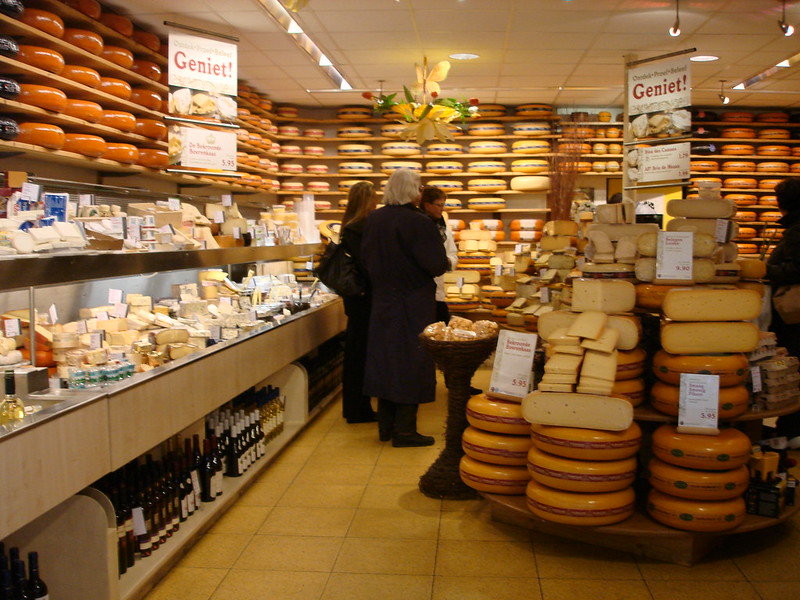
    IT’S BEEN a challenging couple of years for independent cheese shops in the U.S., as the specialty-cheese boom they fostered is absorbed by big-box retailers who sell some of the same brands they do at lower prices.

    Independent cheese shops are the front line, connecting consumers (and their dollars) to small-scale and local cheese producers as well as makers of cheese-adjacent products such as yogurt, butter, charcuterie, jam, pickles, crackers, and beer. A brigade of cut-to-order cheesemongers care for cheeses, answer questions, offer tastes, make customized cuts and, most important, tell the stories of the cheeses they sell.

    Much of what consumers learned about cheese over the last 30 years or so, they learned at a cheese case staffed by an evangelizing monger. These shops invest in consumer education and experience because they have to. Challenged to compete with large retailers on price, they use their intimate venues to offer an experience the national chains rarely can, which often extends to classes, farm trips, and “meet the cheesemaker” events that connect consumers to other enthusiasts.

    The Journal described a nightmare scenario for independent retailers. They can’t compete on price and are stuck competing on the most expensive inputs into the retail value chain. You can’t automate intimate knowledge about a niche industry. You can, however, easily and quickly use market power to negotiate advantageous pricing agreements. Independent retailers are doomed to invest resources that build new markets only to have large corporations undercut them with price once the markets are made.

    This is a societal choice, not fate.

    The Original Fair Trade Laws

    What is happening to independent cheese shops is what millions of people feared in the 1930s—predatory behavior by large chain retail stores. At that time, A&P, the Walmart of the era, used its massive size to bully food producers into volume discounts. It would aggressively discount products. Consumers flocked to the low prices. Local retailers couldn’t match the prices and went bankrupt. Once they went bankrupt, A&P rose prices. It was classic predatory behavior. In 1937 the Roosevelt Administration passed the Miller-Tydings Act of 1937. The legislation exempted retail price-maintenance agreements (commonly known as fair-trade laws) from federal anti-trust.

    What are retail price-maintenance agreements?

    Today, if you go to Walmart to purchase a block of cheese, the price in the aisle is the price the retailer determines—not the manufacturer. This price is, of course, influenced by the wholesale cost of the item, but a manufacturer has no recourse against a retailer if a retailer wants to sell a product at a loss to gain market share. It also has no remedy for the opposite. In the late 2010s, a plastic bag manufacturer instituted a price cut to gain market share. Almost every retailer kept the sticker price the same and pocketed the extra margin.

    Retail price-maintenance agreements put an end to this practice. It allowed manufacturers, of select products, to mandate a sticker price for their product. This allowed small retailers to compete against large chain retailers because they could compete on selection, service, and price.

    The end of state-level fair trade

    By 1975 prices in America were increasing by around 12 percent every year. The causes of this are vast and debated, but at the time, one of the easy culprits were fair trade laws. As the WSJ explained, large retailers can distribute more cheese at a lower price. The logic was that if Congress got rid of fair-trade laws, prices would drop. You still hear the reframe from Walmart supporters.

    That year Congress held hearings to determine their fate. In his book, Goliath, Matt Stoller recounts the testimony of Curtis Brunner, a small high quality car-wax manufacturer.

    In 1965, Brunner began trying to sell his high-qualty car wax, most of the large chains wouldn’t even talk to him, preferring to sell cheap wax in a market dominated by DuPont and three other giants. Smaller retailers wouldn’t stock it either, because they feared being undercut by discounters. Then Bruner discovered fair trade contracts.

    When he began promising small stores that his high quality car wax would be sold at the same price in small stores and discount stores, small stores stocked the item and told cusomters about it. Bruner’s product became popular, and discount stores began stocking it. Bruner could now break into what had been monopolistic market in car wax, by competing on quality, not just price. It was the same basic story that retailers and producers of branded goods had been telling for a hundred years, the same story that motivated Brandeis to call predatory discounting “competition that kills.”

    Bruner was telling the members of Congress that the laws against predatory pricing were working. Discount chains, supermarkets, and large department stores existed side by side with independently owned retailers with good service and local roots. But if the fair trade laws disappeared he said, the country would be “dominated by big businesses.” He was not asking for protection from big business He was telling Congress how we would react if forced to compete in a country dominated by big businesses. “I intended to be one of them,” he said.

    Bruner predicted the plight of cheesemakers and cheese sellers 40 years before it happened. If only he could have seen how Amazon changed the CPG landscape.

    That same year Congress invalidated state-level fair trade laws.

    Image via Flickr

  • Consumer Packaged Goods and Quality Issues on Amazon

    Consumer Packaged Goods and Quality Issues on Amazon

    In 2020, one of the most significant issues facing consumer packaged goods manufacturers is what they should do about Amazon. Amazon controls about 50 percent of the American online market. That means that a brand’s Amazon strategy often becomes their overall e-commerce strategy.

    At first glance, consumer packaged goods and Amazon seem like they should be a match made in heaven. Most CPG manufacturers’ supply chains were created to ship pallets of products to retailers–not individual packages to consumers. Amazon has a massive consumer-facing delivery infrastructure in place. In theory, CPG manufacturers should be able to piggyback off this infrastructure. 

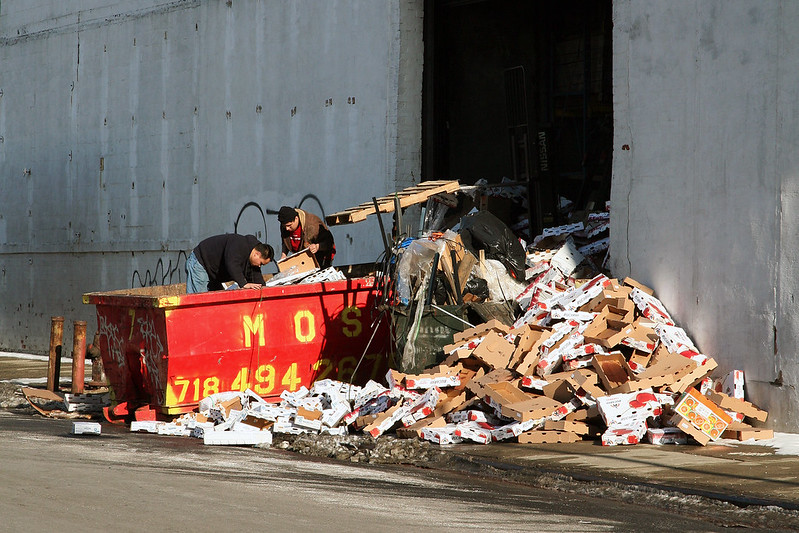
    But selling through Amazon isn’t without risks. Manufacturers are at the whim of faceless algorithms that steer shoppers towards private labels. The price of fulfillment keeps rising. Anyone can open a store-front on Amazon.com and sell about anything. Just ask the dumpster divers.

    From the WSJ

    These are among the dedicated cadre of sellers on Amazon who say they sort through other people’s rejects, including directly from the trash, clean them up and list them on Amazon.com. Many post their hunting accounts on YouTube.

    Translated: Amazon has so little control of its infrastructure that it allows sellers to ship literal garbage.

    Late one night several days before the store opened, (WSJ) reporters with flashlights and blue latex gloves visited Clifton, Clark and Paramus, N.J., scouring dumpsters behind outlets such as a Michaels craft store and a Trader Joe’s grocery.

    The bins were a humid mess of broken glass and smashed boxes, a stench of rot in the air. Several products were in original packaging, some soiled with coffee grounds, moldy blackberries or juice from a bag of chicken thighs.

    Among items the reporters retrieved were a stencil set, a sheet of scrapbook paper and the lemon curd. The curd jar showed an expiration date of May 2020.

    The Journal cleaned and packed the three items—bubble-wrapping and taping the curd jar—and mailed them to an Amazon warehouse in Pennsylvania in September and October. The Journal completed Amazon’s documentation requirements by specifying the items’ universal product codes, the numbers next to bar codes on most products.

    Amazon didn’t ask about the inventory’s origins or sell-by dates.

    The Journal’s dumpster finds were soon up for sale with an Amazon Prime logo, available to millions of shoppers, including the listing for “Trader Joe’s Imported English Authentic Lemon Curd 10.5oz” at $12.00.

    One of the ironic things about this is that CPG brands selling on Amazon now face massive and avoidable quality issues because Amazon lost control of its vast infrastructure. It’s ironic because brands developed due to consumer’s quality concerns. 

    Early retail was effectively the wild-west. Stores sold generic goods out of bushels. If you wanted sugar, you didn’t go to the store and purchase a package of sugar. You went to the store, a clerk measured out a pound of sugar from a tub, and you bought it. Consumers had little if any knowledge of a product’s quality or if they were even getting the right amount. A&P, America’s first great retailer and the Amazon of its own day, understood this. Quality was the retailer’s value proposition. Here’s how Marc Levinson described their approach in his book on the company’s rise

    Scandals involving short-weighting, adulteration, and contamination were frequently in the headlines around the turn of the century. In an environment rife with mistrust, the Hartfords understood how to extract advantage from the Great Atlantic & Pacific brand. “Teas and coffees bought at any of our stores are warranted strictly pure,” the company advertised.

    The company, the largest retailer of the era, never had a single major quality issue with the federal government. Amazon has yet to face any real brand consequences. Instead, the burden is falling on brands and small storefronts. Internal Amazon message boards are rife with complaints from reputable sellers about the impacts of dumpster diving. 

    To see if Amazon customers shared such concerns, the Journal analyzed about 45,000 comments posted on Amazon in 2018 and 2019. It found nearly 8,400 comments on 4,300 listings for foods, makeup and over-the-counter medications with keywords suggesting they were unsealed, expired, moldy, unnaturally sticky or problematic in some other way.

    About 544 of the 4,300 products were promoted as Amazon’s Choice, which many consumers take to be the company’s endorsement. Amazon’s website says the label reflects a combination of factors such as ratings, pricing and shipping time.

    The numbers are staggering. It breaks down to about 18 percent of all comments or 2 complaints per product analyzed. Consumer packaged goods companies invest millions of dollars every year to ensure a consistent quality standard. Sales reps routinely audit stores and vice-versa. Amazon throws that money out the window by not policing their storefront. That means ensuring quality is just one more concern CPG manufacturers have to consider when developing their Amazon strategy.

    Image via Flickr