
In the span of forty years the China performed a development miracle. It transformed itself from an agrarian afterthought to the world’s second largest economy. This was in spite of pervasive attitudes and policies that ran contrary to most Western economic thought. In as recent as 1980, the country’s official dictionary defined “individualism” as “the heart of the Bourgeois worldview, behavior that benefits oneself at the expense of others.” Analyzing how one person’s world went from rural farming to internet millions is a hard task. Distilling the thoughts and attitudes of a billion people and putting it in context of modern society is a seemingly impossible one. As I explain in my Age of Ambition review, Evan Osnos delivers the impossible. He answers the question, “At what cost was China’s development miracle?”
Author: Eric Gardner
-

Change Management is the tactical implementation of strategy
Change Management is a vague concept. It has been around for about fifty years, but there it lacks an 100 percent agreed upon definition. A cynic would say it’s almost like people built an entire industry without fully understanding what it is they were claiming to do. John Kotter, who popularized the term, originally considered it an 8-step linear process. PROSCI, the largest and most well known change management firm, defined it as “the discipline that guides how we prepare, equip and support individuals to successfully adopt change in order to drive organizational success and outcomes.”
These are partially correct, but holistically wrong. Change Management is just the tactical implementation of strategy. (more…)
-

Ranking the Best 34 Books I Read in 2015
Contrary to what I want to believe 2015 is nearing an end and that means it is time to create my annual list of recommended books. If 2014 was my personal apocalypse, 2015 was the most demanding, unpredictable, and rewarding year of my life. Reading-wise I found myself diving head first into the civil rights movement and graphic novels, only to circle back to sports, entrepreneurship and science fiction. Hopefully you find something on this list worth reading; I know I did. If reading recommendations are your thing, check out last year’s The Best 38 Books I read in 2014 and The Best 27 Articles I Read in 2014.
-

The Dangers of Data Journalism
I like Catherine Rampell. I can’t say that I am a regular reader, but every time I am forwarded something she wrote I normally read it. That being said, this week wasn’t a good week to be Catherine Rampell. She inadvertently made a case study in the dangers of data journalism.
-
To Hate or to Adhere
Why does language evolve the way that it does?
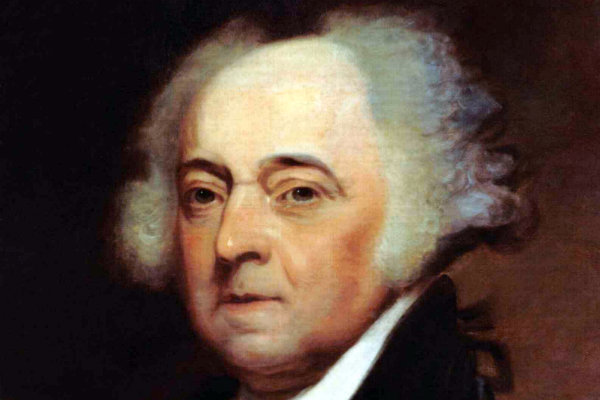
I stumbled upon a passage written about John Adams by Thomas Jefferson. Adams was a notoriously jealous and petty. He earned the nickname “His Rotundity” for being obese and arguing that everyone should refer to George Washington as “His Majesty the President.” Jefferson was a cool guy. A philosopher and statesmen that shared the opinion that most reasonable, fun loving people of the era had: Adams was a jerk. After learning that Adam’s official notes from the Treaty of Paris were “a display of his vanity, his prejudice against the French court and his venom against Dr. Franklin.” I found Jefferson’s reply interesting. He simply wrote, “[Adams] hates Franklin, he hates [John] Jay, he hates the French, he hates the English. To whom will he adhere?”
This begs the questions: Why, 232 years later, do we say we hate things, but not adhere them?
-

Ranking the 38 Books I Read in 2014
It’s the end of the year, which means it is time for ugly sweater parties and “best of lists”. 2014 was a pretty eclectic year in reading for me. For a short time I got obsessed with the journalism of Jon Ronson and then the novels of David Benioff, only to meander down to Presidential biographies. One thing you won’t find is a lot of business books. Even though I write a lot about business you won’t find many business books on this list. The reason is simple. You’ll learn more about strategy and leadership from LBJ than you will from any business advisor.
If you missed my earlier post on 2014’s best articles you can find it here.
Now to the books.
-

The 27 Best Articles I Read In 2014
Why spend the time identifying the 27 best articles I read all year? The better question should probably be, “Why not?” I selected each article based on the following criteria:
- The work should most importantly be interesting
- The work should help explain the business, political and social world we live in.
- The work should provide historical context to the modern world.
- The work should make you laugh (See Jones, Jerry)
Without further ado, here they are.
-
Book Review: Peter Thiel’s Zero to One
Each year hundreds of thousands of business books are published. Peter Thiel’s Zero to One is arguably the best business book of the decade. I’m not alone in this sentiment. The Atlantic called it “a lucid and profound articulation of capitalism and success in the 21st century economy.” New York Magazine said it was “surprisingly awesome” and The New Republic argued it “isn’t just entrepreneurial; it’s also ethical and romantic.”
Perhaps calling Zero to One the best business book of the decade was an understatement?
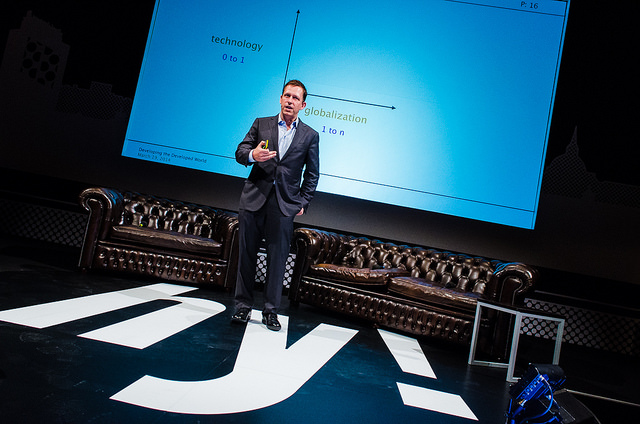
The book begins by asking a simple but contrarian question, “What important truth do very few people agree with you on?” The answer, according to Thiel, is that “most people think the future of the world will be defined by globalization, but the truth is that technology matters more.” Thiel describes globalization as taking what worked in developed nations and applying them in developing world. This moves the world from 1 to n. But if you invent a better way of doing things (how Thiel describes technology) the world moves from 0 to 1.
The problem is, moving from 0 to 1 is hard.
Thiel offers a lot of valuable advice on the topic. The most intriguing is his argument that capitalism isn’t about competition but rather creating a monopoly. He goes so far as to state “capitalism and competition are opposition.” For everyone on the right who is upset reading this socialist propaganda, realize that Thiel is about as pro-business as you can get without opposing all taxes. He founded Paypal in an attempt to create a virtual currency and supplant the US dollar. This would seem extreme if it wasn’t for his plan to build private islands exempt from the American government and international law.
All in all, Thiel’s book is an antidote to the bullshit percolating around the web. The world is now populated with charlatans and consultants of all stripes. Here is a guy who has actually built billions of dollars worth of value.
It is time we listen.
-

Book Review: Eric Schlosser’s Command and Control
I have very few certainties in life. There’s life and there are taxes, but when Eric Schlosser releases a book you read it. That may seem like a bold statement, but it is the truth. With the release of Fast Food Nation, a 2001 book that examined the impact of the fast food industry on America, Schlosser became one of the few working journalists who can claim to have changed an entire industry. “This is a fine piece of muckraking, alarming without being alarmist,” wrote the New York Times upon the book’s release, “Schlosser makes it hard to go on eating fast food in blissful ignorance.”
It took him over ten years, but Schlosser finally released his follow up, Command and Control, a book nominated for the Pulitzer Prize. I can say this with certainty; it is without a doubt the most comprehensive book on the systemic risk of any nuclear weapons system. It is impossible to read this book and not think to yourself, “I don’t understand how the world made it through the Cold War.”
The book centers itself on the Damascus Incident, a 1980 nuclear missile explosion in Arkansas that nearly blew the state in half. Schlosser takes a detour to trace bureaucratic and executive decision making that led to a place where the idea of Mutually Assured Destruction went from a punch line to stated American policy. It makes incredible and jarring points about the folly of complex systems. How the people most familiar with nuclear weapons were the most dedicated in their support for banning them. How armed nuclear bombs were routinely dropped and discharged, completely by accident. The book is meticulously researched, balanced and important.
I’m also not sure I would recommend it.
To put it bluntly the book was so detailed that I felt it detracted from the overall flow of the narrative. Unlike his previous works, I felt myself struggling through the middle of the book (although the last section that details the actual explosion is riveting). Instead, I’d recommend reading the excerpt published earlier in the New Yorker. The except doesn’t give a complete picture of how close the world came to ending due to minor lapses, but it gives a good enough glimpse.
Bottom Line: Command and Control is one of the most important books ever written about both nuclear strategy and the dangers of relying on a complex computerized system. If you are genuinely interested in those topics than it is a must read, if not, read the excerpts and reviews to get a general sense of how close we all came to not existing.
-
The Revolutionary Logic Behind Chip Kelly’s Madness
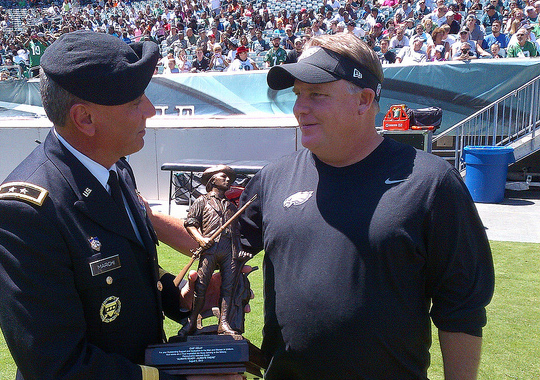
[drop_caps]C[/drop_caps]hip Kelly is an interesting man. He was an unassuming former D-1AA defensive back who became a successful offensive coordinator and found himself the most wanted college football coach in America. In his first game as the head coach of the Oregon Ducks, his team managed just 153 yards and scored only 8 points. A season ticket holder wrote him asking for his money back. Kelly mailed him a personal check for $439.
Like I said, Chip Kelly is an interesting man.
