Category: Book Reviews

  • Books about the impact of technology on society

    Books about the impact of technology on society

    If you’re looking to learn more about why society is changing so fast and what to expect in the future you’ve come to the right place. The following is a list of the five best books about the impact of technology on society. I have a fairly loose definition of technology. In my opinion, it can be both the traditional view (the internet) or policy (free trade legislation). There’s not a whole lot of rhyme or reason to the list’s order.

    Brave New War: The Next Stage of Terrorism and the End of Globalization

    “I keep coming back to the way terrorism and guerrilla warfare is rapidly evolving,” John Robb writes in the preface of the paperback version, “to allow nonstate networks to challenge the structure and order of nation-states.” Brave New War is a book about terrorism but defines the structure of an interconnected world in regards to war, politics, and business. He argues that for the first time in modern history an outsider can not only fight a modern war–but win. This leaves established organizations (corporations and governments) in a tenuous position. Recent memory has shown that Robb’s final thesis was right; companies that embrace lean tactics flourish, while others fade away. “We have two choices: we can enable its emergence, or we can delay it until it evolves on its own out of necessity.“

    The Starfish and the Spider: The Unstoppable Power of Leaderless Organizations

    You know a book is great when it is published as a libertarian manifesto and becomes required reading for political organizers of all persuasions.  Brafman and Beckstrom argue that organizations that become leaderless become unstoppable because they can’t be logically attacked. If you cut off one source of power a new one simply reemerges. The book belongs in the same category as Rules for Radicals, but as I’ve gotten older and gained experience working with Fortune 100 management I’ve began to question to the viability of scaling a leaderless organization. Nevertheless it remains an important work.

    Men Who Stare at Goats

    Jon Ronson is an expert of drilling down into a seemingly ridiculous/hilarious idea and revealing the terrifying fragment of truth behind it. Men Who Stare at Goats is an investigation of a rumored US Army program to train a group of top-secret soldiers to become so powerful they could kill a goat by staring at it. He investigates the seemingly insane rumor and stumbles upon something true and perhaps even more frightening: the institutionalized use of psychological warfare in modern society.

    American Kingpin

    American Kingpin tells the remarkable true story about how one man built an Amazon for drugs and weapons. At its peak, it processed hundreds of millions of dollars a day in illicit substances. It then came crashing down due to the work of a handful of dedicated US agents. It took Sam Walton 30 years to conquer retail. Jeff Bezos 15. All of this happened in a few years.

    How Not to Network a Nation

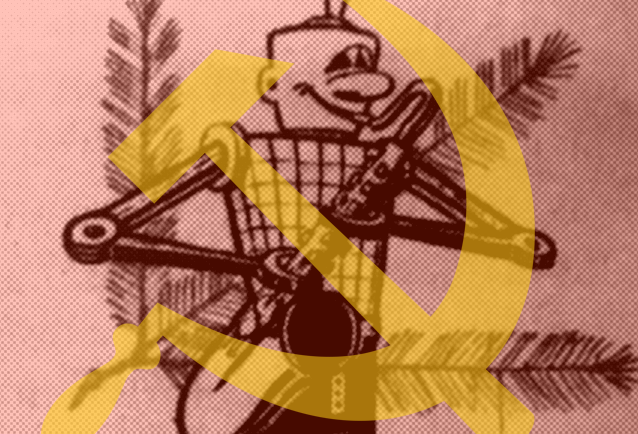
    In the thirty some years since the fall of the Soviet Union, most analysis is reduced to one sentiment: communism failed because capitalism is superior. They bring up the work of Hayek, stories about full grocery aisles, or simply argue that people are too self-interested for mass collectivism to work. And yes, I understand and even agree with many of these arguments, but it’s also lazy. It’s like analyzing the most recent Super Bowl and concluding that the New England Patriots won because they wanted it more. In How Not To Network a Nation Benjamin Peters provides an exhaustive look at one of the functional problems that plagued the Soviet experiment: information. Peters concludes that “American APRANET initially took shape thanks to well-managed state subsidies and collaborative research environments. The comparable Soviet network project stumbled due to widespread unregulated competition among self-interested institutions, bureaucrats, and other key actors.”

    Basically, the socialists acted like capitalists and the capitalists acted like socialists.

    Photo by freestocks.org from Pexels

  • Book Review: Break ‘Em Up by Zephyr Teachout

    Book Review: Break ‘Em Up by Zephyr Teachout

    Early in her newest book, Break ‘Em Up, Zephyr Teachout retells the story of an Amazon air hockey seller. The seller, whose air hockey table was one of the top-3 search results until Amazon introduced sponsored ads. Coincidently, despite years of sales and popular reviews, the product dropped off the search charts with their arrival—even the free organic results. Potential buyers in the America’s largest online market could no longer find the product. In a desperate act to regain volume, the seller decided to spend $5,000-$10,000 a month on Amazon sponsored advertisements. As if magic, a product that mysteriously dropped off Amazon’s organic search results, found its way back to the top after it bought thousands of dollars of advertisements.

    Zephyr Teachout explains:

    The resulting system is the opposite of a competitive market — it’s a kickback regime. Amazon sets up an allegedly neutral system , and then charges fees to game that system, calling those fees “ advertisements. ” Sellers compete over how much they can pay Amazon to get access to consumers.

    This example speaks to the heart of Break ‘Em Up. Teachout argues that large private monopolies are forms of tyranny that destroy our economy and democracy. The small air hockey seller is not free to conduct business if they’re forced to purchase thousands of dollars of advertisements from the only online market that matters. According to Teachout, the only way to combat the tyranny is to target the heart of the issue: the business model itself.

    About Zephyr Teachout

    In my opinion, Zephyr Teachout is one of the most important figures within the modern progressive movement. She’s a lawyer, law professor, author, and multiple time candidate for public office. Unlike a lot of her contemporaries, her arguments and solutions aren’t driven solely from a moral standpoint. Instead, she provides a moral vision with a fierce defense of competitive markets and cost-savings—something every business minded person should hold dear to their heart. Take the popular progressive position of Medicare (universal health care). Zephyr supports it, but wants to move past the discussion of universal coverage and into the structural issues driving health care cost: private monopolies.

    Here’s the rub: driving down prices is much harder when the government is negotiating with a powerful monopoly than when it is negotiating in a competitive market. Healthcare expert Phillip Longman has written several persuasive articles about consolidation in the drug market, and the healthcare industry more generally, and the risk that this consolidation poses to nationalizing plans. If a single payer plan was enacted without additionally addressing the monopoly problem, he argues, government could end up effectively subsidizing big pharma, and big hospitals, and keep paying enormously high prices. Those costs would shift back to the public—in the form of taxes.

    Single payer care is necessary for humane reasons, and for the extraordinary reduction in administrative costs. But why not demand both single payer and breaking up drug monopolies?

    Basically, Zephyr Teachout has the courage and the moral conviction of Ralph Nader, but the vision to see the structural issues driving our society.

    Private Taxes

    Break ‘Em Up is structured into two parts. The first argues that private monopolies have destroyed a lot of what we consider society. The second is what to do about it. One of my favorite things about this book is how she frames business taxes. The earlier $5,000 to $10,000 ‘advertising’ fee that the small business pays every month isn’t advertising. It’s a private tax, imposed by Amazon in order to access the market. Unlike public taxes, which go to fund roads and schools, this goes straight into the pocket of Jeff Bezos—who is current worth around $200 billion.

    She walks us through a variety of industries and the monopolies that impose private destructive taxes on each: Tyson and Farming, Facebook and Journalism, Amazon and Retail. The stats are particularly damning in farming. In 1985 farmers were paid about 40 cents for every dollar Americans spent on food. Today, that number is down to 15 cents. The money has shifted from small producers, to large manufacturers and retailers.

    The first part of the book is well written, but unless you’re new to the anti-monopoly thought, it isn’t particularly groundbreaking. In my opinion, The Curse of Bigness by Tim Wu (who she ran for governor with) and Matt Stoller’s Goliath do a little bit better job explaining the evolution, history, and impact of the rise of private monopolies. Where Break ‘Em Up really shines is in the second part—what to do about it.

    Break ‘Em Up!

    If you regularly read this blog, you know that I write and work at the intersection of politics, technology and consumer products. I’m generally partial to the plight of consumer products companies—this isn’t to say they’re blameless—but most are effectively powerless against large retailers. The reason for this is quite simple–we quit enforcing free trade laws.

    For most CPG companies, two retailers (Walmart and Kroger) constitute 30-35% of sales. If one of them says an item’s price needs to be lowered—it’s going to get lowered—and the manufacturer is going to take the margin bite. They simply can’t risk getting their item take out of the store. The only way they’re able to negotiate is if they have a large portfolio—either raising prices elsewhere or making it up in overall volume. Either way, the underlying structure pushes companies towards consolidation—like the mega-merger of Kraft-Heinz. Break ‘Em Up is one of the first books that I’ve read that gives concrete framework to stop the structure from happening.

    1. Open, competitive markets, working together with publicly provided services and neutral infrastructure, are necessary for economic liberty. There is no one-size-fits-all answer to every industry, but unregulated private monopoly poses a unique threat. Private corporations with too much power raise prices for consumers, depress wages for workers, choke off democracy, and regulate all of us.

    2.  To preserve rough economic and political equality, we should make it easier to organize people and harder to organize capital. It should be as easy to unionize, or to create a cooperative, as it is hard to merge goliaths.

    3.  It’s better to err on the side of decentralized private power. Democratic governance is messy and will lead to mistakes, but corporate government will lead to tyranny.

    To me, some of her most powerful writing is when analyzes Michael Sandel’s What Money Can’t Buy, a book that argues the typical progressive line on capitalism—that it’s bad and needs to change for moral reasons. Her response is phenomenal and I think shows a viable path forward to popularizing progressive policies across the ideological spectrum.

    Sandel’s approach is dangerous because it closes down an arena of moral action and redirects activism away from breaking up big corporations. It makes us ignore market – structure problems. If we treat markets as a kind of necessary infectious disease that one must cordon off, instead of institutions that can be wonderful or corrupt depending on how they are structured, we stop trying to fix them. And while a few people think the state should make shoes and grow carrots, most people — including myself — imagine most of economic life happening through private exchange.

    Zephyr’s solution isn’t to regulate out markets. The solution is to regulate markets in a way that works for people. She then provides a framework that isn’t just theory, but practical and proven.

    All in all, Break ‘Em Up is a nice addition to the modern anti-trust movement by one of its most important practitioners.

    Image via Flickr

  • Reengineering Retail by Doug Stephens - A  review

    Reengineering Retail by Doug Stephens - A  review

    Reengineering Retail isn’t a bad book. It’s just…whatever. Written by Doug Stephens, Reengineering Retail tries to lay out a theory that encompasses the future of retail. The central idea is this. Digital technology has upended the traditional retail industry. The retail store is no longer a static distribution point for a product. Instead, Stephens, a self-proclaimed “consumer futurist”, sees them as “experiential media channels.” Now, throw in a bunch of business buzzwords, technology-centric case studies, and a weird 20-page diversion into innovation consulting, and you have successfully described Reengineering Retail.

    Now again, on the surface, there is nothing inherently wrong about Reengineering Retail. Retailers need to get leaner, they need to reevaluate how they use store space, and they need to focus on creating experiences rather than just transactions. There are a handful of case studies in the book that made me think. The case studies are also almost uniformly geared towards high-end lifestyle retailers. Stephens would probably recommend that every grocer in America turn itself into Eatily — despite the fact that dollar discount stores are the only reliable growth engine left in retail. But then again, dollar stores aren’t as fun or exciting as having a private chef teach cooking lessons to sell more cheese.

    I think that’s my biggest issue with the book. Reengineering Retail’s overall premise is probably true, but it spends the bulk of the time trying to make its’ case through buzzwords and glittering objects rather than the nuts and bolts of retail.

    Let’s take his discussion of “building a network.” Stevens argues that in the future, successful retailers will build networks, not empires. Now, he never actually defines what he means by a network. Instead, he gives a string of loosely collected buzzwords.

    Networks, on the other hand, are capital-light, structurally lean and able to scale rapidly. They operate on transparency and a sense of shared ownership with peer-to-peer trust and governance. Their success ultimately depends on a balanced scorecard of stakeholder interests, from shareholders to employees and network partners. They are more fluid, flexible and adaptable to change, in part because they offer an intrinsically broader collective market intelligence.

    First off, the “they operate on…” sentence is just describing joint business planning, a business function almost all retailers use to some extent. Secondly, “Intrinsically broader collective market intelligence…” Who is he kidding? I get what he’s probably trying to say. That the wisdom of the crowds is more significant than any one individual buyer. But how does that translate to brick and mortar retail? From a back-end operations perpsective it doesn’t.

    Retail is a complex operation. For manufacturers, sorry, partners, roughly speaking you have a team that creates a good, a procurement team that figures out a way to buy the raw materials, a supply team that figures out how much to make, a demand team that forecasts how much and when retailers will buy, a sales team that sells the product to retailers, a finance team that makes sure they make money, and a customer service team that handles any issues. The retailer then, has a similar organization, only on its side.

    How does this fit into Reengineering Retail’s network model? Well, it doesn’t. At least not to the extent that Stevens insinuates. A more rational future state would include major investments into warehouse management, inventory control, and trade planning software. The efficiencies gained from those could free up massive amounts of capital to invest in the “experiences” that Stevens suggest.

    But that’s not nearly as innovative as a network, now is it?

    Image via Flickr

  • Review: The Curse of Bigness by Tim Wu

    Review: The Curse of Bigness by Tim Wu

    Tim Wu, a law professor at Columbia University, spent the last decade establishing himself as one of the pre-eminent antitrust thinkers. In the Master Switch and The Attention Merchants, Wu used a wide-angle lens to examine the implications of the rising information cartels on American business and society. In The Curse of Bigness, Wu takes a magnifying glass to industrial concentration and the economic and political dangers it creates. The book succinctly distills a generation of research into one easily digestible volume. In this The Curse of Bigness Review, I summarize the main argument that Tim Wu’s central arguments

    (more…)

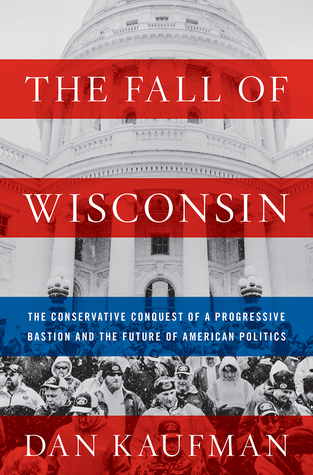
  • Review: The Fall of Wisconsin by Dan Kaufman

    Review: The Fall of Wisconsin by Dan Kaufman

    The Fall of Wisconsin, a 2018 book by New Yorker’s Dan Kaufman, analyzes how conservatives utilized Dark Money, Gerrymandering, and Weak Democratic opposition to enact a radical and dangerous conservative agenda in Wisconsin. “(Their) devastating success has allowed for the transformation of Wisconsin into a laboratory for corporate interests and conservative activists,” Kaufman writes. Act 10 (rightly) receives the majority of the press, but it’s really one of many extreme changes the Republican Party brought to Wisconsin. In the last two years, the Republican-controlled Senate supported a bill to remove all of the state’s air-pollution regulations. This book review will outline Kaufman’s core thesis and help explain how three forces, Dark Money, Gerrymandering, and weak Democratic Opposition created a nightmare scenario.

    Dark Money fueled the Fall of Wisconsin

    The Citizen’s United decision effectively allowed corporations to launder political spending through non-profits. According to Issue One, a non-partisan campaign finance reform organization, just 15 groups have spent more than $600 million “in secret money” influencing our elections. In Wisconsin, no organization has been more potent than the Bradley Foundation. Initially established by a Milwaukee industrialist looking to avoid inheritance taxes, it initially focuses on area hospitals and universities. In the 1980s it transitioned into a weaponized conservative outlet—focusing on school vouchers, destroying unions, and promoting white supremacy masked in academic jargon. The foundation’s assets have ballooned to nearly $850 million.

    The Bradley Foundation’s most significant success has been Act 10—legislation that stripped collective bargaining rights from the state’s public workers (except police and firefighters—two groups who were neutral or supported Walker’s initial election). The legislation kick-started massive teacher protests, which Walker later compared to ISIS. The effects have been devastating for the state’s educational system. According to an analysis by the Milwaukee Journal Sentinel, Act 10 resulted in a 30% drop in state granted education degrees resulting in 25 percent of school districts reporting an “extreme shortage” of qualified applicants. “Teaching,” current Governor-elect Tony Evers remarked at the time, “no longer considered an attractive career path.”

    Perhaps the most insidious effect was villainizing teachers. The last thirty years left many Wisconsinites behind. Instead of asking “Why they no longer had health insurance,” people started asking “Why did teachers have it?” “A Wisconsin labor leader once told me that Act 10 succeeded,” said Kauffman. The leader’s answer is both telling and depressing. “Because Walker transformed the person who spent the day in a classroom teaching his child from “teacher” to “union member.”

    Gerrymandering

    Once in control over Wisconsin’s government, the Republican party launched a full-throated assault on voting rights in the state. They passed restrictive voter identification laws to suppress minority and student votes and cemented control by gerrymandering election boundaries. In the first election after the rigged voting maps, Republican received 175,000 fewer votes but ended the day with a 60-39 majority. This was a fundamental part of the Republican strategy. Restrict the rights of non-Republican voters, while reducing the impact of non-Republican votes. In 2018, after Governor Walker was surprisingly beaten by State Superintendent Tony Evers, Republicans began their second assault on Democracy and voting rights.

    Weak democratic opposition

    A portion of Republican success in the state is due to the Democratic party. Modern democrats had no interest in defending the average working person against the Republican onslaught. President Obama declined to even campaign in Wisconsin during the passage of the bill—creating a boom for Scott Walker. The book doesn’t dive into this, but in the mid-1990s, centrist Democrats began to move away from unions as a source of natural support. The transition started with Jimmy Carter but solidified itself after NAFTA. The logic was that for every union vote they lost, they’d make it up with the professional suburbs. Led by Bill Clinton, liberals began to abandon New Deal policies and adopt market “friendly” positions. The result was market deregulation and globalization—at the same time, Democrats reduced the welfare state. The result was two parties working against working people. This directly led to Donald Trump.

    Should you read The Fall of Wisconsin?

    The point of every review is basically, should I read this book? After I finished The Fall of Wisconsin, I would have said no. I didn’t really learn anything during it. However, I also live in Wisconsin and am active in Wisconsin politics. As I began writing my review, I realized that Kauffman did a solid job of distilling the state’s political revolution. If you don’t live here, you should absolutely read this book. The current state of Wisconsin is the nation’s fate if Progressives don’t start winning office and exterting political power.

  • Review: Hit Makers by Derek Thompson

    Review: Hit Makers by Derek Thompson

    In Hit Makers, Derek Thompson tries to explain why some ideas become popular and others fade away. It’s an important question and one facing every content creator in today’s hyper-competitive media landscape. Technology platforms like Spotify, Facebook, and Twitter have transformed media into a winner take’s all market. How does a new band break through on Spotify—when the top one percent of acts capture 80 percent of recorded music revenue? How can a television show break through hundreds of channels and streaming options? How can an unknown writer catch-on? Hit Makers claims to answer these questions. Unfortunately, Thompson fails to offer new insights to this question. Instead, Hit Makers is a book on how cultural hits are created, published in 2017, with arguments from 2010.

    (more…)

  • Nixonland: How a book about Richard Nixon helps explains Donald Trump

    Nixonland: How a book about Richard Nixon helps explains Donald Trump

    The central thesis of Nixonland, a sprawling look at the origin, rise, and decline of the Nixon administration, is that there was simmering white resentment underneath the optimism and change of the Kennedy Administration. Hidden behind the civil rights movement was a mass of unhappy middle-class white people. Nixon wasn’t the first politician to exploit white rage, that honor would go to Ronald Reagan. Nixon merely copied it, perfected it, and fractured the nation into Nixonland. Richard Nixon, Ron Perlstein writes, “so brilliantly co-opted the liberals’ populism.” Re-directing well-meaning reforms, “into a white middle-class rage at the sophisticated, the wellborn, the “best circles” — all those who looked down their noses at “you and me”…that sneered imperiously at the simple faiths of ordinary folk, their simple patriotism, their simple pleasures.”

    In 1964, Lyndon B. Johnson won 61.05 percent of the popular vote on a platform of expanding FDR’s New Deal to non-white Americans. Its sole goal was to eradicate poverty and racial injustice. He coined it the “Great Society.” When lighting the national Christmas Tree, President Lyndon Johnson described it as “the most hopeful times since Christ was born in Bethlehem.” Eight years later Richard Nixon won 60.67 percent of the vote on a platform of “Law and Order”; an ideological repudiation of the Great Society. Nixonland is fundamentally about this uniquely American transformation. How America went from believing civil rights law leveled the playing field to one that held it caused race riots. How it went from viewing welfare as help for the weakest to help for the laziest. How political dissent became tantamount to treason. Nixon was at the center of it all, weaponizing a white populace’s fears into an “us versus them” political revolution. “Far from becoming a great society,” Nixon wrote in Reader’s Digest leading up to his Presidential election, “ours is becoming a lawless society.” The underlying context was that only Richard Nixon, and people like him, could protect society from the hordes of others.

    Sound familiar?

    (more…)

  • Review: Devil’s Bargain by Joshua Greene

    Review: Devil’s Bargain by Joshua Greene

    Joshua Greene’s Devil’s Bargain is ostensibly about Steve Bannon, arguably mainstream Democrats biggest boogeyman not named Vladimir Putin.

    The book, of course, covers his evolution from the Navy to Goldman Sachs, to World of Warcraft, to Hollywood, and to (supposedly) anti-Goldman right-wing crusader. However, the book is really about how three well-financed forces coalesced and resulted in the election of Donald Trump to President of the United States.

    (more…)

  • Review: The Warmth of Other Suns by Isabel Wilkerson

    Review: The Warmth of Other Suns by Isabel Wilkerson

    With a scope wide as it is personal, Isabel Wilkerson’s The Warmth of Other Suns paints a historical picture of one of the largest, but least reported events in the 21st century: the mass northern migration of African Americans.

    Despite losing the Civil War, an open caste system remained in the South. Blacks were restricted in both their opportunities and possibilities. Most were relegated to sharecropping—in practice a form of pseudo-slavery. Voting was technically legal but practically unheard of. Lynchings were common.  At the turn of the 20th century, 90% of African Americans lived in the south. By the end of the 1960s, roughly half called the North home.

    (more…)

  • Book Review: How Not to Network a Nation

    Book Review: How Not to Network a Nation

    In the thirty-some years since it fell, American analysis of the Soviet Union has been reduced to one sentiment: communism failed because capitalism is superior. Professional people—especially ones employed by media companies—spend an awful lot of time and energy attempting to rationalize its downfall through clichéd ideological arguments. They bring up the work of Hayek, stories about full grocery aisles, or simply argue that people are too self-interested for mass collectivism to work.

    And yes, I understand and even agree with many of these arguments, but it’s also lazy. It’s like analyzing the most recent Super Bowl and concluding that the New England Patriots won because they wanted it more. In How Not To Network a Nation Benjamin Peters provides an exhaustive look at one of the functional problems that plagued the Soviet experiment: information.
    (more…)