The Most Devastating Insult

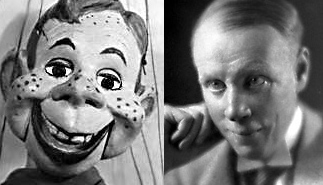
Sinclair Lewis was the first American to win a Nobel Prize in Literature. He has been mostly forgotten, but he once wrote best selling novels, short-stories and plays. He had his own stamp. He was evidentially the inspiration for Howdy Doody. He also wrote one of the greatest insult passages of all time: She was … Read more

And We Wonder Why the GM Recall is a Diaster

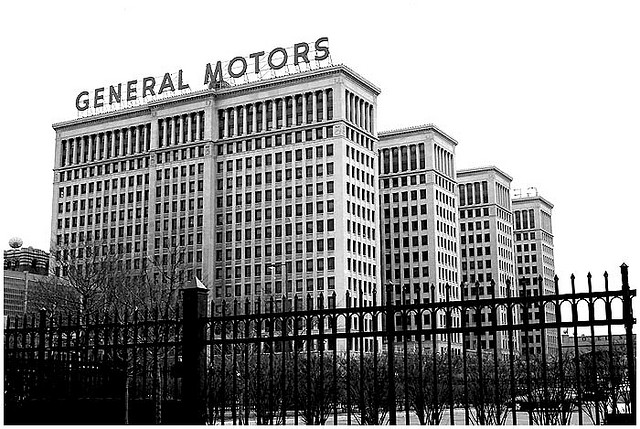
On July 22, 2014 General Motors announced they would recall an additional 800,000 cars, bringing their annual total to 29,000,000. According to The New York Times the cars have been called back for a number of problems including: “seats, air bags and turn signals, parts that may not have been welded together properly, and a … Read more

Why Outsource?

When you throw away the books and the theory and look behind the curtain to see public and business strategy being implemented something becomes clear: most people have no idea what they are doing.  They may speak the language and look the part, but deep down most decision makers do what they think a person in their situation should do. Why outsource production? Because that’s what the book says to do.

Last month Esther Kaplan published a phenomenal article in VQR titled Losing Sparta. In it, Kaplan reviews a recent decision by Philips to close an award winning light fixture manufacturing plant in Sparta, Tennessee. What’s fascinating and important about this story is that there was no business case to outsource the plant’s production. It had it all. It was a days ride from most U.S. markets. It had a brand new production line that could be switched and retooled in minutes. It was named one of the best factories in America by Industry Week. Yet by 2010 the plant was closed and all of the production was shipped to Monterrey, Mexico.  Now manufacturing lead times at the plant have ballooned from ten days to eight weeks. Phillips lost nearly a third of their market share  in the products previously produced in Sparta.

Why did Philips decide to outsource? The answer is quite simply a lack of critical thought at the executive level. Kaplan explains:

Read more

The Six Innovations of CrossFit

[drop_caps]Y[/drop_caps]ou know you are on to something when people simultaneously hate and adore what you are doing. A prominent Boston Globe columnist once wrote about a band, “[They] are not merely awful; I would consider it sacrilegious to say anything less than that they are god awful.”[1. Coincidentally the critic was none other than William F. Buckley Jr., the “brains” behind the conservative renaissance of America. This would probably be considered the dumbest thing he had ever wrote, if he hadn’t spent the 1960s advocating against Civil Rights legislation, but that’s another story]

A year later the Beatles sold out Shae Stadium.

Apple has legions of fanboys, but plenty of people believe their computers are nothing but overpriced and stylized pieces of plastic. People get tattoos of their favorite football teams on their arm, but more and more refuse to allow their children to play. CrossFit fits this description. For those that don’t know, CrossFit is a new group fitness regime. Fast Company explained:

The heart of CrossFit is the Workout of the Day (WOD), a common workout begun at hourly intervals throughout the day by cohorts of gym members. All exercises are functional in nature, cherry picking movements from gymnastics, Olympic lifting, army obstacle courses, triathlon training, and calisthenics, designed to prepare athletes for whatever real-world obstacles they may encounter, from police pursuits to lifting newborn twins.

People who love CrossFit really can’t stop talking about the benefits, while the critics can’t stop talking about the risks. I’m guilty of the first. I’ve been doing CrossFit for about 16-months and I often find myself annoying friends with stories about my workouts. In that way, CrossFit is like fantasy football: No one wants to hear about it unless they are involved. But yet, there is an entire online industry both deriding and proselytizing the fitness regime. People go ‘undercover’ to investigate the phenomenon, while others enroll their kids in classes. It has been called dangerous. It has been called a cult. But I think that most apt description is innovative.

Read more

Things You Should Read – Clinton on LBJ

You don’t have to be a policy wonk to marvel at the political skill L.B.J. wielded to resuscitate a bill that seemed doomed to never get a vote on the floor of either chamber. Southern Democrats were masters at bottling up legislation they hated, particularly bills expanding civil rights for black Americans. Their skills at … Read more

5 Articles You Must Read About Martin Luther King Jr

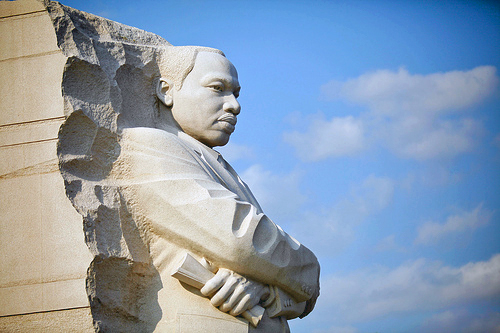
Today marks the 46th anniversary of the assassination of Rev. Martin Luther King Jr. If Thurgood Marshall was the tactical leader of the civil rights movement, King was its spiritual. It is hard to imagine anyone accomplishing more in his or her life than King, who lead non-violent protest across America and won the Nobel Prize abroad. Legacy wise, nearly every constituency has attached themselves to King, even conservatives. This is ironic since most conservatives would disown King if they knew about his opposition to Vietnam and his dream to unite the labor and civil rights movements. I’m sure today there will be hundreds of superficial articles published King, but very few will address the context of his life. I’ve gone ahead and curated five articles that do just that.

Read more

Thomas Piketty’s Inequality Wake Up Call

This post begins with me sitting in a conference room that overlooked the capital city of a developed country. The room was filled with a handful of Ivy League MBAs, a former officer at a major international bank and two high-level government officials. We were tasked with developing a strategy for the nation’s financial service industry. They viewed themselves as the next Dubai or Singapore, but lacked the infrastructure and history of success. Across from us sat an executive at the second largest corporation in the nation. Her job was to direct the company’s overall strategy. That morning we were there to ask ACME Corporation questions around the private sector’s views on the financial system.

Read more

How Growth Hacking Saved “Newsweek”

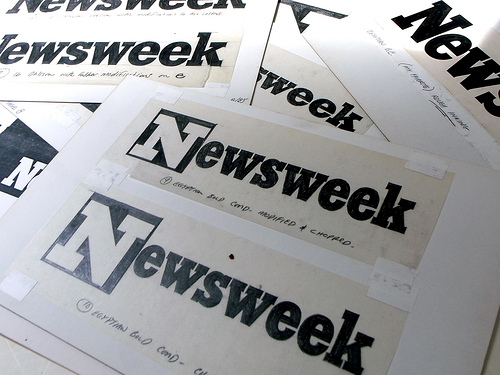
After a 14 month absence Newsweek returned to print with a splash. The 91 year old publication reported the identity of the creator of BitCoin, a new and somewhat controversial currency used by millions. The article sent shockwaves through the Internet, and propelled the alleged founder, Satoshi Nakamoto, and Newsweek to the forefront of the news cycle.

This is a far cry from seven months ago when Newsweek’s publisher left it for dead. “I wish I hadn’t bought Newsweek,” a disappointed Barry Diller told BusinessWeek, “it was a mistake.” Diller bought the publication in 2010 for $1 (He also assumed all existing liabilities) and promptly hired star editor Tina Brown to turn it around. The first thing she did was to drive the publication straight into a wall. In August 2013 Diller sold the company to IBT Media for a small sum.

In just seven months IBT Media tripled Newsweek’s online readership and felt confident enough to start the printing presses again. How did they do it?

Read more

5 Articles That Explain the Ukrainian Revolution

The world has been on high alert since Russian President Vladimir Putin threw caution to the wind and sent military troops to occupy Ukraine’s Crimean Peninsula. This act of aggression coincided with the defection of Ukrainian naval leadership and the seizing of parliamentary buildings by forces loyal to Russia. Many columnist and analysts are predicting a massive global conflict and a potential return to the Cold War era. What we aren’t seeing is a coherent narrative about how the conflict got to this stage. I’ve gone ahead and curated 5 great sources that paint an accurate narrative of the historical, political and strategic framework of the 2014 Ukrainian revolution.

Read more