Category: Blog

  • Things You Should Read – Clinton on LBJ

    You don’t have to be a policy wonk to marvel at the political skill L.B.J. wielded to resuscitate a bill that seemed doomed to never get a vote on the floor of either chamber. Southern Democrats were masters at bottling up legislation they hated, particularly bills expanding civil rights for black Americans. Their skills at obstruction were so admired that the newly sworn-in Johnson was firmly counseled by an ally against using the political capital he’d inherited as a result of the assassination on such a hopeless cause.

    According to Caro, Johnson responded, “Well, what the hell’s the presidency for?”

    Read the full book review here

  • Thomas Piketty’s Inequality Wake Up Call

    Thomas Piketty’s Inequality Wake Up Call

    This post begins with me sitting in a conference room that overlooked the capital city of a developed country. The room was filled with a handful of Ivy League MBAs, a former officer at a major international bank and two high-level government officials. We were tasked with developing a strategy for the nation’s financial service industry. They viewed themselves as the next Dubai or Singapore, but lacked the infrastructure and history of success. Across from us sat an executive at the second largest corporation in the nation. Her job was to direct the company’s overall strategy. That morning we were there to ask ACME Corporation questions around the private sector’s views on the financial system.

    (more…)

  • How Growth Hacking Saved “Newsweek”

    How Growth Hacking Saved “Newsweek”

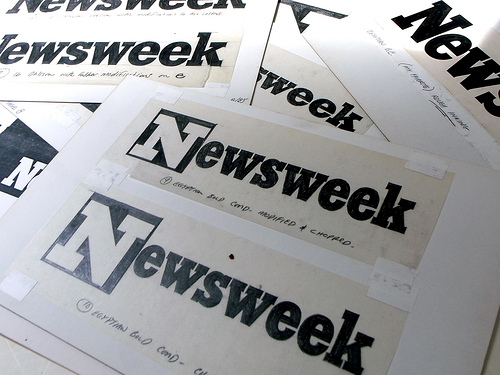
    After a 14 month absence Newsweek returned to print with a splash. The 91 year old publication reported the identity of the creator of BitCoin, a new and somewhat controversial currency used by millions. The article sent shockwaves through the Internet, and propelled the alleged founder, Satoshi Nakamoto, and Newsweek to the forefront of the news cycle.

    This is a far cry from seven months ago when Newsweek’s publisher left it for dead. “I wish I hadn’t bought Newsweek,” a disappointed Barry Diller told BusinessWeek, “it was a mistake.” Diller bought the publication in 2010 for $1 (He also assumed all existing liabilities) and promptly hired star editor Tina Brown to turn it around. The first thing she did was to drive the publication straight into a wall. In August 2013 Diller sold the company to IBT Media for a small sum.

    In just seven months IBT Media tripled Newsweek’s online readership and felt confident enough to start the printing presses again. How did they do it?

    (more…)

  • Book Review: “Young Money” by Kevin Roose

    Book Review: “Young Money” by Kevin Roose

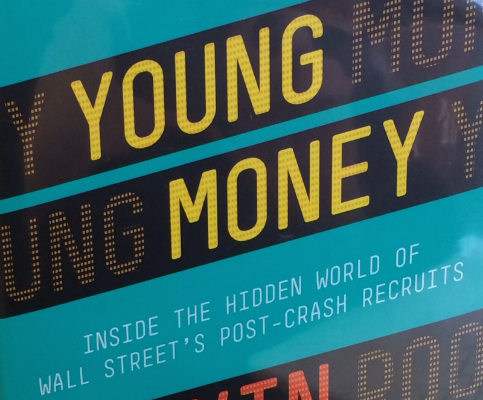
    For three years New York’s Kevin Roose followed the careers of eight young Wall Street workers to research Young Money. According to the book’s marketing materials Roose created “the story of how the financial crisis changed a generation–and remade Wall Street from the bottom up.” Released last month, the book is many things: a look at the culture of Wall Street through the eyes of those at the bottom, an exploration into the decline of the industry’s esteem, and an 8 person character study. It isn’t however, as some reviewers have suggested, a new Liar’s Poker.

    It is a lazy cliché to compare any book remotely critical of Wall Street to Michael Lewis’ 1989 classic. Poker tells the story of an industry on crazy pills and absolutely shreds it. After majoring in Art History, Lewis get a job at Salomon Brothers and found himself handing out investment advice to seasoned investors despite not knowing a thing about the financial industry. “The whole thing still strikes me as preposterous,” he later wrote in a pseudo-epilogue.

    I don’t think Roose set out to write the next Liar’s Poker. If he did he would have spent more time analyzing how the industry’s incentive structure turns good people into amoral technocrats. [2. Roose briefly touches this at the end, but it doesn’t seem like enough.] He also would have called out the superficiality of many of the young analyst’s statements [3. This probably has more to do with Roose becoming friends with his subjects]. Instead he crafted a narrative around the psychological impact of working in a toxic industry on eight young people. “I have never seen more people disgusted to get their hands dirty in my entire life,” a young analyst told Roose after her Bank of America class was tasked with doing routine yard work for a few charities.  “There were like two hundred kids just standing there, looking at their BlackBerrys and being like, ‘I really want to get back to the office.’ I was like, ‘Are you guys kidding me? Is this a joke? You’re out in the sun, doing something good for the community, and all you guys want to do is go back and sit at your desks?’”

    That’s Wall Street culture in a nutshell. Given the chance to stay outside and help the community, they’d rather get back to their desks.

    Bottom Line: Young Money does not offer an in-depth description of the financial services industry or a grand explanation for its failings. Rather, it is a light and breezy look at the impact of the finance culture on the lives of eight young people.

  • Classic Reads: Simon Johnson’s “The Quiet Coup”

    Classic Reads: Simon Johnson’s “The Quiet Coup”

    In May 2009 The Atlantic Magazine published an article by Simon Johnson titled, “The Quiet Coup.” Today, “The Quiet Coup” stands as one of the watershed articles on the 2008 financial crisis. Johnson, the former Chief Economist of the IMF, argued that roots of the financial crisis was not interest rates or poor people taking out loans they could not afford, but that financially and politically the United States had more in common with Russia than Germany.  “Elite business interests,” he wrote, “played a central role in creating the [financial] crisis, making ever-larger gambles, with the implicit backing of the government, until the inevitable collapse. More alarming, they are now using their influence to prevent precisely the sorts of reforms that are needed…”

    To put this in entertainment terms, the closest thing to Johnson’s pronouncement would be if Meryl Streep suddenly gave up serious acting and began producing hard-core pornography.

    It is also the exact reason it is a classic article.

    (more…)

  • 5 Life Philosophies from Harold Ramis

    5 Life Philosophies from Harold Ramis

    Harold Ramis, a writer, director and actor who shaped American culture more than perhaps any comedic figure died this week of an autoimmune disorder. Listing his credits is similar to listing the Beatles discography; nearly every modern variation of comedy can trace itself to one of Ramis’ creations. “His work is the reason why so many of us got into comedy,” Judd Apatow said, “…He literally made every single one of our favorite movies.”

    Ramis was much more than the creative force behind Groundhog Day or Animal House, he was a guy trying to understand the world. ““When I was twelve, I read the line, ‘An unexamined life is not worth living.’ ” He told a Buddhist Publication, “I took it seriously to heart. And literally. Like it was a requirement in life, akin to the Buddha’s suggestion that we maintain ‘sufficiently inquiring minds.’ ” Like many people I spent the last few days reading up on Ramis’ life. What struck me was not his accomplishments or sense of humor [1. Which are amazing], but the level of wisdom he articulated. After reading a handful of features and interviews a number of themes became evident. I curated them below.

    (more…)

  • Income Inequality: Why Conservatives are Wrong

    Income Inequality: Why Conservatives are Wrong

    [drop_caps]I[/drop_caps]n 2012 the top 1 percent of Americans took home over 20 percent of the income generated in the country. According to Annie Lowrey of the New York Times, this level of income equality was one of the highest rates since 1913, when the federal income tax became law. Think about that for a minute. Things are more unequal today than when John D. Rockefeller was alive. “That should offend all of us,” President Obama remarked in a December speech addressing the topic.

    In a lot of ways income inequality is like climate change. Both are happening, both are exacerbated by our current system, and both threaten to upend the entire world.  Deniers of both situations create an environment where facts become debatable. Despite 97 percent of climate scientists agreeing “that climate-warming trends over the past century are very likely due to human activities,” it is still acceptable for a mainstream American politician to argue if it is even happening. The same holds true for income inequality. “In far too many countries the benefits of growth are being enjoyed by far too few people,” Christine Lagarde a managing director at the IMF told a group at the World Economic Forum. If a leader at an organization whose answer to every economic problem is tax cuts and trade liberalization says income inequality is a problem, it is a problem.

    (more…)

  • Hypothetical History: Talking Points with Eisenhower

    Hypothetical History: Talking Points with Eisenhower

    The below is a history hypothetical. Inspired by Chuck Klosterman’s HYPERthetical’s, the following asks a seemingly ridiculous question rooted in historical fact. Remember, the premise is not 100% true, but is meant to stimulate an absurd conversations. In this case, Mamie Eisenhower did not make an emergency stop in Europe during WW2, but Eisenhower and Summersby were certainty involved. 

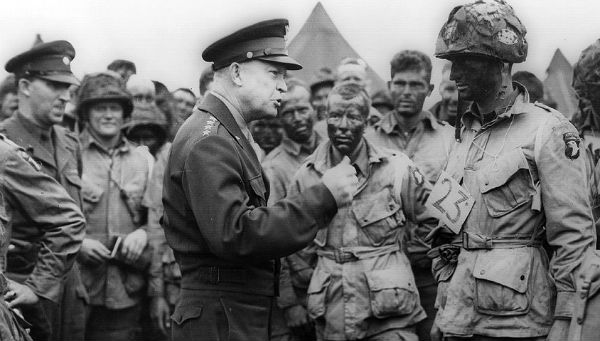
    [drop_caps]I[/drop_caps]t is May 1944 and you just joined the army. D-Day is weeks away and planning is in full throttle. One small mistake could upend months of secret logistics and strategy. To your surprise you are assigned as General Dwight Eisenhower’s personal driver for the initiative. In an odd bureaucratic maneuver, you don’t report to the General, but rather Kay Summersby, a beautiful Irish girl who is his Senior Assistant and takes fencing classes every day from 6:30-7:30pm. You’ve been told it is a tremendous opportunity. You are responsible for chaperoning the leader of the invasion, and making sure his life runs smoothly. A fresh Eisenhower means a fresh commander, which means the Allies have a shot at winning the war.

    (more…)

  • Climate Change and Supply Chains

    Climate Change and Supply Chains

    [drop_caps]L[/drop_caps]i & Fung’s client list reads like a phonebook of discount stores in Omaha, Nebraska. The Hong Kong based enterprise helps Wal-Mart, Sears, Macy’s and Kohl’s bring $7.99 sweatshirts to Americans. [1. When asked about Li & Fung, Cathy Feingold the director of international affairs for the A.F.L.-C.I.O. referred to them as “the sherpa showing companies the fastest route down that slope.” The slope was of course a race to the bottom.] Since 1906 Li & Fung has acted as a middleman between cheap Asian labor and the developed world. The company began by bringing Chinese toys to the shores of America and now handles all aspects of supply chain management. The New York Times called them the, “most important company that most American shoppers have never heard of.” My guess is that they like it that way. Li & Fung revolutionized modern commerce by connecting over 15,000 suppliers in 60 countries and has 8,000 words less in their Wikipedia page than Gangnam Style [2. Li & Fung clocks in at about 1,000 while Gangnam style almost hits 9,000.]

    Li & Fung handles over 2 billion items and doesn’t own a single factory. Their network is the company’s sole value. They can find you a factory to make 10,000 custom socks in a week. They can make sure the crate gets on a boat without hassle. Hell, they can probably get you a toe by 3:00 this afternoon. With nail polish. In 2012 the company utilized their network to generate over $20 billion in revenue. To put that in perspective, if Li & Fung were an African country they’d be nestled right between Mozambique and Namibia in terms of GDP.

    It also has a businesses model that climate change will turn obsolete.

    (more…)

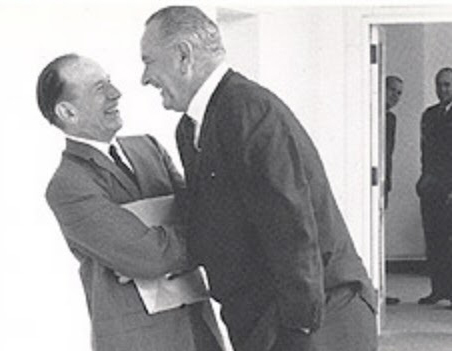
  • President Johnson and Thurgood Marshall: The Art of Persuasion

    President Johnson and Thurgood Marshall: The Art of Persuasion

    The following is the transcribed conversation of President Johnson asking Thurgood Marshall to become the first African-American Solicitor General of the United States.  The Solicitor General is essentially America’s lawyer, representing the Federal Government at the Supreme Court. It’s a remarkable display of persuasion.

    President Johnson: I have a rather big problem that I wanted to talk to you about.

    Marshall: Right.

    President Johnson: I want you to give it some real thought because it’s something that I have thought about for weeks and I think that we can’t think of how it affects us personally. We’ve got to think about the world–

    Marshall: Right.

    President Johnson: –and our country.

    Marshall: Yes, sir.

    President Johnson: And our government. And then ourselves way down at the bottom of the list. I want you to be my Solicitor General.

    According to Marshall he had no idea the question was going to be posed. When his assistant told him the President was on the phone, his response was, “The President of what?”  I love how President Johnson sets the stage and cuts right to the chase.

    President Johnson: Now, you lose a lot. You lose security and you lose the freedom that you like. And you lose the philosophizing that you can do. And I’m familiar with all those things.

    Marshall: The number one [unclear].

    President Johnson: Well, you won’t lose any. And I want you to do it for two or three reasons. One, I want the top lawyer in the United States representing me before the Supreme Court–

    Marshall: [Unclear]–

    President Johnson: –to be a negro.

    Marshall: Oh.

    President Johnson: And be a damn good lawyer that’s done it before. That’s–so, you have those peculiar qualifiations.

    Marshall: [Unclear.]

    President Johnson: Number two, I think it will do a lot for our image, abroad and at home, too, that this is the man that the whole government has to look to to decide whether it prosecutes a case or whether it goes up with a case, or whether it doesn’t, and so on and so forth.

    Look how President Johnson leads with the negative saying, “You lose security and you lose the freedom that you like…” At the time Marshall was a Federal Judge and had a lifetime appointment. Giving that up to become the Solicitor General, who serves at the leisure of the President was a big deal. President Johnson than quickly lays on the praise softening the news.

    President Johnson: Number three, I want you to have the experience and be in the picture. I’m not discussing anything else–

    Marshall: Yeah.

    President Johnson: –and I don’t want to make any other commitments–

    Marshall: Yes, sir.

    President Johnson: –and I don’t want to imply or bribe or mislead you.

    Marshall: Right.

    President Johnson: But I want you to have the training and the experience of being there day after day for the next few weeks anyway.

    Marshall: Right.

    President Johnson: Maybe the next few months if you could do it. Now, I’ve talked to Ramsey Clark, whose father is on the Supreme Court.

    This is where it gets into perfection. “I don’t want to imply or bribe or mislead you,” but after I talk about all the reasons you should take this I’m going to allude to the Supreme Court.

    In about two years as Solicitor General Marshall won 14/19 cases he brought to the court, and in 1967 he found himself on it.

    You can read the whole transcript in the archives.