
In Hit Makers, Derek Thompson tries to explain why some ideas become popular and others fade away. It’s an important question and one facing every content creator in today’s hyper-competitive media landscape. Technology platforms like Spotify, Facebook, and Twitter have transformed media into a winner take’s all market. How does a new band break through on Spotify—when the top one percent of acts capture 80 percent of recorded music revenue? How can a television show break through hundreds of channels and streaming options? How can an unknown writer catch-on? Hit Makers claims to answer these questions. Unfortunately, Thompson fails to offer new insights to this question. Instead, Hit Makers is a book on how cultural hits are created, published in 2017, with arguments from 2010.
Category: Reading
-
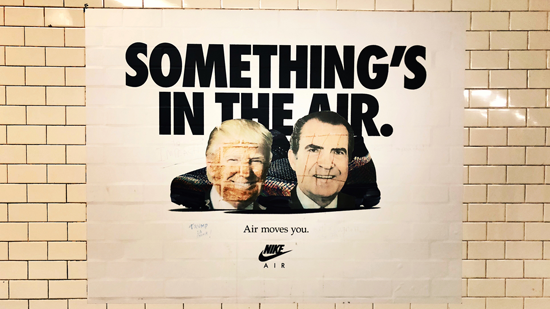
Nixonland: How a book about Richard Nixon helps explains Donald Trump
The central thesis of Nixonland, a sprawling look at the origin, rise, and decline of the Nixon administration, is that there was simmering white resentment underneath the optimism and change of the Kennedy Administration. Hidden behind the civil rights movement was a mass of unhappy middle-class white people. Nixon wasn’t the first politician to exploit white rage, that honor would go to Ronald Reagan. Nixon merely copied it, perfected it, and fractured the nation into Nixonland. Richard Nixon, Ron Perlstein writes, “so brilliantly co-opted the liberals’ populism.” Re-directing well-meaning reforms, “into a white middle-class rage at the sophisticated, the wellborn, the “best circles” — all those who looked down their noses at “you and me”…that sneered imperiously at the simple faiths of ordinary folk, their simple patriotism, their simple pleasures.”
In 1964, Lyndon B. Johnson won 61.05 percent of the popular vote on a platform of expanding FDR’s New Deal to non-white Americans. Its sole goal was to eradicate poverty and racial injustice. He coined it the “Great Society.” When lighting the national Christmas Tree, President Lyndon Johnson described it as “the most hopeful times since Christ was born in Bethlehem.” Eight years later Richard Nixon won 60.67 percent of the vote on a platform of “Law and Order”; an ideological repudiation of the Great Society. Nixonland is fundamentally about this uniquely American transformation. How America went from believing civil rights law leveled the playing field to one that held it caused race riots. How it went from viewing welfare as help for the weakest to help for the laziest. How political dissent became tantamount to treason. Nixon was at the center of it all, weaponizing a white populace’s fears into an “us versus them” political revolution. “Far from becoming a great society,” Nixon wrote in Reader’s Digest leading up to his Presidential election, “ours is becoming a lawless society.” The underlying context was that only Richard Nixon, and people like him, could protect society from the hordes of others.
Sound familiar?
-

Review: Devil’s Bargain by Joshua Greene
Joshua Greene’s Devil’s Bargain is ostensibly about Steve Bannon, arguably mainstream Democrats biggest boogeyman not named Vladimir Putin.
The book, of course, covers his evolution from the Navy to Goldman Sachs, to World of Warcraft, to Hollywood, and to (supposedly) anti-Goldman right-wing crusader. However, the book is really about how three well-financed forces coalesced and resulted in the election of Donald Trump to President of the United States.
-

Review: The Warmth of Other Suns by Isabel Wilkerson
With a scope wide as it is personal, Isabel Wilkerson’s The Warmth of Other Suns paints a historical picture of one of the largest, but least reported events in the 21st century: the mass northern migration of African Americans.
Despite losing the Civil War, an open caste system remained in the South. Blacks were restricted in both their opportunities and possibilities. Most were relegated to sharecropping—in practice a form of pseudo-slavery. Voting was technically legal but practically unheard of. Lynchings were common. At the turn of the 20th century, 90% of African Americans lived in the south. By the end of the 1960s, roughly half called the North home.
-
Book Review: How Not to Network a Nation
In the thirty-some years since it fell, American analysis of the Soviet Union has been reduced to one sentiment: communism failed because capitalism is superior. Professional people—especially ones employed by media companies—spend an awful lot of time and energy attempting to rationalize its downfall through clichéd ideological arguments. They bring up the work of Hayek, stories about full grocery aisles, or simply argue that people are too self-interested for mass collectivism to work.
And yes, I understand and even agree with many of these arguments, but it’s also lazy. It’s like analyzing the most recent Super Bowl and concluding that the New England Patriots won because they wanted it more. In How Not To Network a Nation Benjamin Peters provides an exhaustive look at one of the functional problems that plagued the Soviet experiment: information.
(more…) -
Book Review: The Most Powerful Idea in the World by William Rosen
I read The Most Powerful Idea in the World, William Rosen’s book about the invention of the steam engine, for two reasons, one of which was Bill Gates’ glowing recommendation. In his review, he raved about how Rosen was one of the first people to successfully argue that patent law had a large impact on innovation.
Since I am working on a project that looks at the impact of legal systems on innovation it only seemed natural. But I had a reservation. Not about the time period, I’d read a few books about the industrial revolution this year. It’s the simple fact that most books on innovation suck. They’re filled with bland platitudes and offer generic advice that is obvious to anyone with five years of business experience and a subscription to Harvard Business Review.
-
Book Review: The New Deal by Michael Hiltzik
The New Deal, a seminal era in American history, saw government take an active role in promoting the welfare of the citizens. In The New Deal, journalist Michael Hiltzik, tells the story of the people, policies, and actions that shaped the nation.
-

Ranking the 29 best books I read in 2016
2016 was a bizarre year. Donald Trump won the Presidential election. The Chicago Cubs won the World Series. Uber grew its revenue and still lost $3 billion. It’s been 1,000 days since a major American suburb has poisonous water--and nothing has been done. General Electric re-made itself–again. A 74-year-old socialist almost won a major party’s Presidential nomination. The long-awaited digital revolution is finally happening. Solar power is now cheaper than fossil fuels. Thirty years of social change seemed to hit at once.
Like I said. 2016 was a bizarre year. Thankfully, books can help us make sense of what’s happening and what’s driving the trends. In a recent interview with the New York Times, President Obama remarked that reading allowed him to better digest the constant bombardment of information pointed at the office. It slowed the assault, helped separate the signal from the noise, and gave him perspective. Here are the books I read in 2016 along with a quick recap of the context they provide to the ever changing landscape. If reading recommendations are your thing, here are my recommendations for 2014 and 2015.
-

Classic Read: How Democrats Killed Their Populist Soul
Matt Stoller’s How Democrats Killed Their Populist Soul is the best political analysis I’ve read all year. It offers a solid argument to how economic populism fell out of the national narrative—and accelerated the decline of the American middle class.
It’s hard to believe today, but seventy years ago Bernie Sander’s ideas were fairly common on the left. Stoller traces how they became rare. He examines the forces that moved the Democratic party from one in fierce opposition to monopoly power to one that embraced it. I really do hope Stoller has a larger thesis in mind, because I’d love to read a book on it.
I’d recommend reading the entire piece. However, I wrote up some highlights for the lazy below.
-
Book Review: Rana Foroohar’s Makers and Takers
In 1946, over a decade before he became the architect of the Vietnam War, Robert McNamara was hired to rehaul the Ford Motor Company. It was in desperate need of help. The iconic corporation was hemorrhaging about $9 million a month. McNamara, an accountant by training who rose to prominence by applying statistical methods to warfare planning, immediately transformed the culture.
Decisions were no longer made from the eye of a designer, or the experience of the line-worker. He immediately developed complex financial metrics to measure a product’s viability. Every penny spent in manufacturing, marketing, design, and engineering had to be justified and rationalized through this analysis. It shifted power from engineers to MBAs. Within three years he doubled the company’s profits. In Makers and Takers, Rana Foroohar argues that this was the end of American global automobile leadership. As crazy as it sounds, the question needs to be asked: Did modern finance destroy innovation?