Category: Companies

  • LaCroix was a category leader and then National Beverage changed the sales strategy

    LaCroix was a category leader and then National Beverage changed the sales strategy

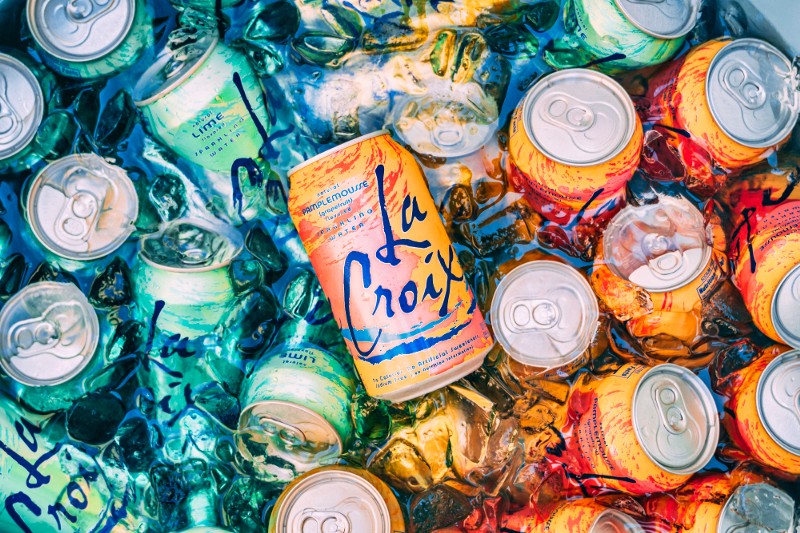
    I’m sure most people reading this have heard of LaCroix, a sparkling water brand owned by National Beverage. It’s an undisputed leader in the sparkling beverage category. Led by smart marketing and forward-looking management, the colorful cans are a bright spot in an otherwise declining aisle. Despite almost a decade of positive results, not everything is sunshine and roses in the land of fizz and refreshment. In the fall of 2019, Businessweek published a cover story on the rise and recent stumbles of the company — most notably around management’s decision not to provide additional sales support to retailers.

    National Beverage’s management believed that LaCroix wasn’t just a brand that added a bit of flavor to carbonated water, but one whose “innocence” and targeted marketing propelled it to the top of the segment. By not acceding to the sales demands, the company decided to play chicken with the most powerful group in the retail industry: retailers.

    Now that some time has passed we can begin to analyze: Did National Beverage’s game of chicken work? Was the LaCroix brand as powerful as they thought? Before we answer that question, it’s best to look at how it went from a third-tier soda company to the sparkling water leader.

    Reinventing LaCroix

    In 1982, Heileman Brewing Company founded LaCroix in La Crosse, WI, as a mass-market alternative to premium European sparkling water brands. About ten years later, it sold the modestly successful brand to National Beverage, where it languished for a few years. This isn’t exactly scientific, but I went to college in La Crosse, and I don’t remember a single person under the age of 65 drinking it. Suddenly, ten years later, LaCroix is one of the most millennial centric food brands in America.

    What happened?

    When customer preferences change

    Within the consumer goods world, sparkling water is categorized as a “sparkling beverage.” Giants like Coca-Cola and Pepsi have long dominated the category with sugary drinks like soda. If you are health conscious, for generations, a walk through the sparkling beverage aisle felt like being surrounded by a bunch of explosives. The explosives had super long fuzes, but each time you pulled a product from the shelf, the inevitable health catastrophe inched closer.

    In the past few years, the risk is now out in the open. Sugary drinks have been linked to everything, from diabetes to poor bone health. Soda, the sales anchor of the category, now faces an existential decline. Almost two-thirds of Americans actively avoid drinking it. “The drop in soda consumption,” Margot Sanger-Katz wrote in the New York Times, “represents the single largest change in the American diet in the last decade.”

    LaCroix is located in the same aisle as soda. Most importantly, with zero calories, it doesn’t have a fuze.

    Businessweek detailed how the transition wasn’t an accident:

    In 2006, Beverage Digest released a report showing that soda sales in the U.S. had declined for the first time in two decades, as consumers grew concerned about obesity and Type 2 diabetes. That year, LaCroix staked out an early position as a health-conscious alternative to soda, becoming a sponsor of the Susan G. Komen Breast Cancer Foundation.

    In hindsight, this was a risky move. Implicit in the branding was pulling demand away from sugary drinks and into sparkling water. There was one problem. National Beverage’s most significant brands were Shasta and Faygo — two sugary drinks. “I would say to him [CEO Nick Caporella], ‘It’s great to be behind it a hundred percent,” a longtime executive told Businessweek, “but we should remember to dance with the one who brung us. This company was built on soft drinks.”

    Caporella made the gutsy decision to cannibalize existing sales.

    In the meantime, a small team of executives quietly began working to revitalize LaCroix. They decided to market it as different from both elegant mineral waters and sugary sodas, aiming squarely at diet soda drinkers. The company expanded LaCroix’s distribution outside its traditional regional markets and into major retailers such as Target and upscale national grocers like Whole Foods that would prominently feature the product. By 2013, National Beverage was touting “double-digit volume gains” for LaCroix.

    Perhaps most impressively, the company did all of this without a massive traditional marketing budget. It didn’t create a single expensive advertisement with a celebrity spokesperson. Instead it gave away coupons on social media to a variety of influencers.

    According to Digiday:

    The brand has specifically turned to Instagram, Alma Pantaloukas, the brand’s former digital strategist, says on her LinkedIn profile. LaCroix looks at the platform to engage with “highly engaged millennials” and “to inspire them to use our products in many different ways and/or stages in life,” she says. It was this focus that turned Instagram into its most engaging platform, growing its fan base from 4,000 to 30,000 within eight months in 2015. (It now has 39,000.)

    One tactic is engaging with people who tag the brand, no matter their follower counts. One marketing pro, Kelly Fox, posted a couple of photos with LaCroix cans for her 2,500-plus followers this month and tagged the brand. The brand then sent her vouchers for cases of LaCroix.

    “I know that I am being genuinely rewarded for being an advocate, and am not going out there posting on behalf of every other brand like some of the large influencers with huge followings,” said Fox. “It’s a smart strategy for the brand to go after the smaller fish instead of the bigger fish.”

    If you think about the six core business processes within a CPG company, LaCroix excelled at four of them.

    • Research and Development: LaCroix targeted flavors at diet soda drinkers. It originally had 6 flavors; it now has 27.
    • Production: National owns 12 production facilities. It could quickly bring new choices to market because it did not have to negotiate with independent bottlers around new products or expansion needs.
    • Transportation: National’s existing transportation network featured delivery to retailer warehouses and directly to stores (DSD). It could expand its product to more stores, because it could get LaCroix to almost any retailer at an affordable cost.
    • Marketing: A targeted social media campaign generated consumer demand in a cost-effective way.

    Put together, the four redirected a niche segment into the mainstream within a category dominated by giants. Against all odds, a once-sleepy regional brand became a category leader in 41/52 metro areas.

    Pepsi and Coca-Cola strike back

    LaCroix’s success did not happen in a vacuum. The CPG world is intensely competitive and filled with smart people. When a new item at the grocery store sees double-digit volume growth, it becomes a fire in the middle of a field. Everything and anything focuses on it.

    Again, Businessweek

    PepsiCo Inc. released Bubly, a sparkling water backed by a marketing arsenal that LaCroix has struggled to match. In 2017, Coca-Cola Co. paid $220 million for Topo Chico, a Mexican mineral water with a cult following. Meanwhile, a legion of startups has rolled out “craft” sparkling water brands that promote artisanal ingredients, antioxidant boosts, and cannabidiol infusions. LaCroix’s sales for the four weeks ended July 14 fell more than 15% from the prior-year period, even as its main competitor, Bubly, saw sales surge 96%, according to Bloomberg Intelligence.

    All of this competition impacted LaCroix. Sure, LaCroix had to respond to new threats to consumers, but it could handle that through its innovative use of social media. The real challenge was with retailers. They want to buy what will sell. For a decade, LaCroix was more or less the only branded sparkling water option. Now there were dozens. Perhaps most troublesome for National Beverage is that retailers don’t care who started the fire in the field, they just want to keep it burning.

    The complicated relationship behind grocery aisles

    Retailers and manufacturers have a complicated relationship. Publicly, both sides will say that they’re partners — working together to make and sell consumers the products they want. In theory, retailers need vibrant manufacturers who create products consumers want to get people in stores. Manufacturers lack a physical store footprint, so they need retailers to sell their products to consumers.

    Initially, the relationship was simple. In the early 1900s small corner stores dominated the industry. Given America’s rudimentary transportation network, it wasn’t practical for manufacturers to deliver to each street corner. Instead, a manufacturer like National Beverage sold to a Broker (who took a percentage of the sale) and delivered the product to a retailer. Over time, retailers got bigger and bigger. Led by A&P, the Walmart of the era, the relationship changed.

    In his book, The Great A&P, Mark Levinson explained what happened next:

    A&P demanded that manufacturers give it advertising allowances in return for promoting their products nationally in whatever way it saw fit. Manufacturers were to sell directly to A&P without using brokers or agents, and A&P would receive the commission normally paid to brokers. If a manufacturer refused to play by those rules, A&P would take its business elsewhere. As the Hartfords [Management] anticipated, allowances became a major source of income. By 1929, allowances paid by manufacturers directly to A&P headquarters accounted for one-quarter of pretax profits.

    In modern times, this activity is called Trade. The advertising allowances that A&P pioneered have grown to everything from bulk discounts and prime shelf placement to end-of-aisle displays. Trade is a vital part of any CPG company’s sales process. The companies are willing to make the investment because a) they don’t have a lot of choice and b) many trade events are almost a sure thing to generate sales.

    That overall cost is huge. Outside of the cost of producing a good, Trade is often the largest line-item on a company’s income statement. A typical CPG firm will spend between fifteen and twenty percent of gross revenue on Trade spend every year — with hyper competitive categories spending upwards of thirty percent. For a company of National Beverage’s size, that’s potentially tens of millions of dollars transferred directly from their pockets to the retailer’s bank account.

    As I said, the relationship between retailers and manufacturers isn’t exactly a partnership. It’s complicated.

    Pepsi and Coke entered the category, armed with hundreds of millions of dollars ear-marked for trade spending. Retailers wanted National Beverage to match the spending. LaCroix management had a choice. They could defend their shelf space with additional spend or withdraw from the arms race and bet on the value of the brand. “In a beverage industry that is dominated by the “cola giants”,” the company wrote in its most recent annual report, “We pride ourselves on being smaller, faster and stronger.”

    In this case, smaller, faster and stronger meant no increase in Trade spend. There would not be an arms race.

    Businessweek explained what happened at Whole Foods:

    The company wanted LaCroix to be more aggressive with matching discounts and promotions being offered by the new brands. When the company didn’t yield, Whole Foods eventually decided to reduce the number of prominent in-store LaCroix displays and replace them with its competitors’, according to people familiar with the decision. A Whole Foods spokesman declined to comment.

    Category goes up, LaCroix goes down
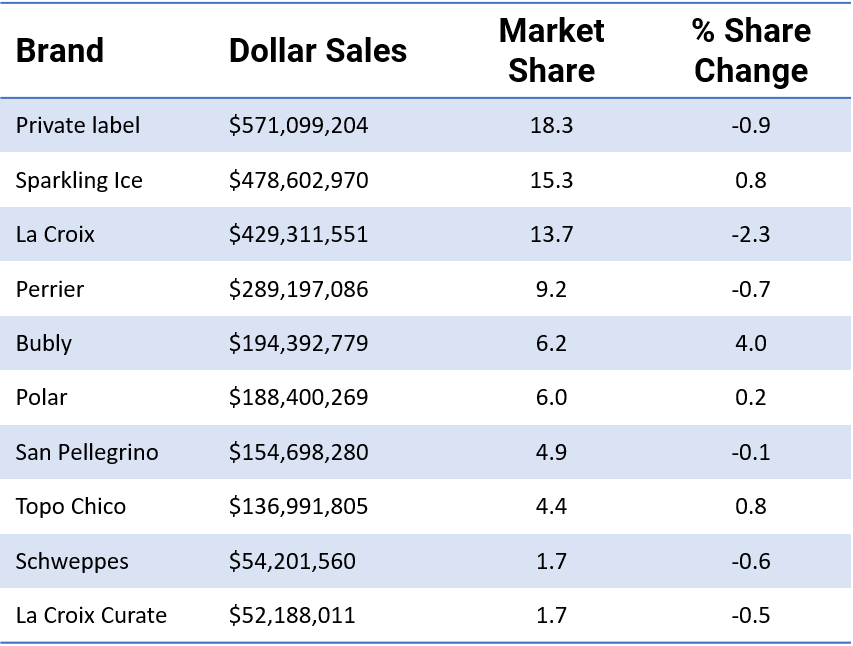
    National Beverage does not break out individual brands on their income statement, but from a high level, the numbers don’t look good. According to Businessweek, the decision to not enter an arms race happened in 2018. Most trade agreements are made annually. Any impact wouldn’t be seen until 2019.

    The numbers aren’t pretty.

    In 2019 the company’s net sales growth submarined from double digits to under four. This happened while retail data provider IRI estimated that the sparkling water segment saw an increase of about 13 percent. According to IRI’s calculations, Bubly, backed by Pepsi and millions of dollars of Trade spend, grew 216 percent.

    I think it’s clear that the LaCroix brand wasn’t as powerful as executives thought.

    CPG retail is an unforgiving place for manufacturers. The LaCroix experience shows that generating consumer demand isn’t enough — even if it’s individualized and targeted. Redefining a category isn’t enough — if companies don’t accede to future trade demands.

    The real battle is over sales and shelf space — one that small brands are increasingly in a weak position to win.

    Photo by Matt Botsford on Unsplash
  • Proctor and Gamble 2021 Q1 Earnings Call – E-commerce and the battle for shaving

    Proctor and Gamble 2021 Q1 Earnings Call – E-commerce and the battle for shaving

    On October 20, 2020, Proctor Gamble held its’ 2021 Q1 earnings call with financial analysts. Overall, like many CPG companies, P&G had a fantastic quarter. Organic sales grew 9% across the company, with 9 of 10 categories experiencing top-line growth—led by Homecare, which grew 30%. The progress was seemingly sustainable, with the Cincinnati based manufacturer adding a point of mix and price.

    Jon Moeller, Vice Chairman, COO and CFO of Proctor and Gamble, summarized the quarter:

    A very strong start to the fiscal year, strong volume, sales and market share trends, strong operating earnings, margins advancing, strong core earnings-per-share growth. We’ve built strong momentum heading into the COVID crisis and have been able to maintain this through the most recent quarter, supporting the guidance increase for all key financial metrics, organic sales, core earnings per share, cash productivity and cash return.

    What else did we learn?

    1. Proctor and Gamble believes long-standing consumer preferences are changing.

    COVID changed everything within the CPG world. Companies that spent decades building brands suddenly saw themselves in prime position—as customers flocked to trusted partners. To keep up with the influx of demand, management reduced SKU counts. E-Commerce exploded—both changing the relationship between manufacturers and retailers. According to Jon Moeller, that change may be permanent.

    We do expect that there is some stickiness to new habits that are being formed and new awareness that’s been raised. It’s hard for us to see in our interactions with consumers that we’re going to snap back and revert to the same attitudes and the same behaviors that we had collectively pre-COVID. Even things like the amount of inventory — pantry inventory I keep, and in some way, this is analogous that some of us remember our grandparents. For example, having survived The Great Depression, and they continued to hold on to more brewed and canned items that I could never understand. But it was because of what they’ve been through.

    2. E-commerce is growing, but retail is still king at Proctor and Gamble

    There was an interesting question by an Evercore ISI analyst. Essentially, P&G has 22 billion-dollar brands who are leaders in traditional brick and mortar retail, but that hasn’t translated to across the board e-commerce success. Crest dominates online, but the company is struggling, even losing, with diapers and bath tissue. How does P&G think about that the market?

    Moeller’s answer pointed to the bigger picture.

    And we don’t see a lot of — there is some, but we don’t see a ton of differentiation between our ability to succeed in an e-commerce format and a offline format, when we execute our strategies and when our products in categories where performance drives brand choice are truly superior. So that’s our focus. We look carefully at overall share progress online versus offline and margin progress online versus offline. In an aggregate, which is always dangerous of course operationally, we move to lower levels of aggregation, we’re indifferent between online and offline shopping, which is exactly where we want to be. I mentioned we grew e-commerce sales 50% in the quarter that we just completed, e-commerce sales are now probably 11% to 12% of our total. So they are important and we’re just as focused on being successful in that channel as we are the others.

    Essentially, e-commerce is important, but it’s just 12 percent of P&G’s total volume. Proctor and Gamble wants to be wherever household products are sold. I’m very curious to see if this statement “When we execute our strategies and when our products in categories where performance drives brand choice are truly superior. So that’s our focus.” holds true. I’m not convinced that brand power is as vital in a land of online monopolies as it is in traditional retail.

    3. P&G is keeping an eye on DTC, but it’s a balancing act

    Direct-to-consumer (DTC) is a huge push within the fast-moving consumer product’s world. One of the issues is that it is really hard to be profitable within the space. P&G should know. Earlier this year Proctor & Gamble purchased female-centric shaving company, Billie. Much of the coverage was about the exciting DTC possibilities.

    I disagreed.

    I wrote after the official announcement:

    You’ll notice that there isn’t much here about Billie’s direct-to-consumer capabilities, a major talking point of early coverage and the whole reason Unilever acquired Dollar Shave Club. Instead, Moeller describes the benefits of plugging Billie into P&G’s established manufacturing and sales organization. In fact, the only reference to online distribution is about P&G’s own established abilities (The company’s Venus brand has a D2C service.) Apart from individualized marketing, he talks about it as he would any other brand acquisition… With P&G to buy Billie, the plan isn’t to build an online direct-to-consumer giant, it’s to add a young digital native brand to its traditional brick-and-mortar line-up.

    In my view, Moeller confirmed this thinking in his comments of DTC.

    Within that, DTC clearly can play a role. As you mentioned, in some of our businesses, it’s already a significant part of the operating model. It’s – it allows us to get closer to consumers to understand, to have an even better understanding of their needs and their habits, including their purchase habits, and that all can be very complementary and important in the broader context. So, you will see us continue to increase our DTC presence, but again, not at the preference of – or the de-prioritization of any other channel of trade.

    Notice how there wasn’t anything about it being a growth driver, but rather, ancillary benefits.

    4. P&G is preparing for a coming battle for razors

    Gillette has long-been a cash cow for P&G. An influx of hip, and low-cost competitors have entered the market. It saw its market share drop from 70% to around 50% in just a few years. Earlier this year, Unilever announced that Dollar Shave Club, perhaps the biggest challenger, was pivoting to an omnichannel brand—with Walmart as its first major retail distribution. P&G didn’t address the competition specifically, but it outlined how it would combat the move to brick-and-mortar.

    1. Product Innovation: SkinGuard line of shaving aids for men with sensitive skin.
    2. Moving into the premium space with King C. Gillette.
    3. Expanding into dry shave.

    Image via Flickr

  • How King Arthur turned flour from a commodity CPG to a branded CPG

    How King Arthur turned flour from a commodity CPG to a branded CPG

    Consumer packed goods is a tough business. Almost every single consumer product category features entrenched players who have brands backed by literally hundreds of millions of dollars. Not only do companies need to create products that consumers want, but they must fend off competitors who are using their hundred-million-dollar war chests to entice customers (retailers) to give preference to their product through discounts and other sales incentives.

    No where is this harder then with commodities—like flour. Realistically, for the average home baker, there isn’t much difference between flours. Today, the retail flour industry is dominated by General Mills, whose Gold Medal brand contributes to the conglomerate’s $17 billion in revenue every year. One thing about Gold Medal is that its attributes are a perfect distillation for the overall consumer goods industry: It’s a reasonable quality product that General Mills can produce quickly across the country.

    As flour is exposed to oxygen it naturally bleaches—making it easier to bake. Gold Medal, and most other store-brands, are artificially bleached. A bleaching agent like chlorine gas is used to speed the whole process up. This allows millers to turn production over in a fraction of the time—increasing production efficiency and profit.

    Writing in the New York Times, the great Tim Wu explains:

    Milling flour, at the risk of stating the obvious, is not a new business. The basic technologies of milling were invented sometime in the third century B.C. For the early centuries of American history, local mills, powered by water, were economic anchors for small towns across the American colonies and, later, the nation. Their physical legacy is the hundreds of old stone gristmills scattered around the country, some converted to other uses, others quietly decaying.

    The abandoned mills are testament to the fact that during the 20th century, the business of flour was almost entirely overtaken by large, centralized operations. For many decades now, flour has been ruled by the central dogma of American business strategy: maximization of size and scale, ideally to the point of monopoly. Most of America’s large national corporations are built on this model.

    The end result is a commodity product across American homes. Something weird happened during the coronavirus era. People flocked to branded flour. The biggest beneficiary was King Arthur.

    King Arthur: A Premium Flour

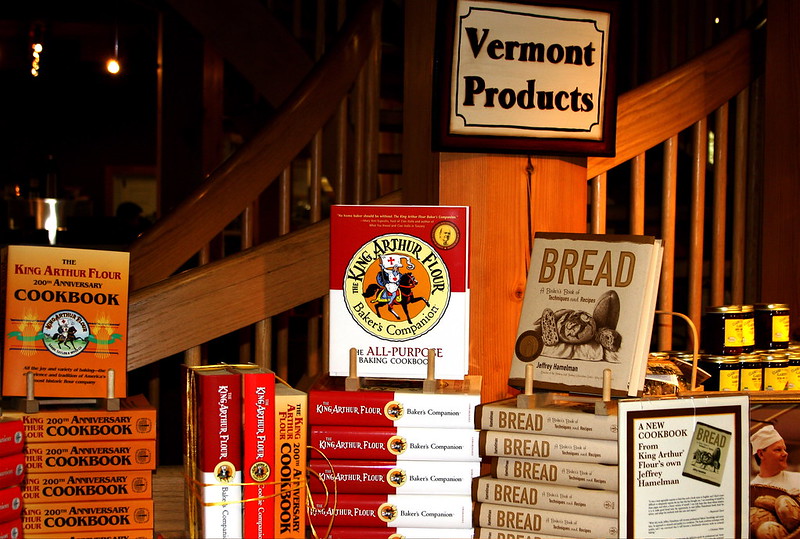
    King Arthur is Vermont based employee-owned flour company. In 1984 it logged about $4 million in sales; in 2019 it shipped $150 million worth of flour to retailers. On average King Arthur is priced above Gold Medal.

    Bloomberg recently profiled the company. Here’s what it had to say about the company’s strategy:

    At the heart of the company’s approach is wheat sourcing. It pays extra for wheat that’s especially high in protein—the critical element for giving baked goods a nice, proud rise. The 45 mills that make King Arthur flour, including Farmer Direct, meticulously blend each variety to get the protein ratio consistent within two-tenths of a percent. King Arthur all-purpose flour clocks in at a sturdy 11.7%, a figure that’s printed right on the front of the bag. The resulting breads are light and airy; the cookies don’t spread too much on the tray…The flour is never bleached, lending it a creamy, natural appearance that sets it apart from its bright-white competitors.

    By comparison, Gold Medal is bleached flour and has a protein ratio is 10.5%. That means King Arthur sells a premium product at a premium price.

    But how does it differentiate itself? After all, very few people probably know that more protein leads to better baking.

    How King Arthur turned a commodity into a branded product

    Early on, King Arthur management viewed it as much more than a flour company. It wasn’t selling flour, it was selling the joy and love of baking.

    Bloomberg continues (emphasis mine):

    As the business’s fortunes have grown, the Sands family’s commitment to baking education has continued to flourish. King Arthur has published three cookbooks, and it offers more than 1,000 recipes on its website—gateways to a thriving e-commerce operation where you can pick up whole-wheat pastry flour, Indonesian cinnamon, or a baguette pan. For 20 years the company has also run a hotline staffed by experienced bakers, who field thousands of calls each month from customers fretting about proofing temperatures or recipe substitutions. An equally knowledgeable team tackles questions and comments that come in through social media.

    I think the bolded part bears repeating. For two decades the company has ran a baking hotline where people can call and ask questions about baking! Not only did it sell a premium product, but it built a support infrastructure to support a community.

    From commodity to branded – a recipe.

    Success in consumer products is about execution. With that in mind, I think the following framework can help in understanding what to execute.

    1. Where is the commodified gap?

    As categories grow and scale, gaps inevitably develop across brands. With razors it became price, with Gillette and opening itself up to cheap competitors like Dollar Shave Club. With flour it was quality—allowing a premium brand like King Arthur emerge.

    1. What larger movement does your commodity address?

    A premium flour allows better baking. Patagonia offers sustainably designed outdoor gear.

    1. How can you support the larger movement?

    Premium products need premium support. King Arthur built out a robust website, an in-person hotline, and leveraged social media to offer more support. King Arthur flour isn’t just a product you buy from the grocery store. It’s a network that amateur bakers can leverage.

    Image via Flickr

  • The business impact of COVID-19 on 4 major CPG companies

    The business impact of COVID-19 on 4 major CPG companies

    COVID-19 has had a tremendous business impact across the CPG landscape. Seemingly overnight the competitive landscape shifted. Faced with concerns about quality and safety, consumers returned to long-established brands. Some brands even exploded after restaurant demand evaporated overnight. This left major companies with an interesting operational decision. For years, CPG companies expanded and structured themselves to deliver unlimited choice for consumers—trying desperately to capture the ever-changing preferences. In the midst of unprecedented demand and uncertainty, retail partners are overwhelmed, preferring to stock safe SKUs—not experiment.

    I’ve written before about how small CPG firms that focused on foodservice were forced to transition to retail and the uncertain results that follow.

    Internet or direct-to-consumers is always trotted out as the silver bullet for struggling companies in the coronavirus era. It’s basically the business version of telling unemployed people to ‘learn to code.’ It’s an unserious idea for a structural issue.

    Food service involves selling and delivering one fifty-pound bag of coffee to one customer, retail involves selling fifty one pound bags to fifty customers. They have entirely different cost structures and operations.

    But what about the largest CPG companies? They have the resources to pivot on a dime. I combed the largest CPG firm’s public statements to understand the business impact of COVID-19.

    CompanyApproachDescription
    NestléLarger Pack Sizes“The other one, while still early days, that we saw, is an interest in larger pack sizes. That’s also not surprising when people spend more time at home, rather than consuming lots of small packs, they rather buy fewer large packs. As I said, our strategic business units are now working overtime to really understand, not only in light of the health care crisis, but also the economic pressure, what that means for each of our categories. To me,that is super interesting work because clearly this is not going to be a quick recovery. This is going to be several-quarter, if not several-year kind of process, where it is safe to expect some changed category dynamics. We want to recognize those early and adapt to those early and be a leader when it comes to those trends.”
    Proctor and GambleSKU Rationalization“Increased demand has focused retailers on the core SKUs that drives the business. There is potential for this to result in a cutting of the long tail of inefficient SKUs and brands in our categories. We’re discovering daily lower cost ways of working with fewer resources. Today’s necessity birthing the productivity intentions of tomorrow. New digital tools are being brought to the forefront, providing another productivity rocket booster on the factory floor and in the office environment.”
    PepsiSKU Rationalization, Delivery Adjustments“We’ve made some choices in our supply chain to — we’ve reduced some of the tail of our portfolio. We’ve discussed that with our partners, retail partners. And we both agreed that it’s probably the best thing to do, to eliminate the less — let’s say, the smaller SKUs in the portfolio to maximize the best-selling SKUs and be in stock. As I said earlier, our DSD system, I think, is a fundamental advantage in the way we’re able to service our customers. And I think they appreciate that, that we’ve made the effort, adjusting delivery schedules and increasing delivery schedules to make sure that we keep our brands in stock and we help, obviously, our partners.”
    UnileverSKU Rationalization“The first test of this theory came early in the pandemic when demand for Unilever’s more essential products, such as cleaning supplies, shot up 600% in some cases. To deliver, the company converted production lines and reduced the number of total SKUs it produced by 65%.”

    Photo by Ross Sneddon on Unsplash

  • Brand Licensing – Incremental or transformational growth?

    Brand Licensing – Incremental or transformational growth?

    Over at FoodDive, Megan Poinski published an article about how Coronavirus ignited Kraft-Heinz’s interest in brand licensing.

    “Many consumers have returned to some of those pantry staples that we’ve had in our portfolio during this pandemic, and it’s reminding them of their love for a lot of the Kraft Heinz brands,” Christopher Urban, Kraft Heinz’s vice president of global strategic capabilities, said at a virtual licensing conference on Monday. “And we see this in our data. We’ve seen significant increases in household penetration across many of our brands over the past few months. In some cases on some of the brands, we are seeing record high numbers. And I think this increase in household penetration just makes the brands even more relevant to the consumer.”

    Urban spoke at the Licensing Week Virtual conference about the opportunities the food company has available and is pursuing, many through the agreement signed last year with Brand Central. Kraft Heinz, which owns scores of well-known and globally beloved brands, entered the Brand Central agreement to transform its megabrands Heinz, Kool-Aid, Planters, Jet-Puffed, Oscar Meyer, Philadelphia, Kraft Macaroni and Cheese and Velveeta into lifestyle brands. 

    So here’s Kraft’s logic as I see it:

    1. A global pandemic led to record sales for almost every CPG company
    2. Record sales reintroduced old brands to new consumers
    3. They are going to extend the momentum through brand licensing deals

    Consider me skeptical. Given the realities of Kraft-Heinz’s business, this seems to be at best an incremental revenue driver.

    How Brand Licensing Works

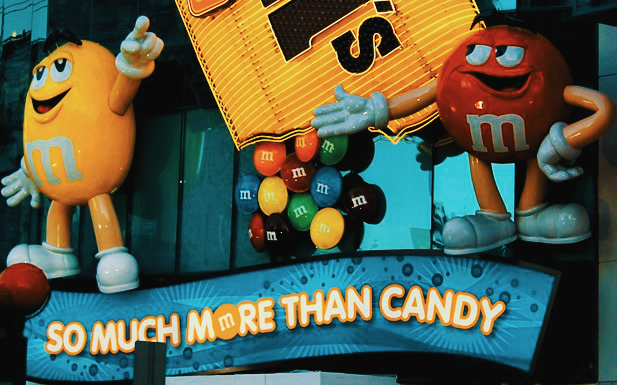
    By 1995 M&M’s had lost their mojo. After a generation in the business, sales of the hard-coated candy were flat. The brand was at risk of becoming a commodity. “They’d become just candy.” Susan Credle, a creative director at BBDO, told Business Insider, “An aisle store candy brand versus an icon brand.”

    With help from marketing firm BBDO, Mars Inc. transformed the brand into one of the most beloved in America.

    From Business Insider:

    BBDO’s idea: Take the colors of the candies in the bag and develop each into a character to make a comedic ensemble.

    Credle describes M&M’s as the “court jester” brand — when the king is getting slaughtered, the jester comes in to lift them up. 

    Along came Red (the sarcastic one,) Yellow (the simple one,) Blue (the cool one,) and Green (the sexy one) — and later, Brown and Orange, too.

    The characters debuted at the Super Bowl and were an instant sensation. Today, over twenty years later, M&M’s are still the best-selling chocolate brand in America. Perhaps more importantly, the company leveraged the characters to successfully evolve into a brand licensing platform. People didn’t just want to buy chocolate candies, they wanted to associate with M&M’s themselves. They wanted t-shirts, notebooks, stickers. 

    Retail Merchandiser explains:

    Long-term licensing partners include apparel, housewares and plush provider ERE; novelty and candy dispenser maker CandyRific; electronic accessory company Maxell; calendar maker Trends International LLC; travel accessory provider EB Brands and watchmaker MZ Berger. MRG in the past year added apparel maker Mad Engine Inc. and cycling jersey manufacturer Brainstorm Gear to its list of licensees.

    This was transformational growth. Apparel, housewares, electronic products–all by a candy company. Kraft-Heinz is betting that it can capture similar enthusiasm with Oscar Meyer, Kool-Aid or any of their legacy brands.

    Physical Stores propelled M&M’s brand licensing success

    One of the reasons I am skeptical of Kraft-Heinz is that under 3G’s management, the company has effectively no track record of building brands. In fact, they have a strong track record of using zero-based-budgeting to drive efficiencies—which can often destroy a legacy brand’s value. M&M’s transition from a branded candy to a lifestyle brand wasn’t cheap.

    In fact, it took one big, bold, and expensive bet—a physical retail store to truly cement the change. A branded retail store is a place where a brand’s image turns into a real experience. Scott Galloway calls it a “temple to the brand.”

    Patrick McIntyre, Director of Global Retail at Mars, described the strategy at Insider Trends:

    Where brands come to life is advertising either in a TV commercial, in a print ad, or in some interaction that a consumer has with the brand. That’s a snapshot in time. It’s one moment and then it’s over, and then you’re on to the next thing. I think many brands, and us in particular, ealized a long time ago is the impact of being able to amplify those brand attributes in an experience where someone can actually be immersed fully within that brand. That’s what we started 20 years ago with our first M&M’s World Store in Las Vegas – a very famous tourist location. We created a four-floor 28,000-square foot store that was completely and totally dedicated to M&M’s.

    Today, Mars Inc. has seven full M&M branded retail stores. The London location alone drives 5.3 million visitors a year. The company has an additional store planned at perhaps the most exceptional branded merchandise company in the world—Disney World.

    Kraft-Heinz’s approach could drive some incremental revenue

    Given that Kraft-Heinz lacks the characters of M&M and it a full-service retail store seems impractical—especially given COVID-19 realities—I think the safest bet is that the brand licensing initiative is used as a supplement to its dwindling research and development arm (Which I’ve covered in detail here). 

    Image via Flickr.

  • Unilever, an Agile Supply Chain, and the decline of Scenario Planning

    Unilever, an Agile Supply Chain, and the decline of Scenario Planning

    Last month Unilever, the CPG giant, released its Q1 sales results. Unlike P&G, which saw an increase of about five percent, Unilever was relatively stagnant.

    According to Barrons:

    Sales of the company’s hygiene and cleaning brands, including Cif surface cleaners and Domestos bleach surged by double digits as consumers stocked up to clean their homes to fend off coronavirus. In-home food product sales also rose as shoppers loaded their trolleys.

    But ice cream sales and the company’s food service business, which sells ingredients to chefs and restaurants in 180 countries, were hit hard by the pandemic. The company, which also owns the Magnum brand, said it missed out on the start of the ice cream season in Europe, with outlets closed and distributors reluctant to buy stock with an “uncertain holiday and tourism season” ahead.

    All of this is understandable. As the table below shows, 79% of Unilever’s revenue comes from two categories: Beauty & Personal Care and Foods & Refreshment. Under COVID-19 quarantine people are spending less time doing their hair and make-up. They’re also eating out less. Packaged foods are flying off shelves, but unfortunately for Unilever, the bulk of its Foods & Refreshment margin comes from Ice Cream and Food Service—two categories crushed by social distancing.

    Its last category, Home Care, which includes cleaning solutions, is doing fairly well—but it’s also it’s smallest and least profitable. In 2019, it accounted for about 21% of Unilever’s overall business—but just 16% of operating profit. Meanwhile, Beauty and Personal Care accounted for 42% of sales and 52% of operating profit.

    CategoryRevenue% of Revenue% of Operating Profit
    Beauty & Personal Care21.9 billion Euros42% 52%
    Foods & Refreshment19.3 billion Euros37%32%
    Homecare10.8 billion Euros21%16%

    Unilever accelerates an agile supply chain to meet COVID-19 demands

    In my opinion, the most interesting tidbit from the earnings call had nothing to do with coronavirus. It had to do with an agile supply chain. When asked about how the pandemic changed the company’s operations, CEO Alan Jope responded:

    Earlier in the pandemic we changed our monthly operational forecasting cycle to a weekly basis so we can reflect the rapid changes in consumer demand. And we have been using people data centres to pick up the changing consumer sentiment early.

    Forecasting is a huge component on any CPG company’s supply chain. A company needs to not only know how much it plans to sell, but how much it needs to produce and accrue. A large CPG company will produce multiple forecasts, here’s just a small sample:

    ForecastDescription
    AccrualEvery CPG manufacturer pays retailers trade dollars—essentially a percentage of sales to ensure prime locations and promotional activity. Companies need to forecast this to ensure the end of month financials are correct.
    DemandA combination of Production, Sales and Supply Forecasts.
    ProductionHow much the company will need to manufacture to meet consumer demand.
    SalesHow much product retailers are going to buy.
    SupplyHow much raw material they’ll need to buy to make production goals.

    Most CPG products have relatively predictable demand. Forecasting is centralized at a corporate level and done at a monthly basis. Demand Planners and Forecasters will run through a handful of different business scenarios and develop a forecast. Given the mass uncertainty caused by covid-19, Unilever is increasing forecasting frequency. This gives them more information and enables quicker decisions—reducing stock-outs. This is interesting, but not particularly unique. Most CPG companies are doing so.

    What is interesting is something Alan Jope told Bloomberg Businessweek this month.

    We’re actually moving away from scenario planning and trying to focus on building agility and responsiveness into the company. And I don’t know that we should all be spending too much time locking in particular views or scenarios for the future, but rather unleashing the trapped capacity that most big organizations have by letting go and letting people close to the markets, close to the front line, exercise their judgment and their decision-making. We’ve discovered a new responsiveness in Unilever that I wish we had unlocked years ago, but it’s taken this crisis to do that.

    This is almost the definition of an agile, resilient supply chain. What does this mean in practice?

    Unilever is moving away from mass centralized forecasting and into a decentralized model—putting decision making power in the hands of the front line. Centralized planners won’t spend their time modeling various scenarios—the front-line worker will drive opportunities. It’s potentially a revolutionary change that requires flawless execution of technology and business process.

    Photo by Sean Biehle at Flickr

  • General Mills: From foodservice to retail, the impact of coronavirus

    General Mills: From foodservice to retail, the impact of coronavirus

    In the age of coronavirus, American consumer product companies, like General Mills, are working overtime to ensure that people stay fed in an era of self-containment. It has been almost two weeks since President Trump declared a national emergency, and numerous states followed with “safer-at-home” orders. In a matter of days, Americans went from eating out and grocery shopping a few times a week, to all at once bulk purchases.

    The coronavirus transition has massive impacts from an operational point of view. Overnight, restaurant and coffee shop sales went to zero and empty shelves became the norm in grocery stores. However, large CPG companies like General Mills are well-positioned to handle it. To understand why, you need to understand that General Mills is three separate business—spread across five segments–wrapped under one corporate entity. 

    How General Mills is organized

    Since its founding in 1856, General Mills has worn a wide variety of hats. In the 1960s, it manufactured toys. In the 1980s, it founded Olive Garden. Today it focuses primarily on food manufacturing through five separate segments.

    SegmentDescription
    North American RetailPackaged foods that you purchase at grocery stores. General Mills creates products, sells them to retailers, who then sell to consumers. This is the General Mills that you’re most likely familiar with. 
    Convenience Stores & Foodservice Packaged foods that institutions in North America “assemble” and sell to consumers. For example, General Mills sells cake mix to an operator (hospital), who then bakes the cake and serves it to patients. Other operators could include schools, restaurants, and work cafeterias.
    Europe and AustraliaA combined version of the first two segments, with a separate retail arm to sell ice-cream directly to consumers. 
    Asia and Latin AmericaSimilar to Europe and Australia
    PetLike North American retail–except General Mills creates food for pets

    If you look closely at each segment, you’ll see three different businesses—each with separate corresponding processes:

    • Manufacturing finished food goods.
    • Manufacturing food goods that an operator finishes.
    • Retailing finished food goods.

    How coronavirus impacts a large food company like General Mills

    The management of General Mills talked about the impact of coronavirus on the firm’s Q3 investor call.

    From Motley Fool:

    But, look, as we look at March so far, we haven’t seen a big fall-off in our Convenience & Foodservice business through today. But clearly, the situation continues to evolve, and you like us saw stores closing, and that’s a big piece of our business. We also see the restaurant traffic is down and what we’re seeing is those two things, there is some offset by what we see in Convenience Stores where the traffic is strong. And so, unfortunately, certainly with healthcare. And so, we would expect in the fourth quarter that our C&F business would be down for all of those factors. But look, the situation continues to evolve and ways that you would probably anticipate.

    Essentially, since almost all restaurants and group food facilities have closed to help slow the spread of COVID-19, General Mills expects foodservice to drop tremendously. This situation could be devastating to a firm that concentrates primarily on foodservice, like Sysco or US Foods. But remember, General Mills is diversified across three separate businesses: finished food goods, operator finished goods, and retail. Demand for goods that an operator finishes and retail have cratered, but the volume may transfer directly to finished food goods. That segment, North American retail, generates almost 60% of the company’s total sales.

    In the last ten years, food manufacturers like General Mills have spent hundreds of millions of dollars, reworking their retail offerings to fit changing consumer tastes. New flavors and fresh options flooded grocery shelves. Often, the investment falls flat. It’s hard, even for a large firm, to break through. Consumers have so many options—from restaurants to meal kits. Now, most of that competition is gone, and the volume is pushed back into traditional grocery. In China, who has been fighting the coronavirus for months, General Mills saw its direct-to-consumer retail arm crater, and frozen dumplings rise by double digits. 

    Jon Nudi, the President of North America, explained the potential impact within America:

    We’ve worked hard over the last few years to renovate the majority of our product lines. If you think about refrigerated baked goods, we’ve touched the bulk of that business which is big, important and profitable for us. Cereal has been renovated as well. So we do believe it’s an opportunity, perhaps as consumers come back and try our products again after several years to see the products and the improvements that we’ve made and ultimately, hopefully, drive penetration for the long-term.

    I can’t imagine that ten years ago, when General Mills decided to revamp their product lines, it imagined that a global pandemic could help it re-solidify its hold in grocery stores.

    But here we are. It’s 2020.

    Crazier things have happened.

    Photo by chuttersnap on Unsplash

  • The Campbell Soup Company — Processed food growth in a fresh world

    The Campbell Soup Company — Processed food growth in a fresh world

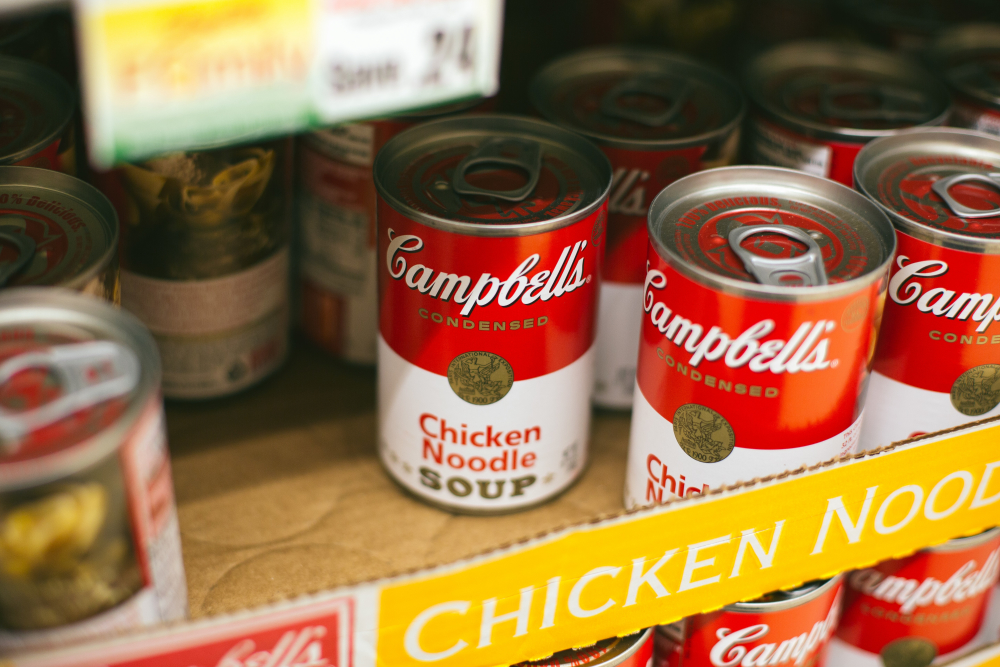
    Last week the Campbell Soup Company announced that its recent investment in soup marketing paid off. This news is somewhat surprising. Nearly all research shows that consumers want fresh food. According to IRI, in 2017, fresh sales accounted for approximately 30.5 percent of all food sales, with produce, bakery, and deli meats accounting for most of the growth. This created a situation where companies like Campbells scrambled to pivot towards the perimeter of the grocery store — where fresh produce reigns supreme.

    From the earnings transcript.

    Not only are we attracting new households, we are attracting younger households which bodes well for the future. In particular, on tomato soup, a good percentage of the gains came from millennial households. Frankly, this is a trend that many believed was not possible. Of course, there were puts and takes across the portfolio and not everything worked perfectly. So let’s break it down.

    Starting with condensed, you can see our enthusiasm for our return on investment, especially with our Icon SKUs, tomato, chicken noodle, cream of mushroom and cream of chicken, where we continued the turnaround. Consumers responded favorably to our messaging and quality improvements.

    What was Campbell’s messaging? Glad you asked. 

    Later, in the transcript.

    If you see how the ads are constructed, we’re actually embracing the can and really connecting it to the quality of the food inside, whether that’s no added preservatives on chicken noodle or whether that’s 6 tomatoes or romancing it in the occasion of the — of grilled cheese sandwich and tomato soup, which we haven’t advertised in a long time, and I think those are all very,very strong.

    Consumers seem to have agreed. According to analyst reports, Campbell’s condensed soup is up about 3%, while the overall category is down 3.5%. That means that Campbell’s growth is a direct result of consumers switching from other brands and private labels.

    The Campbell Soup Company’s fresh food problem remains unsolved.

    In 2019, after seven years, the Campbell Soup Company sold off its Campbell’s Fresh lines — marking an end to the packaged goods company’s foray into fresh food. The unit was never able to stay consistently profitable — despite accounting for over $2 billion in sales. Campbell’s has a supply chain built for packaged food. It could not control for the unforeseen cost associated with selling fresh produce to consumers.

    The increase in soup sales is good news for a company facing an uncertain future. Despite the positive short-term results, the problem remains: almost all consumers say they want fresher food, and Campbell doesn’t offer it. The recent growth is artificial, a result of increased marketing and promotional spending. It won’t be sustainable unless the company increased efficiency — through things like revenue growth management. But at least the company is investing in its brands, unlike someone we know.

    Photo by Calle Macarone on Unsplash

  • Kraft Heinz Is Dying a Death by a Thousand Cost Cuts

    Kraft Heinz Is Dying a Death by a Thousand Cost Cuts

    How did things go so wrong for Kraft Heinz, one of the nation’s largest, most recognizable food companies that’s backed by one of the nation’s most beloved investors? In February, Kraft Heinz announced a 2.7% decline in net sales for 2019. This comes just one year after the company wrote down $15.4 billion because legacy brands like Oscar Mayer and Kraft failed to keep up with changing consumer tastes. Its long-term debt was downgraded to junk bond status after management refused to cut its dividend. Oh, and it also was investigated by the Securities and Exchange Commission for misrepresenting financial results.

    During a scheduled conference call reviewing the past year, CEO Miguel Patricio told investors that “2019 was a very difficult year for Kraft Heinz.” The situation is a far cry from just four years ago when the company headlined its annual report “Kraft Heinz Reports Solid Financial Performance with Integration on Track.”

    So what happened? To understand Kraft Heinz’s fall, you need to understand how the company came to be and how its strategy and approach to budgeting differs from the traditional model of a consumer packaged goods (CPG) company.

    Private equity comes to town

    This all goes back to when 3G Capital, a Brazilian private equity firm, entered the picture in 2013. The firm had earned itself a reputation for generating profits. Like most PE firms, its model was based on cash flow and cost cutting. The general strategy looked like this:

    1. Identify an established brand that 3G management believed it could manage more efficiently.
    2. Acquire it with other people’s money.
    3. Maximize its efficiency through cost cutting.
    4. Use the resulting profitability to finance additional deals.

    The firm had used the formula to turn Burger King and Budweiser into cash machines; it sold 1,200 Burger King locations to outside investors and reduced the head count by almost 36,000. In three years, net income rose 34%. “These things are seemingly working at Burger King,an analyst told Businessweek in 2014, “and causing questions to be asked about the strategy of others in fast food.”

    With financing from Warren Buffett, arguably America’s most respected investor, 3G gained control of H.J. Heinz for around $23 billion in 2013. Two years later, the group acquired Kraft for $49 billion. The result was the fourth-largest food company in America with a roster of stable brands, including Oscar Mayer, Jell-O, Maxwell House, and Planters. “This is my kind of transaction,” Buffett said after the deal went through, “uniting two world-class organizations and delivering shareholder value.”

    Financial Times describes what happened next:

    Since 2013, more than 10,000 people — one-fifth of the workforce — have been laid off from Kraft and Heinz, with seven plants shut, highlighting the human cost and upheaval involved in producing the highest profit margins in the food industry. The founders of 3G have transformed the beer, fast food, and food manufacturing industries with bold acquisitions, which are quickly followed by a brutal but disciplined attack on costs, a surge in profitability, and high returns to shareholders.

    The “brutal but disciplined attack on cost” has a name: zero-based budgeting. The logic behind it is compelling while being simultaneously against the branded CPG industry’s entire business model.

    How zero-based budgeting works

    Traditional corporate budgets are derived from historical information. Imagine that you’re in charge of in-store marketing at Kraft. Last year, you spent $15 million on a variety of in-store marketing events. After analyzing inflation, competitor data, and new item distributions, you estimate you’ll need an additional $500,000 in funding to support the business. Your boss agrees, so you get the budget.

    Zero-based budgeting doesn’t work that way. In zero-based budgeting, every single company expense (from in-store food samples to pencils) is classified into a specific category. Each category is assigned a manager who builds a budget from scratch, justifying every single expense. Budgets are analyzed and awarded a cap. Managers are then incentivized based on how much they spend under the cap.

    The result is a ruthless accounting of company expenses.

    In the first few years, Kraft Heinz eliminated over $1.7 billion in annual spending. This included excessive expenses like private executive jets. It also included eliminating things that don’t cost a lot, like taking away free Kraft snacks in break rooms and limiting each employee to 200 printed pages a month. Workers may have hated it, but investors loved it. According to Berstein Research, for every dollar of sales, the food industry typically earns about 16 cents. Eighteen months under the new regime, 3G was earning 26 cents for every dollar it sold.

    There’s nothing inherently wrong with documenting and assigning responsibilities to spend. In fact, 10 to 15 years ago, you could almost certainly make the argument that many CPG firms were bloated. But the problem with this approach is threefold:

    1. It assumes the underlying brands independently operate with stable and strong business infrastructure — and that both are capable of doing more with less.
    2. It discounts the fact that legacy brands — almost all of Kraft Heinz’s portfolio — require promotional spending to maintain past sales performance.
    3. It fails to take into account that businesses aren’t linear. They are a collection of interdependent processes, each one influencing and impacting the bottom line in aggregate. It isn’t always possible to account for and rationalize every single expense because the results are often dependent on numerous factors.

    In year one, a cut in marketing and promotional spending may not impact much. Change doesn’t happen overnight. The initial success means the cuts are repeated for three straight years — because why not? The manager is incentivized to cut. Everything is fine until reality catches up. A legacy brand with reduced promotional support in an ever-changing category is a recipe for disaster. Suddenly, sales stop and management is forced to take one of the largest write-downs in a decade.

    Creating true value

    CPG companies are valuable because of the sum of their interlocking parts. A company can have the best product in the world with a great marketing campaign, but what does it matter if it can’t consistently manufacture it? The following major business processes drive consumer product companies:

    1. Research and development: Creating a product that consumers want.
    2. Production: Figuring out how to manufacture the improved product at scale.
    3. Supply chain: Ensuring that you have enough raw commodities to manufacture the product.
    4. Transportation: Getting the product to the customer (retailer).
    5. Sales: Ensuring the product gets prime placement for a customer through negotiations and pricing.
    6. Marketing: Generating consumer awareness and demand through advertising.

    Zero-based budgeting is about making each process the most efficient version of its current state. But despite how zero-based budgeting operates in theory, business processes aren’t independent. Businesses typically get a greater return on sales spend if they’re backed by a marketing campaign and vice versa. Some processes, like research and development, are not linear. It may take years for a product innovation to break through.

    For an example of a more successful way to acquire a company and integrate it into the core processes — rather than trying to grow through cuts — we can look at what happened with P&G and Charmin.

    Building new value through acquisition

    In 1957, P&G acquired a Green Bay, Wisconsin-based papermaker named Charmin. At that time, Charmin wasn’t the national powerhouse we know today. It was a regional afterthought with about $20 million in sales. To put the acquisition in perspective, P&G had an advertising budget of over $80 million the same year.

    Like the more recent Kraft Heinz deal, the logic for the acquisition was compelling. Acquisitions are evaluated based on how well they plug into a company’s existing operations and strategy — both vertically and horizontally. Vertically, P&G had technical experience with pulp-making, a key component of papermaking itself, through the Buckeye Cotton Seed Oil, a company it owned that manufactured component materials for film. Horizontally, it had a long history — first with soap, then with detergent — in marketing and distributing low-cost consumer products. On paper, everything looked fantastic. P&G had both the technical and business skills to build the brand.

    What could go wrong?

    For starters, Charmin wasn’t a product consumers wanted. Today it’s the most popular branded toilet paper in America, but in the 1950s, it regularly placed last in blind tests against products from paper powerhouses Kimberly Clark and Scott Paper. The poor quality meant that Charmin only controlled about 14% of the Midwest and Great Lakes market. Out-of-market retailers weren’t willing to give shelf space to a product that couldn’t win in its own territory.

    When P&G went up to Green Bay, it realized that Charmin failed in just about every process — specifically production. Rising Tide, the history of P&G, explains:

    Charmin benefited almost immediately from P&G’s more sophisticated financial and marketing techniques, but the transfer of technical knowledge proved troublesome. At the time, papermaking was considered an art, in the same way soap making had been earlier in the century. Charmin “had no clearly established product or process standards.”

    Despite having technical paper experience, P&G struggled to develop a new product. Mass production requires a strong paper to withhold against the stress of the pushing and pulling of papermaking machinery. But making it strong meant a thicker, harder paper — not exactly the words people want to be associated with toilet paper.

    After years of experiments, P&G engineers developed CPF, a paper manufacturing process based on a Japanese technique that involves inserting an air drying step into the manufacturing process. CPF resulted in a softer and more absorbent paper that had a cheaper per-unit production cost than traditional methods. Rival firms got wind of the new process but were powerless to respond because they were locked into extensive and costly legacy manufacturing systems.

    Adapting existing processes

    Investing in research and development and production processes resulted in P&G having a better product, but retailers didn’t want to sell it. Competitors made sales presentations that showcased how poorly the old version of Charmin performed. “Who needs a brand that’s been on the market for five or six years and is a weak number two or a weak number three in its category?” P&G’s former sales director later told interviewers.

    This is where P&G’s existing horizontal sales and marketing processes came into play. P&G put its marketing skills to use, inventing a new branding campaign, “Don’t squeeze the Charmin.” It then redesigned the packaging. Toilet paper was traditionally sold in opaque paper packaging. Charmin marketers put it in clear plastic, creating an attention-grabbing effect on the shelf.

    Armed with a superior product, a revamped brand, and better packaging, Charmin launched pilot programs in select cities. Within months, Charmin climbed to the top of each test market. The initial success gave sales representatives a story to sell. It’s hard to imagine now, but as the brand expanded into new cities, retailers couldn’t keep it stocked. “The thing just took off like nothing had ever taken off before,” Ed Artzt, a sales and marketing executive, recalls.

    After two years, Charmin was the bestselling toilet paper in every region it competed in. R&D created a better product, which led to a great marketing plan, which led to big sales increases in retail stores. The process was long, difficult, and cost millions of dollars, but it was worth it. “The acquisition of Charmin,” David Dreyer wrote in the company’s history book, “became the basis of several billion-dollar brands and one of the company’s leading growth producers.”

    Where does research and development go at Kraft Heinz?

    It’s staggering to contrast Kraft Heinz’s integration approach to P&G and Charmin. It’s even more staggering when you look at one specific business process: research and development.

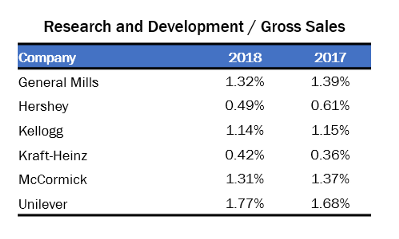
    As the Charmin example showed, research and development is at the center of a branded CPG firm. Consumer preferences change, and it’s up to manufacturers to develop new products that consumers want. In the food industry, consumers are transitioning away from fatty packaged food and toward healthy and fresh alternatives. According to Businessweek, from 2014 to 2017, the top 10 packaged food companies lost over $16 billion in revenue. No one is entirely sure what this means for legacy manufacturers like Kraft Heinz, but during this transition, Kraft Heinz slashed R&D budgets. In the three years before the merger, Kraft spent about 0.8% of revenue on research and development, already somewhat low for CPG firms. The table below shows how it only got worse once Kraft Heinz merged:

    Data via firm annual reports

    Making matters worse, when Kraft Heinz actually made an investment in R&D, it chose poorly. In an attempt to compete with healthier products, the company invested $10 million to reformulate hot dogs — at about the same time the World Health Organization labeled the food as a contributor to the risk of colon cancer.

    A different approach

    To be clear, 3G management took on an almost impossibly tall order with a $72 billion acquisition of Kraft and Heinz. First, history is littered with failed mergers and acquisitions. Billion-dollar transactions rarely work out unless you’re the bank booking the M&A fee. Second, both companies were established CPG firms. Unlike P&G and Charmin, there was no real value in bringing Kraft’s products into Heinz’s existing business processes because Kraft’s processes were probably just as efficient. It’s not like Heinz hadn’t mastered producing and selling ketchup for the last 100 years.

    P&G acquired a regional toilet paper brand and spent enormous sums of money developing a better toilet paper. It supported the product with world-class marketing and sales. Charmin dominated the industry for the last 60 years. 3G could have mimicked this approach. It could have acquired Kraft and then targeted smaller, regional brands that produce healthy options that would benefit from the company’s established scale and business processes.

    Instead, it pursued a strategy centered on two tactics: optimizing operations through cost cutting and generating leverage against retailers by creating the fourth largest food company in America. The former slowly and then suddenly deteriorated the value of the company’s legacy brands. The latter hasn’t materialized. In the case of the reformulated hotdogs, Kraft Heinz struggled to sell them to Walmart, which constitutes about 20% of the company’s yearly sales. The grocery goliath preferred Ballpark Franks and its own private label, leaving the new company in the same position facing many legacy manufacturers.

    The result is a company with legacy brands hemorrhaging sales to healthy upstarts and an organization ill-prepared for the new reality. “[Innovation] is a big driver for growth for the future, has to be especially in the food industry,” Patricio, Kraft Heinz’s CEO, told investors in 2019. “But we have to do bigger innovation. We have to do fewer innovation[s]. We have to do bolder innovation.”

    But because Kraft Heinz is spending so little on R&D, these innovations have yet to yield meaningful results. That’s because without properly funded R&D, Kraft Heinz is stuck either treading the same path while ignoring consumer trends or failing to innovate significantly and quickly enough. Last year, in fact, one of the biggest new product launches from Kraft Heinz was salad frosting.

    Yes, salad frosting.

    Something tells me that salad frosting isn’t the healthy and fresh choice consumers have been looking for.

    Note: This article was originally featured over at Medium’s Marker Magazine.

    Photo by Pedro Ribeiro on Unsplash

  • When negative externalities threaten Dart Container, it threatens back

    When negative externalities threaten Dart Container, it threatens back

    Negative externalities are an economics concept that is not often talked about, but incredibly intuitive. A negative externality is when an interaction between two parties harms a third party. If I buy new speakers from Sonos, Sonos gets money, and I get speakers. If I play them at all hours of the night, my neighbor gets less sleep. That’s a negative externality. It’s a trivial example, but according to economic theory, I should compensate my neighbor for the lost sleep. What does this have to do with consumer products? Many major consumer goods company’s products are priced artificially low because they don’t account for negative externalities. The company sells the product, captures the profit, and outsources the cost. 

    A recent New York Times articles explains the case of Dart Container.

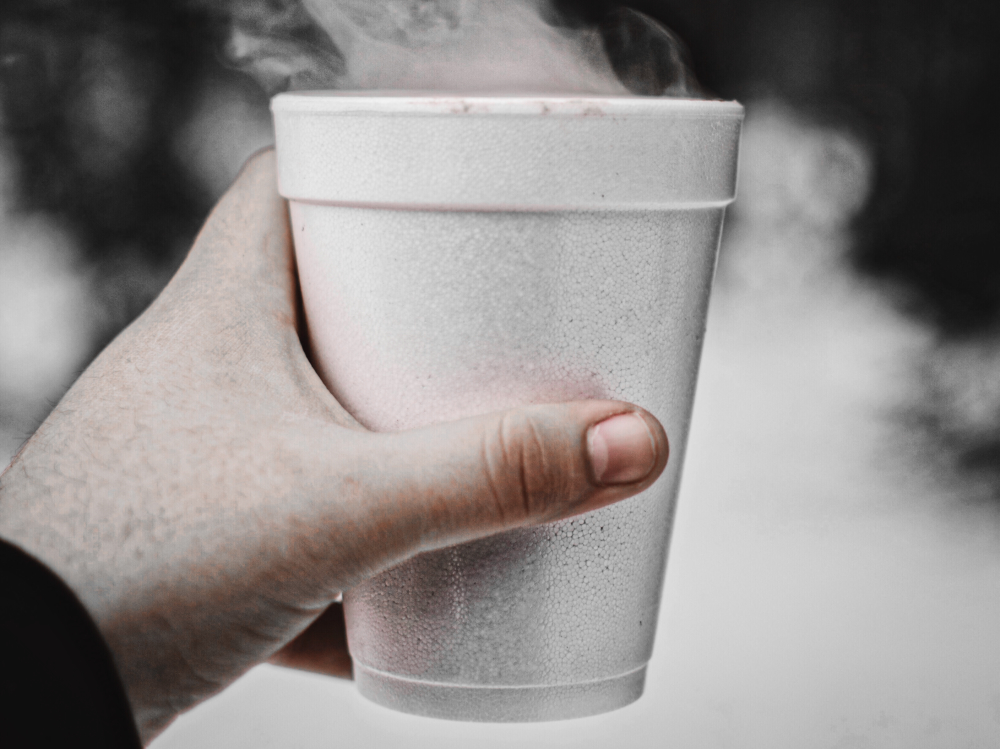
    Cities and states are increasingly banning one of Dart’s signature products, foam food and beverage containers, which can harm fish and other marine life. In December, Gov. Andrew M. Cuomo of New York proposed a statewide ban on single-use food containers made of “expanded polystyrene” foam, more commonly, but inaccurately, known as Styrofoam. (Styrofoam is a trademarked material typically used as insulation.) Maine and Maryland banned polystyrene foam containers last year, and nearly 60 nations have enacted or are in the process of passing similar prohibitions. Some elected officials and environmental groups say polystyrene containers are difficult to recycle in any meaningful way.

    “There is overwhelming evidence that this material is seriously damaging the earth,” said Brooke Lierman, a Maryland lawmaker who sponsored her state’s ban.

    Right now, you can go to the store and purchase fifty Dart foam containers for about $8.00. Once used and thrown away, the containers are effectively impossible for cities to recycle. Foam, which is mostly air and plastic, isn’t biodegradable. It gets broken into pieces and ingested by fish and wildlife. An additional cost of $8 foam containers is a water and food supply tainted with plastic. It’s impossible to quantify, but if Dart accounted for the negative externalities its’ product inflicts, the containers would have a significantly higher cost—making them less attractive to consumers.

    According to Dart, foam containers make up about one fifth of the companies $3 billion a year in annual revenue. Obviously, they aren’t taking the proposed laws idly. 

    Dart is waging a broader campaign to argue that its products are being used as scapegoats for a society fueled by on-the-go consumerism. Dart says that critics of polystyrene are ignoring the negative environmental impacts of other products, like many paper cups, which are derived from trees and can emit greenhouse gases as they degrade in landfills. By Dart’s reasoning, most materials inflict some negative impact on the environment, so it doesn’t make sense to ban one and not another.

    Dart’s logic seems absurd to me, but that hasn’t stopped the company from shuttering distribution centers and recycling programs from cities who enact laws outlawing foam containers. They’re effectively holding workers hostage against environmental legislation. The Times points out that both Dart heirs renounced their US citizenship to avoid paying taxes. That seems relevant to really understand the company’s response. 

    Climate change will change business. How it changes depends on the actions of policy makers and executives. Let’s hope it’s for the better.

    Photo by Caleb Lucas on Unsplash