Author: Eric Gardner

  • Proctor and Gamble looks for a Trade Reset

    Proctor and Gamble looks for a Trade Reset

    Despite a decrease in Trade spending, Proctor and Gamble saw another successful quarter fueled primarily by COVID-19 related buying patterns. Organic sales increased 8 percent, with all top 10 global categories seeing growth.
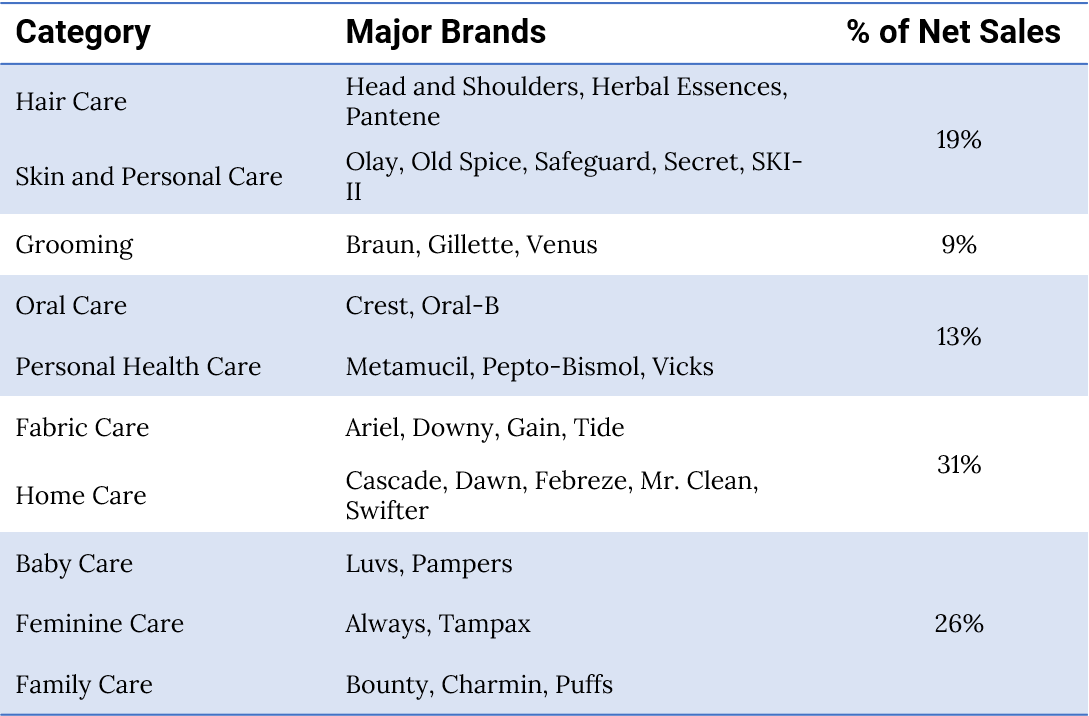
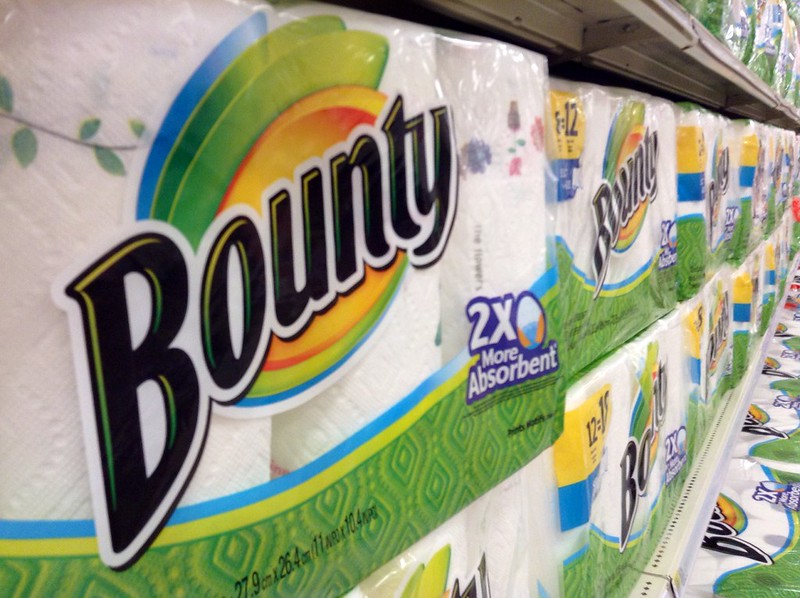
    The Homecare category, which includes cleaning brands like Cascade, Dawn, and Swifter, grew by 30 percent. Oral and Family Care, headlined by mainstays Crest and Bounty rose double digits. E-Commerce grew at a rate of 50% and now accounts for nearly 20% of its total sales–more than Walmart.

    “We created strong momentum well before the COVID crisis.” COO Jon R. Moeller told investors. “We strengthened our position further during the crisis. And we believe P&G is well-positioned to serve the heightened needs and new behaviors of consumers and our retail and distributor partners post-crisis.”

    Coronavirus impacted Proctor and Gamble’s Trade Promotion Strategy

    Earlier in the year, I wrote about how National Beverage established the sparkling water category with LaCroix but lost the advantage with a poor trade promotion strategy. Trade is a tricky part of the consumer goods world. Retailers expect that manufacturers will pay for prime shelf placement and other advertising activities. Manufacturers pay because a) they don’t have a choice and b) the activities drive volume that is greater than the cost of the promotion itself.

    Here’s how I defined the scope.

    Outside of the cost of producing a good, Trade is often the largest line-item on a company’s income statement. A typical CPG firm will spend between fifteen and twenty percent of gross revenue on Trade spend every year — with hyper-competitive categories spending upwards of thirty percent. For a company of National Beverage’s size, that’s potentially tens of millions of dollars transferred directly from their pockets to the retailer’s bank account.

    We don’t have much data on Trade spend across companies and categories. That’s because Trade spend is a strategic driver for a company—it’s somewhat of a black box. In 2017, P&G disclosed about $15 billion of advertising and promotional spending on $68 billion in sales. That’s about 22%. A blinded University of Chicago study across nearly 50,000 products and 17,000 stores found two key trends with volume and spend. About 29 percent of all CPG volume is sold on promotion, and 20% of revenue is spent on Trade.

    Last week’s call revealed a bit of P&G’s past trade strategy and management’s plan for the future.

    Jon Moeller explained:

    Promotion levels which you’ve mentioned have returned from about the lowest points, which was about 17% of products sold on promotion, up to about 26%, so a significant amount of that promotion return is already in the numbers. And that compares to a pre-crisis range of, call it, averagely 33%.

    He continued:

    A strong support for our brands is part of our model and will continue to be part of the model going forward. If you look at the quarter we just completed, just in the marketing side of the equation, we increased marketing about 7% year-on-year. I think our levels of support, as witnessed by both our share of progress and our top-line progress are appropriate. I would not want to dial those back by any means. But, I expect they’ll pretty much move in line with sales with some efficiencies potentially available to us.

    Translation. COVID-19 allowed P&G to cut back on substantial trade investments with no impact to sales. They’re looking to increase investment as the world returns to normal.

    Expert endorsements are a key to P&G’s future

    Proctor and Gamble was one of the first CPG companies to understand the power of academic endorsements on product quality. In 1960, P&G’s Crest became the first toothpaste to gain an endorsement from the American Dental Association as an effective tool against tooth decay. According to Rising Tide, the HBR book-length study of P&G’s success, the day after the official announcement, the stock opened 90 minutes late because of the onslaught of buy orders. Investor optimism was warranted. In 1960 Crest controlled 13 percent of the toothpaste market. One year later, it led the market with 28 percent. Today, Crest is still the category leader.

    Rising Tide explains the impact of the ADA endorsement:

    Accepting external ideas and cooperating with outside authorities became the driving force behind the development of stannous fluoride, then a central aspect of the brand’s subsequent marketing campaign. Crest’s success hinged on P&G’s ability to negotiate and learn to work with outside partners.

    Expert, science-based endorsements are a core of P&G’s overall product and marketing strategy. According to Moeller, that’s not going to change. They’re the industry leader in it and they’re only going to do more.

    Claim supports, developing claims are essentially communication that we can back up with laboratory research that highlights the benefit of our products in many categories to serve these needs. For example, hygiene that’s a benefit as a result of use of some of our laundry offerings. It’s a long answer, but it was a good question. And I want to just reiterate the point again that — the question, behind the question and all of this, I suspect today will be, are you — what kind of shape are you going to come out of this in? And I think, we think, we’re going to be in great shape coming out of this.

    P&G believes that the company is well-positioned to capitalize on the new normal

    The impacts of COVID-19 on the world are immeasurable. Within the retail world, we’re seeing shifting consumer habits. P&G is well-positioned, and is ready to move.

    And then there are the mid to long-term impacts of the crisis, which may be accelerators of top and bottom-line growth. The relevance of our categories and consumers’ lives potentially increases. We will serve what will likely become a forever altered cleaning, health, and hygiene focus, for consumers who use our products daily or multiple times each day. There may be a continued increased focus on Home, more time at home, more meals at home, with related consumption impacts.

    The importance of noticeably superior performance potentially grows. There is potential for increased preference for established, reputable brands that solve newly framed problems better than alternatives, potentially less experimentation. Potential for a lasting shift to e-commerce, both e-tailers and omnichannel. Our experience to-date makes us believe we are generally well-positioned in this environment. We’re discovering lower-cost ways of working with fewer resources.

    With the success in e-commerce and the focus on expert driven marketing in key categories, it’s hard to see where he’s wrong.
    Image via Flickr

  • Ranking the 40 books I read in 2020

    Ranking the 40 books I read in 2020

    I read 37 books this year, which I think is a new record. What can I say, I had a bit more free time with quarantine. You’ll see a pretty diverse set of books: from thrillers to business profiles.

    40. Tides of War – Steven Pressfield

    I once heard Trump described as “What a dumb person thinks as smart, a poor person thinks as rich, and a weak person thinks as powerful.” Tides of War is that but in book form. A cool concept (the retelling of the Peloponnesian War) but done in the most stereotypical and contrived way possible.

    39. The Green Mile – Stephen King

    I’ve never seen the movie and generally enjoy Stephen King. When I saw it on sale for $2 at a used book store, I grabbed it. The story is well told but hard to enjoy since the entire plot is a racist trope.

    38. Motherless Brooklyn – Jonathan Lethem

    A murder mystery with incredibly low stakes.

    37. The Girl on the Train – Paula Hawkins

    I looked for Gone Girl 2.0 and ended up with a mystery where the ending was obvious. All the characters were irredeemable.

    36. Dream Big – Cristiane Correa

    Correa’s profile of 3G Capital, the private equity group that upended the CPG industry with leveraged buyouts, is effectively propaganda. I went in looking for an honest assessment of the firm’s business strategy and structure. What I got was something that could have been written by the founder’s itself. 3G’s rise is incredible. In under twenty years, 3G went from an unheard-of Brazilian firm to owning two iconic American brands: Budweiser and Kraft. According to Correa, it was all due to their guts and courage. Complete nonsense.

    35. Billion-Dollar Brand Club – Lawrence Ingrassia

    200 pages on how the direct-to-consumer model is upending consumer products, when it’s not clear the author understands the CPG industry’s basic economics. The one good insight was that successful D2C companies undercut high priced competitors by offering “just-good-enough” products. The rest is a few hundred pages of repackaged buzzwords and press releases.

    34. The Border – Don Winslow

    Overall, Winslow’s Power of the Dog series has moments of pure beauty. He has the rare ability to put huge and overarching themes into genre writing. It’s a large part of why I rated the series’ second book one of my favorites of 2015. He is also a huge part of #resistance. I’m not a fan of Donald Trump, but I also have no interest in reading someone’s fan-fiction about throwing a Trump doppelganger in jail—which describes about 1/3 of the book.

    33. Raised in Captivity: Fictional Nonfiction – Chuck Klosterman

    A collection of short stories by one of my favorite essayists. I don’t remember a single story a year later, so I went ahead and downgraded it.

    32. Dethroning the King – Julie MacIntosh

    In 2008, 3G Capital purchased Budweiser for $52 billion. Overnight, a company that branded itself as America was now under foreign control. MacIntosh traces the rise of Budweiser from a regional brand to one that controlled over 50% of the American beer market. She outlines the operations that fueled the increase: Marketing, Marketing, and Marketing and how egos and greed led to a hostile takeover. A bit of it falls into the worship of 3G-Capital and the top-heavy management style it forces on its targets, but overall I’d say it was a decent read.

    31. Secondhand – Adam Minter

    An informed and well researched look at the secondhand goods and waste market.

    30. Applied AI – Mariya Yao

    A book on AI, written by an AI consulting firm. The book is marketing material at its core, but it’s an easy read and cuts a lot of the fat out of the conversation.

    29. Mindset – Carol Dweck

    28. Getting Things Done – David Allen

    27. Executive Presence – Sylvia Ann Hewlett

    My general view on self help books is that they’re good if you take 2-3 points form each. That explains each of these.

    26. Point B – Drew Magary

    In the future, the invention of teleportation solves climate change. Teleportation eliminates the need to drive anywhere and thus all carbon emissions. It also removes any sense of privacy as people can teleport anywhere they want—including a stranger’s bedroom. The wealthy can afford protection, while the poor are left to live in constant fear. I loved the premise, but the execution is somewhat limited—a fun book to read on vacation.

    25. The Obelisk Gate – N.K. Jemisin

    The second book in N. K. Jemisin’s Broken Earth Trilogy. I really enjoyed her short story collection, but I haven’t been gripped yet.

    24. True Grit – Charles Portis

    Rightly viewed as a modern American classic. A deadpan look at the old-west, including the misogamy and racism inherent in its founding.

    23. Store Wars – Greg Thain

    I’d highly recommend reading this book if you’re new to the CPG world. Consider it a collection of case studies of the Western retail market.

    22. Rising Tide – Davis Dyer

    Harvard Business Review paid a history professor to write a history of Procter & Gamble. The company granted him immense access to its archives and resources. It’s incredibly well done, but don’t read this is if you’re looking for a complete company narrative. View it as a comprehensive look at one of the most successful companies in American history—written by the company itself.

    21. Soap Opera: The Inside Story of Procter and Gamble – Alecia Sway

    The inverse of Rising Tide. Alecia Sway, a reporter at the Wall Street Journal, spent a career reporting on the Cincinnati consumer goods company. The result is this book, Soap Opera, which she claims led to the company spying on her. The book acts as an examination of P&G’s business culture and values. Unlike Rising Tide, which portrays P&G as a beacon of American industry, Soap Opera paints a much darker picture. For example, in the 1970s, P&G released Rely Tampons. The tampons led to toxic shock and the death of at least one person. According to Rising Tide is was an unfortunate unknowable mistake that the company rectified via recall. According to Sway, it was a preventable problem known by the design team whose warnings were ignored by the financial people. Once the mistake was made public, the company then went on a scorched earth campaign to bankrupt its accusers and cover up the misdeeds.

    Overall, I found it a very interesting read. Part of her criticisms were presented as unique to P&G, while I think they’re applicable to the industry at large. The end of the book did not age well. Published in 1994, it all but predicts the company’s demise.

    20. Secret Formula – Frederick Allen

    A look at the rise and continued rise of the Coca-Cola company. Allen did a nice job connecting Coke’s marketing and sales innovations. I thought it was the happy medium between Soap Opera’s contrarian view and Rising Tide’s mythmaking

    19. The Club – Josh Robinson

    In the last twenty years, English soccer went from locally owned organizations to being backed by billionaire oil despots. This book explains how and why it happened.

    18. Antifragile – Nassim Taleb

    It’s the third and most important book (according to Taleb) in his Incerto series. It essentially argues that we’ve over-engineered our society. Here is a more useful review from noted economist Branko Milanovicv.

    17. No Encore for the Donkey – Doug Stanhope

    The first few chapters of the book are typical Stanhope: cynical, funny, and a disdain for ‘normal’. But then it changes. It turns into one of the more heartfelt books I’ve read in recent memory. It’s a book about love and loss. About building your own family and sharing it with those you choose-not those you’re related through. It’s also about death, mortality, and rebuilding. Honestly, it is fantastic. One of the things I love most about Stanhope is how much his comedy has evolved. Stanhope is one of a handful of artists who have gotten more progressive and thoughtful with age.

    16. Medium Raw – Anthony Bourdain

    I listened to the audiobook, so it was basically 8 hours of your close friend talking about food.

    15. The Sympathizer – Viet Thanh Nguyen

    After the fall of Saigon, an American education North Vietnamese Captain is sent to live in America. Here he plots the eventual return of communism to his home country. It’s part spy novel, part assimilation story, while analyzing the history of the Vietnam war in American culture.

    14. A Gentleman in Moscow – Amor Towles

    After the communist revolution, a wealthy landowner is sentenced to house arrest in a Moscow hotel. The book chronicles the remaining decades of his life. It’s a fun novel with an unexpected ending.

    13. Deep Work – Cal Newport

    It’s a self-help book, but I got more than 3 things from it. Basically, schedule “creative” time every day.

    12. The End is Always Near – Dan Carlin

    The first book from the genre-defining history podcaster. It’s more of a collection of mini-podcast episodes than a coherent narrative. However, each one is centered on the idea of how past eras viewed the end of the world.

    11. Break ‘Em Up – Zephyr Teachout

    I wrote a larger review here. Anti-monopoly is one of the most important movement in American society and will have huge impacts across both the CPG and retail world.

    10. Salt Sugar Fat – Michael Moss

    Salt, Sugar, Fat takes a critical but balanced look at the packaged food industry. It’s built around an interesting structure: how food companies evolved to use Salt, Sugar and Far to hook consumers. I’d highly recommended it to both CPG professionals and the broader population.

    9. The Buyout of America – Josh Kosman

    In 2020, I spent a fair portion of my free time learning about private equity. It’s a huge portion of our economy, and yet few people know much about it. Kosman, who writes an influential private equity newsletter, provides an thorough look at the business structure and social impacts of the industry.

    8. The Year without Pants – Scott Berkun

    A quick and easy read on managing remote teams.

    7. Do the KIND Thing – Daniel Lubetzky

    It’s not hyperbole that Lubetzky revolutionized the packaged food industry with KIND. KIND is a premium snack, with straight forward ingredients, marketed as openly as possible. Lubetzky provides dozens of great case studies and tactical advice on building CPG brands in a new era.

    6. Empire of the Summer Moon – S.C. Gwynne

    Gwynne frames the story as a biography of Quanah, one of the last great Comanche leaders, but it’s really a holistic look at the America’s Western expansion. At one time, the powerful Comanche tribe controlled territory from Colorado to the modern-day US/Mexican border. Today, the nation resides on a tiny reservation in Oklahoma. Gwynne provides a deeply researched and brilliantly told story on how it happened—tying in technology and politics. Did you know that the Texas Rangers had their roots as a genocidal militia? Neither did I. Gwynne explains how everything intertwines.

    5. The Meat Racket – Christopher Leonard

    Koshland was my second favorite book in 2019, so of course I had to read Leonard’s previous work. It’s a brilliantly researched and argued look at the rise of Tyson Foods. A chicken company that revolutionized American’s food system, while simultaneously destroying small-town America.

    5. The City of Brass – SA Chakraborty

    4. The Kingdom of Copper – SA Chakraborty

    Typical fantasy novels are modeled after the European middle ages. Chakraborty sets her Daveabad Trilogy in an Arabic fantasy land. The best way I’d describe it is a more accessible, but less detailed and sprawling, Game of Thrones.

    3. Goliath – Matt Stoller

    Goliath is a comprehensive and readable history of America’s anti-monopoly movement. It starts by telling the historical precedence for framing anti-trust policies as bulwarks against fascism and ends by detailing its fall.

    2. The Nickel Boys – Colston Whitehead

    A young black boy is sentenced to reform school for essentially no reason. From there, the system destroys an innocent person. Based on a true story, but a fictional narrative, the Nickel Boys is a beautiful novel about race and America.

    1. The Master Switch – Tim Wu

    I’ve spent a fair amount of time this year thinking about anti-monopoly policy and history. The thing that I keep coming back to is that none of this is new! We’ve faced the exact same problems before, but we knew how to manage them! Wu gives a comprehensive look at networked technologies and details how they’ve been managed throughout our nations’ history. Many commentators talk about information technology as if it is magic, cure-all not bound by typical business restraints. They’re lying or being paid to have the opinion. 

    The 20th century was defined by industrial-scale—electricity, telephone, television, radio. Today we have the same thing, except the vessel, for it isn’t in our homes but our pockets. Facebook, Twitter, podcasts—all of which are just reimaginings of past inventions.

    Most of these technologies create nature monopolies, which have universally disastrous results if unregulated. Wu provides a new way to think about modern technology and shows us how to regulate it.

  • Conagra Brands invested in innovation and it’s working. Will it last?

    Conagra Brands invested in innovation and it’s working. Will it last?

    Conagra Brands had its Q2 2021 earnings call on January 7th. The results were like the packaged goods industry at large—pretty good.  The Chicago-based company, which owns various food brands across the frozen, snacks, and staples categories, posted organic net sales growth of about 8 percent. Even better, the company’s innovation initiatives accounted for about 17% of growth. “Our business remains strong in the absolute and relative to competition.” CEO Sean Connolly told investors, “And we expect Conagra to be in an even better position post-COVID as a result of our ongoing disciplined approach to investment and innovation.”

    Conagra has certainly capitalized on investments, but I think it’s fair to say a good chunk of their recent success is due to COVID-19. People just aren’t eating out anymore, and that means almost all food processors are doing well. Sure, the company spent the last few years building out innovation and branding capabilities, but COVID-19 helped drive adoption.

    Connolly seems to agree:

    We believe that what we are experiencing right now is the acceleration of product trial that in normal times would take years and hundreds of millions of dollars. Now, as for what’s going to sustain it through 2022 and beyond, in a nutshell, it is our people and our playbook.

    The playbook he describes is effectively a modernized marketing mix framework. Conagra Brands sells the right product, at the right price, at the right place, with the right promotion.

    He summarized it as follows:

    [The playbook] works, and it will continue to work. And it’s why our growth rates, our innovation performance, our trial, our repeat — our depth of repeat metrics are often outpacing our competitors. So, you know, in the simplest sense, what we are asserting here is that modern, high-quality products with great online and in-store presence, supported by provocative and targeted messaging, will beat outdated, lower-quality products with weak online or in-store presence but lots of broadcast media every single time. And then lastly, the last part of your question, our total brand investment already is — it has been at a strong level and it remains strong.

    So the big question here is, is Connolly, right?

    An analysis of the categories Conagra competes in reveals that it isn’t as simple as Connolly describes.

    Conagra Brands is a legacy packaged food company

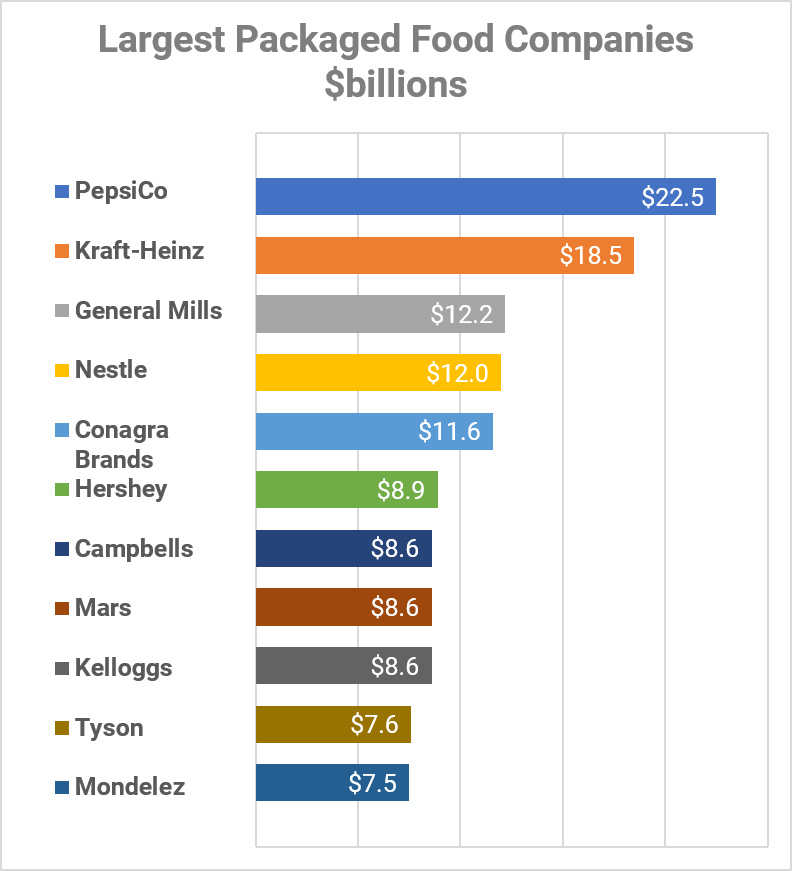
    Conagra Brands is a branded packaged food company. They take raw commodities and turn them into a variety of food products. They’re pretty good at it. They’re the fifth-largest packaged food company in America.

    Packaged foods is an incredibly competitive area. Almost every single one of these companies is a household name. Each has massive war chests to spend on advertising, sales promotion and product development.

    In US Retail, the company is organized into three portfolios. The following table includes Conagra’s major portfolios, brands and % of revenue.

    PortfolioBrands% of overall revenue
    FrozenBanquet, Birds Eye41%
    SnacksSlim Jim, Duncan Hines, Dukes25%
    StaplesHunts, Wishbone34%

    I call Conagra a legacy packaged food company because all three of their portfolios are built on practices, assumptions, and limitations constructed over the last eighty years. Note – I’d consider most food companies legacy food companies.

    • Frozen – Highly perishable requires costly refrigeration at retail and transportation level.
    • Snacks – Low cost and impulse driven. Sales centered around check-out purchases and promotional activity.
    • Stapes – Low margins.

    From a strategic perspective, management views the Staples line as a cash generator. They’re going to run it like a commodity and use the cash to invest in higher-margin segments: Frozen and Snacks.

    The good news for Conagra is that they are pretty good in both Frozen and Snacks. With brands like Banquet, Birds Eye, and Healthy Choice. They currently have the second largest Frozen retail business in America. The snacking business, which contains Slim Jim, Duke’s and Angie’s, is the third fastest-growing snacking portfolio in America. Overall, their recent innovation activities are off to a good start. The bad news is the categories are constrained by forces largely out of their control.

    The Five Competitive Forces that Shape Strategy

    In my opinion, the Porter Model is the most effective way to analyze an industry. Here’s how I described it earlier:

    The most common way to analyze industrial competition was first popularized in Michael Porter’s classic 1979 paper “The Five Competitive Forces That Shape Strategy.” According to Harvard Business School, Porter’s article has been cited over 6,000 times, making it arguably the most influential management paper of all time. The general crux of Porter’s argument is that five disparate forces drive competition within any industry. The forces continuously change based on advances in technology and policy. It is a manager’s job to position the company to compete where they are the weakest.

    In his 2008 update, Porter explained how the five forces drive profitability in the airline sector.

    Rivalry Among Existing Competitors: How incumbents compete. For the vast majority of consumers, airlines aggressively compete on price.

    Bargaining Power of Suppliers: There are only a few plane and engine manufacturers — giving each one additional leverage over airlines.

    Threat of New Entrants: It’s a high-profile industry that new flight providers continuously enter. Some succeed (JetBlue) and some fail (Virgin and Hooters)

    Threat of Substitute Products or Services: Train and car travel are always options

    Bargaining Power of Buyers: Limited customer loyalty (except business travelers).

    I would add a sixth driver to the list: political economy. Essentially, political economy is how the government decides to organize the economy.

    Analyzing Conagra Brands through a modified Porter Model.

    For the sake of this analysis we’re going to concentrate on the US retail segment only

    • Rivalry Among Existing Competitors: High. Dozens of companies compete have billion-dollar war chests and compete over a fixed amount of shelf space. Competition is primarily based on a consumer’s perceived brand value.
    • Bargaining Power of Suppliers: Mixed. The agricultural production has shifted to larger farms resulting in increased bargaining power for the remaining firms. However, some food processors have engaged in illegal price-fixing to counteract.
    • Threat of New Entrants: High. Small and mid-sized food companies are continuously bringing new products to market. They’re offering interesting niche choices to consumers.
    • Threat of Substitute Products or Services: High. Conagra’s main value-added frozen food brands are already facing an onslaught of competition from other convenience meals, including grocery store meal kits, mail-order meal kits, and seamless. Their main product lines (snacks and frozen) are not conducive to new distribution channels like e-commerce.
    • Bargaining Power of Buyers: High. Extreme retail concentration limits manufacturer borrowing power.
    • Political Economy: Mixed: Renewed political interest in antitrust after a decade of non-enforcement.

    The “Conagra Playbook” is a traditional brand-building exercise. It’s built on maximizing their success with existing competitors and potential new entrants. It’s been successful in the short term, but a Porter Model analysis makes me skeptical if it’s truly built to last. Their innovation initiatives have seemingly worked, but they’re also within the existing framework. I question if it’s a real moat. Nearly all cited examples are more incremental brand extensions than transformative ideas. Frozen foods seem to be incompatible with the long-term grocery trend towards health and freshness. It will be interesting to see what happens once the COVID-boost that all food processors have benefited from is removed.

    Image via Flickr

  • Constellation Brands looks to e-commerce and DTC

    Constellation Brands looks to e-commerce and DTC

    Constellation Brands is one of the more interesting major food and beverage companies operating in America. It was started 75 years ago in upstate New York, where it acted as a wholesaler for the Finger Lakes Region’s many wineries. In the last twenty years Constellation underwent a series of rapid acquisitions, and today it owns a variety of brands across the wine, beer and liquor industry.

    The 3Q 2021 financial results were a victory lap. The Wine and Spirits business saw revenue rise 10 percent. Beer, led by brands Corona and Modello, saw a 28% increase. The company is making investments across a new array of channels, including direct-to-consumer and more traditional e-commerce. “Our business remains extremely healthy,” CEO Bill Newland told investors, “and these strong results are truly a testament to the strength of our team and our brands.”

    What else did we learn?

    Constellation Brands is looking to dominate subscription shopping

    Retail, specifically food and beverage, is undergoing massive changes. Today, so many consumer purchases are made in store, by impulse. Think about the last time you purchased beer from a store. If you’re anything like me, you headed towards the craft beer section and started looking through the selection. Maybe you were in the mood to try something new, so you went with the new local six pack with a cool logo. Ten minutes ago, you didn’t even know a Munich Lager was an option! That entire aisle experience, where you’re evaluating a variety of different products at once, is at risk with e-commerce. Retailers and manufacturers are pushing customers into subscription or auto-replenishment models where decisions will be made based on past purchases biased by algorithms and previous purchases. The company that figures out the magic mix of branding and discounts will find itself with an incredible first mover advantage.

    Bill Newland explained:

    In fact, our wine Power Brands competing in the e-commerce space are outpacing the overall wine category as our early investment in the category is providing us with a meaningful first-mover advantage. During the quarter, we became the first CPG company to partner with Instacart to feature our products on Facebook ads, propelling Constellation to the next level of three Tier e-commerce media by enabling us to refine and optimize our ad creative and targeting based on real-time data. Furthermore, it is important to our growth and margin profile that we continue to invest in this space, since DTC is heavily weighted toward the higher end of the wine category as wines priced $20 up, make up nearly 90% of total DTC sales.

    Premium is a good price point

    Constellation Brands recently sold off a number of low-end wine brands to Gallo. Today it is almost exclusively a premium company. Last quarter is started to experience the benefits.

    Bill Newland:

    Fortunately, the robust demand that we’ve seen in many of our Power Brands above $11 where we had lots of double-digit growers, our demand has been very strong and that has been the single biggest driver of our improved wine results is the sheer demand for our products and the fact that the consumer is looking for brands and products that they have great faith in, especially as their shopping patterns have changed some.

    Direct-to-consumer CPG may work with premium brands

    I’ve been fairly negative on direct-to-consumer CPG. The customer acquisition costs are too high. Alcohol may be the exception. Constellation purchased Empathy Wines, a direct-to-consumer wine brand founded by Gary Vaynerchuk. At the time of the acquisition, Empathy shipped 15,000 cases across America. Constellation is expanding that operational model across its portfolio.

    Since our acquisition of Empathy Wines, we have continued to make significant progress in leveraging their unique platform and capabilities across our portfolio within the DTC and three Tier e-commerce space. We have launched several new DTC sites, leveraging the Empathy platform, including The Prisoner Wine Company, Double Diamond and Simi.

    Constellation Brands has a de-facto Monopoly on the Hispanic market

    Latinos are perhaps the biggest undeserved segment of the US consumer market. The Latino population has averaged about 2% population growth over the last decade—while the rest of the population sits around .5%. The buying power is phenomenal. A study cited by CNBC found that U.S. Latino GDP now hovers around $2.3 trillion a year—up from $1.7 trillion in 2010. To put that in context, Italy’s GDP is around $1.8 trillion.

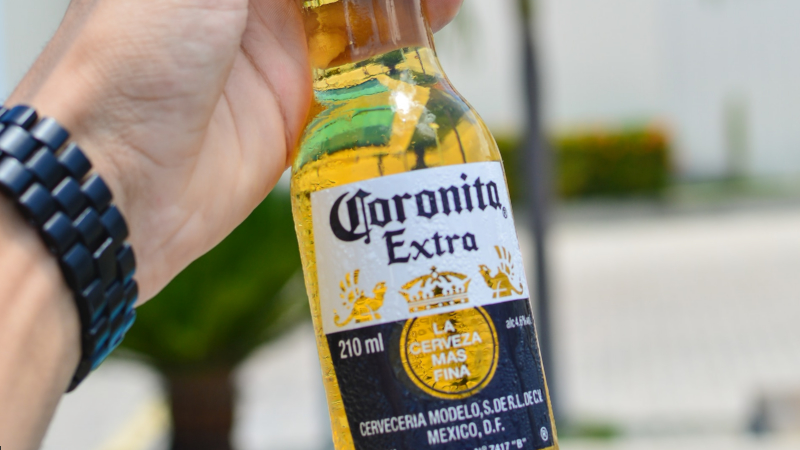
    Constellation holds an effective monopoly on the beer market for this group. Ironically, they purchased the Corona and Modela brands due to concerns about an In-Bev monopoly.

    According to Beer Marketer’s Insights the top selling Mexican beers in America were:

    BrandBarrels Sold (millions)% of US Market
    Corona8.74.1
    Model Especial7.23.3
    Dos Equis2.9
    Corona Light1.2.6

    Constellation owns three of the four brands: Corona, Modelo, and Corona Light. Additionally it owns Pacifico and Victoria.

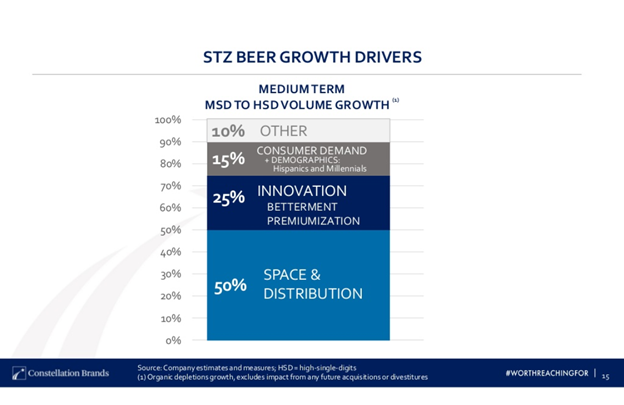
    What’s interesting is that in their own estimations it isn’t taste or culture that is driving demand.

    Constellation Brands
    Via Investor Report

    Constellation Brands are using their existing Space and Distribution networks, built up via acquisitions, to drive placement and sales.

    Photo by Raphael Nogueira on Unsplash


  • LaCroix was a category leader and then National Beverage changed the sales strategy

    LaCroix was a category leader and then National Beverage changed the sales strategy

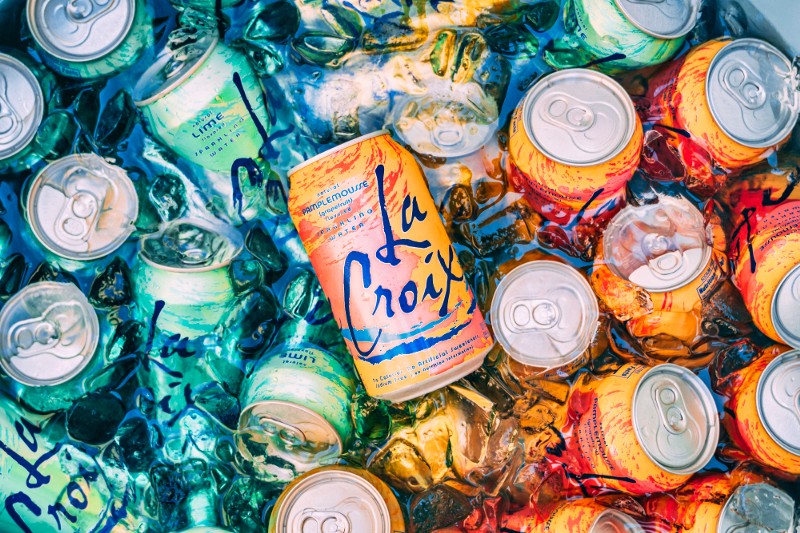
    I’m sure most people reading this have heard of LaCroix, a sparkling water brand owned by National Beverage. It’s an undisputed leader in the sparkling beverage category. Led by smart marketing and forward-looking management, the colorful cans are a bright spot in an otherwise declining aisle. Despite almost a decade of positive results, not everything is sunshine and roses in the land of fizz and refreshment. In the fall of 2019, Businessweek published a cover story on the rise and recent stumbles of the company — most notably around management’s decision not to provide additional sales support to retailers.

    National Beverage’s management believed that LaCroix wasn’t just a brand that added a bit of flavor to carbonated water, but one whose “innocence” and targeted marketing propelled it to the top of the segment. By not acceding to the sales demands, the company decided to play chicken with the most powerful group in the retail industry: retailers.

    Now that some time has passed we can begin to analyze: Did National Beverage’s game of chicken work? Was the LaCroix brand as powerful as they thought? Before we answer that question, it’s best to look at how it went from a third-tier soda company to the sparkling water leader.

    Reinventing LaCroix

    In 1982, Heileman Brewing Company founded LaCroix in La Crosse, WI, as a mass-market alternative to premium European sparkling water brands. About ten years later, it sold the modestly successful brand to National Beverage, where it languished for a few years. This isn’t exactly scientific, but I went to college in La Crosse, and I don’t remember a single person under the age of 65 drinking it. Suddenly, ten years later, LaCroix is one of the most millennial centric food brands in America.

    What happened?

    When customer preferences change

    Within the consumer goods world, sparkling water is categorized as a “sparkling beverage.” Giants like Coca-Cola and Pepsi have long dominated the category with sugary drinks like soda. If you are health conscious, for generations, a walk through the sparkling beverage aisle felt like being surrounded by a bunch of explosives. The explosives had super long fuzes, but each time you pulled a product from the shelf, the inevitable health catastrophe inched closer.

    In the past few years, the risk is now out in the open. Sugary drinks have been linked to everything, from diabetes to poor bone health. Soda, the sales anchor of the category, now faces an existential decline. Almost two-thirds of Americans actively avoid drinking it. “The drop in soda consumption,” Margot Sanger-Katz wrote in the New York Times, “represents the single largest change in the American diet in the last decade.”

    LaCroix is located in the same aisle as soda. Most importantly, with zero calories, it doesn’t have a fuze.

    Businessweek detailed how the transition wasn’t an accident:

    In 2006, Beverage Digest released a report showing that soda sales in the U.S. had declined for the first time in two decades, as consumers grew concerned about obesity and Type 2 diabetes. That year, LaCroix staked out an early position as a health-conscious alternative to soda, becoming a sponsor of the Susan G. Komen Breast Cancer Foundation.

    In hindsight, this was a risky move. Implicit in the branding was pulling demand away from sugary drinks and into sparkling water. There was one problem. National Beverage’s most significant brands were Shasta and Faygo — two sugary drinks. “I would say to him [CEO Nick Caporella], ‘It’s great to be behind it a hundred percent,” a longtime executive told Businessweek, “but we should remember to dance with the one who brung us. This company was built on soft drinks.”

    Caporella made the gutsy decision to cannibalize existing sales.

    In the meantime, a small team of executives quietly began working to revitalize LaCroix. They decided to market it as different from both elegant mineral waters and sugary sodas, aiming squarely at diet soda drinkers. The company expanded LaCroix’s distribution outside its traditional regional markets and into major retailers such as Target and upscale national grocers like Whole Foods that would prominently feature the product. By 2013, National Beverage was touting “double-digit volume gains” for LaCroix.

    Perhaps most impressively, the company did all of this without a massive traditional marketing budget. It didn’t create a single expensive advertisement with a celebrity spokesperson. Instead it gave away coupons on social media to a variety of influencers.

    According to Digiday:

    The brand has specifically turned to Instagram, Alma Pantaloukas, the brand’s former digital strategist, says on her LinkedIn profile. LaCroix looks at the platform to engage with “highly engaged millennials” and “to inspire them to use our products in many different ways and/or stages in life,” she says. It was this focus that turned Instagram into its most engaging platform, growing its fan base from 4,000 to 30,000 within eight months in 2015. (It now has 39,000.)

    One tactic is engaging with people who tag the brand, no matter their follower counts. One marketing pro, Kelly Fox, posted a couple of photos with LaCroix cans for her 2,500-plus followers this month and tagged the brand. The brand then sent her vouchers for cases of LaCroix.

    “I know that I am being genuinely rewarded for being an advocate, and am not going out there posting on behalf of every other brand like some of the large influencers with huge followings,” said Fox. “It’s a smart strategy for the brand to go after the smaller fish instead of the bigger fish.”

    If you think about the six core business processes within a CPG company, LaCroix excelled at four of them.

    • Research and Development: LaCroix targeted flavors at diet soda drinkers. It originally had 6 flavors; it now has 27.
    • Production: National owns 12 production facilities. It could quickly bring new choices to market because it did not have to negotiate with independent bottlers around new products or expansion needs.
    • Transportation: National’s existing transportation network featured delivery to retailer warehouses and directly to stores (DSD). It could expand its product to more stores, because it could get LaCroix to almost any retailer at an affordable cost.
    • Marketing: A targeted social media campaign generated consumer demand in a cost-effective way.

    Put together, the four redirected a niche segment into the mainstream within a category dominated by giants. Against all odds, a once-sleepy regional brand became a category leader in 41/52 metro areas.

    Pepsi and Coca-Cola strike back

    LaCroix’s success did not happen in a vacuum. The CPG world is intensely competitive and filled with smart people. When a new item at the grocery store sees double-digit volume growth, it becomes a fire in the middle of a field. Everything and anything focuses on it.

    Again, Businessweek

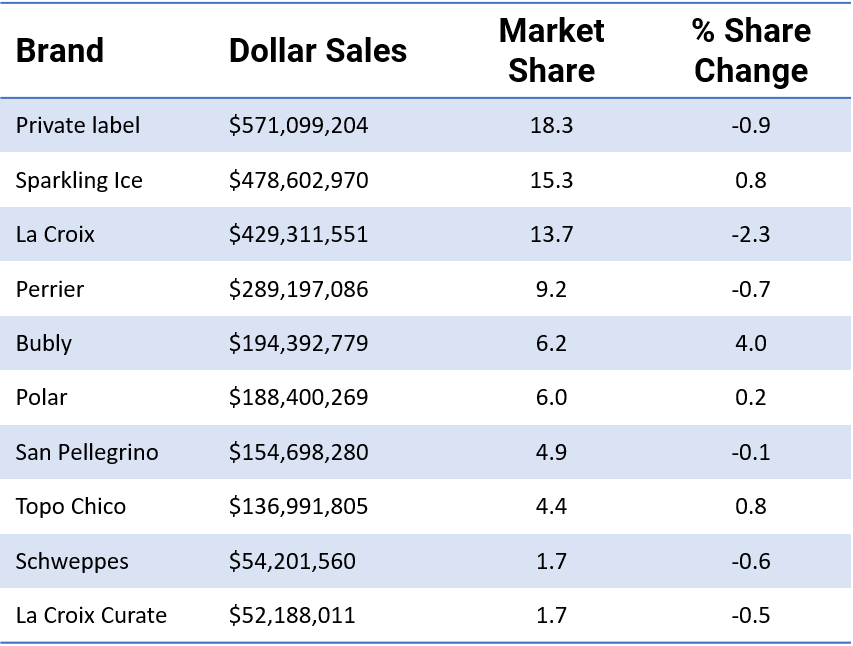
    PepsiCo Inc. released Bubly, a sparkling water backed by a marketing arsenal that LaCroix has struggled to match. In 2017, Coca-Cola Co. paid $220 million for Topo Chico, a Mexican mineral water with a cult following. Meanwhile, a legion of startups has rolled out “craft” sparkling water brands that promote artisanal ingredients, antioxidant boosts, and cannabidiol infusions. LaCroix’s sales for the four weeks ended July 14 fell more than 15% from the prior-year period, even as its main competitor, Bubly, saw sales surge 96%, according to Bloomberg Intelligence.

    All of this competition impacted LaCroix. Sure, LaCroix had to respond to new threats to consumers, but it could handle that through its innovative use of social media. The real challenge was with retailers. They want to buy what will sell. For a decade, LaCroix was more or less the only branded sparkling water option. Now there were dozens. Perhaps most troublesome for National Beverage is that retailers don’t care who started the fire in the field, they just want to keep it burning.

    The complicated relationship behind grocery aisles

    Retailers and manufacturers have a complicated relationship. Publicly, both sides will say that they’re partners — working together to make and sell consumers the products they want. In theory, retailers need vibrant manufacturers who create products consumers want to get people in stores. Manufacturers lack a physical store footprint, so they need retailers to sell their products to consumers.

    Initially, the relationship was simple. In the early 1900s small corner stores dominated the industry. Given America’s rudimentary transportation network, it wasn’t practical for manufacturers to deliver to each street corner. Instead, a manufacturer like National Beverage sold to a Broker (who took a percentage of the sale) and delivered the product to a retailer. Over time, retailers got bigger and bigger. Led by A&P, the Walmart of the era, the relationship changed.

    In his book, The Great A&P, Mark Levinson explained what happened next:

    A&P demanded that manufacturers give it advertising allowances in return for promoting their products nationally in whatever way it saw fit. Manufacturers were to sell directly to A&P without using brokers or agents, and A&P would receive the commission normally paid to brokers. If a manufacturer refused to play by those rules, A&P would take its business elsewhere. As the Hartfords [Management] anticipated, allowances became a major source of income. By 1929, allowances paid by manufacturers directly to A&P headquarters accounted for one-quarter of pretax profits.

    In modern times, this activity is called Trade. The advertising allowances that A&P pioneered have grown to everything from bulk discounts and prime shelf placement to end-of-aisle displays. Trade is a vital part of any CPG company’s sales process. The companies are willing to make the investment because a) they don’t have a lot of choice and b) many trade events are almost a sure thing to generate sales.

    That overall cost is huge. Outside of the cost of producing a good, Trade is often the largest line-item on a company’s income statement. A typical CPG firm will spend between fifteen and twenty percent of gross revenue on Trade spend every year — with hyper competitive categories spending upwards of thirty percent. For a company of National Beverage’s size, that’s potentially tens of millions of dollars transferred directly from their pockets to the retailer’s bank account.

    As I said, the relationship between retailers and manufacturers isn’t exactly a partnership. It’s complicated.

    Pepsi and Coke entered the category, armed with hundreds of millions of dollars ear-marked for trade spending. Retailers wanted National Beverage to match the spending. LaCroix management had a choice. They could defend their shelf space with additional spend or withdraw from the arms race and bet on the value of the brand. “In a beverage industry that is dominated by the “cola giants”,” the company wrote in its most recent annual report, “We pride ourselves on being smaller, faster and stronger.”

    In this case, smaller, faster and stronger meant no increase in Trade spend. There would not be an arms race.

    Businessweek explained what happened at Whole Foods:

    The company wanted LaCroix to be more aggressive with matching discounts and promotions being offered by the new brands. When the company didn’t yield, Whole Foods eventually decided to reduce the number of prominent in-store LaCroix displays and replace them with its competitors’, according to people familiar with the decision. A Whole Foods spokesman declined to comment.

    Category goes up, LaCroix goes down

    National Beverage does not break out individual brands on their income statement, but from a high level, the numbers don’t look good. According to Businessweek, the decision to not enter an arms race happened in 2018. Most trade agreements are made annually. Any impact wouldn’t be seen until 2019.

    The numbers aren’t pretty.

    In 2019 the company’s net sales growth submarined from double digits to under four. This happened while retail data provider IRI estimated that the sparkling water segment saw an increase of about 13 percent. According to IRI’s calculations, Bubly, backed by Pepsi and millions of dollars of Trade spend, grew 216 percent.

    I think it’s clear that the LaCroix brand wasn’t as powerful as executives thought.

    CPG retail is an unforgiving place for manufacturers. The LaCroix experience shows that generating consumer demand isn’t enough — even if it’s individualized and targeted. Redefining a category isn’t enough — if companies don’t accede to future trade demands.

    The real battle is over sales and shelf space — one that small brands are increasingly in a weak position to win.

    Photo by Matt Botsford on Unsplash

  • Books about the impact of technology on society

    Books about the impact of technology on society

    If you’re looking to learn more about why society is changing so fast and what to expect in the future you’ve come to the right place. The following is a list of the five best books about the impact of technology on society. I have a fairly loose definition of technology. In my opinion, it can be both the traditional view (the internet) or policy (free trade legislation). There’s not a whole lot of rhyme or reason to the list’s order.

    Brave New War: The Next Stage of Terrorism and the End of Globalization

    “I keep coming back to the way terrorism and guerrilla warfare is rapidly evolving,” John Robb writes in the preface of the paperback version, “to allow nonstate networks to challenge the structure and order of nation-states.” Brave New War is a book about terrorism but defines the structure of an interconnected world in regards to war, politics, and business. He argues that for the first time in modern history an outsider can not only fight a modern war–but win. This leaves established organizations (corporations and governments) in a tenuous position. Recent memory has shown that Robb’s final thesis was right; companies that embrace lean tactics flourish, while others fade away. “We have two choices: we can enable its emergence, or we can delay it until it evolves on its own out of necessity.“

    The Starfish and the Spider: The Unstoppable Power of Leaderless Organizations

    You know a book is great when it is published as a libertarian manifesto and becomes required reading for political organizers of all persuasions.  Brafman and Beckstrom argue that organizations that become leaderless become unstoppable because they can’t be logically attacked. If you cut off one source of power a new one simply reemerges. The book belongs in the same category as Rules for Radicals, but as I’ve gotten older and gained experience working with Fortune 100 management I’ve began to question to the viability of scaling a leaderless organization. Nevertheless it remains an important work.

    Men Who Stare at Goats

    Jon Ronson is an expert of drilling down into a seemingly ridiculous/hilarious idea and revealing the terrifying fragment of truth behind it. Men Who Stare at Goats is an investigation of a rumored US Army program to train a group of top-secret soldiers to become so powerful they could kill a goat by staring at it. He investigates the seemingly insane rumor and stumbles upon something true and perhaps even more frightening: the institutionalized use of psychological warfare in modern society.

    American Kingpin

    American Kingpin tells the remarkable true story about how one man built an Amazon for drugs and weapons. At its peak, it processed hundreds of millions of dollars a day in illicit substances. It then came crashing down due to the work of a handful of dedicated US agents. It took Sam Walton 30 years to conquer retail. Jeff Bezos 15. All of this happened in a few years.

    How Not to Network a Nation

    In the thirty some years since the fall of the Soviet Union, most analysis is reduced to one sentiment: communism failed because capitalism is superior. They bring up the work of Hayek, stories about full grocery aisles, or simply argue that people are too self-interested for mass collectivism to work. And yes, I understand and even agree with many of these arguments, but it’s also lazy. It’s like analyzing the most recent Super Bowl and concluding that the New England Patriots won because they wanted it more. In How Not To Network a Nation Benjamin Peters provides an exhaustive look at one of the functional problems that plagued the Soviet experiment: information. Peters concludes that “American APRANET initially took shape thanks to well-managed state subsidies and collaborative research environments. The comparable Soviet network project stumbled due to widespread unregulated competition among self-interested institutions, bureaucrats, and other key actors.”

    Basically, the socialists acted like capitalists and the capitalists acted like socialists.

    Photo by freestocks.org from Pexels

  • Are e-commerce buying groups the future of grocery delivery?

    Are e-commerce buying groups the future of grocery delivery?

    One of the big issues facing CPG manufacturers, retailers, and e-commerce companies is the last-mile delivery cost. Most FMCG direct-to-consumer companies fail because it often costs more to deliver the item to consumers than the item itself. However, the daunting economics doesn’t stop people from wanting the convenience of grocery delivery.

    Enter Instacart and Postmates. Both offer grocery delivery by partnering with local retailers to create an individual delivery network. I’m incredibly skeptical of the long-term viability of either Instacart or Postmates. Part of this is history. America is littered with failed grocery delivery companies. Webvan lost over $800 million. Instacart shifted the business model from a retail play to logistics. These new “grocery delivery” companies don’t own any inventory. It seems to be the most promising, but it took a pandemic to make either profitable.

    The biggest reason for my skepticism is that its success comes at the expense of traditional grocers and retailers. Instacart decimates already razor-thin grocery margins when it charges a reported 10% commission on every transaction. I have a hard time believing that grocery stores will give away margin in post-pandemic times.

    The Chinese Approach to Grocery Delivery

    So what’s the solution? There is a clear demand for grocery and other fast-moving consumer product delivery services. There should be a business model that is financially viable. A recent article in Businessweek on Chinese tuan zhangs (e-commerce buying groups) offers a potential fix.

    From the article:

    While managing her convenience store in the central Chinese city of Changsha, Chen Shishun always has an eye on her phone. In part, she’s just talking on WeChat and sharing photos with her improbably large network of friends and neighbors. But Chen also monitors grocery apps for bulk deals on fruits and vegetables, then gathers orders from people she knows and has the food delivered to her store.

    The role of neighborhood e-commerce middleman, or tuan zhang, has become an increasingly vital one in Chinese cities since the first Covid-19 lockdowns. Chen, the kind of local merchant who does things like help customers carry purchases home, took charge of placing online grocery orders for the neighborhood when it was locked down this February. Word of her services spread quickly, and she now has almost a thousand people seeking to take advantage of steep discounts and cheaper shipping fees she gets by placing big orders—on the busiest days, she and an assistant handle 800—and centralizing deliveries.

    There are hundreds of thousands of such operations across China. People form community buying groups based on shared neighborhoods, districts, or even apartment blocks. While some version of this has existed since rural farmers banded together to buy seeds and fertilizer, it’s been supercharged by smartphones and a growing e-commerce market.

    There’s an old-school business model staring us in the face. The author misses it, instead referring to it as a consumer facing buying groups as a fad, echoing Groupon.

    Consumer facing wholesalers

    E-commerce buying groups are effectively consumer facing wholesalers. Like retail wholesalers C&S and US Foods, whose entire business model is buying in bulk from manufacturers and selling smaller retail outlets, buying groups make bulk orders and distribute to individuals.

    Only they’re better positioned, because unlike traditional wholesalers, who are largely nameless, e-commerce buying groups are branded.

    This makes people like Chen surprisingly influential. “My group members just buy what I recommend,” she says. “After all, I’m their next-door neighbor who knows them well, from what dishes they cook in the kitchen to what fruits they like.”

    Buying groups could provide a sustainable business model to grocery delivery. It would spread delivery costs over multiple orders while allowing retailers to maintain higher margins via bulk purchases.

    Image via Flickr

  • Proctor and Gamble 2021 Q1 Earnings Call – E-commerce and the battle for shaving

    Proctor and Gamble 2021 Q1 Earnings Call – E-commerce and the battle for shaving

    On October 20, 2020, Proctor Gamble held its’ 2021 Q1 earnings call with financial analysts. Overall, like many CPG companies, P&G had a fantastic quarter. Organic sales grew 9% across the company, with 9 of 10 categories experiencing top-line growth—led by Homecare, which grew 30%. The progress was seemingly sustainable, with the Cincinnati based manufacturer adding a point of mix and price.

    Jon Moeller, Vice Chairman, COO and CFO of Proctor and Gamble, summarized the quarter:

    A very strong start to the fiscal year, strong volume, sales and market share trends, strong operating earnings, margins advancing, strong core earnings-per-share growth. We’ve built strong momentum heading into the COVID crisis and have been able to maintain this through the most recent quarter, supporting the guidance increase for all key financial metrics, organic sales, core earnings per share, cash productivity and cash return.

    What else did we learn?

    1. Proctor and Gamble believes long-standing consumer preferences are changing.

    COVID changed everything within the CPG world. Companies that spent decades building brands suddenly saw themselves in prime position—as customers flocked to trusted partners. To keep up with the influx of demand, management reduced SKU counts. E-Commerce exploded—both changing the relationship between manufacturers and retailers. According to Jon Moeller, that change may be permanent.

    We do expect that there is some stickiness to new habits that are being formed and new awareness that’s been raised. It’s hard for us to see in our interactions with consumers that we’re going to snap back and revert to the same attitudes and the same behaviors that we had collectively pre-COVID. Even things like the amount of inventory — pantry inventory I keep, and in some way, this is analogous that some of us remember our grandparents. For example, having survived The Great Depression, and they continued to hold on to more brewed and canned items that I could never understand. But it was because of what they’ve been through.

    2. E-commerce is growing, but retail is still king at Proctor and Gamble

    There was an interesting question by an Evercore ISI analyst. Essentially, P&G has 22 billion-dollar brands who are leaders in traditional brick and mortar retail, but that hasn’t translated to across the board e-commerce success. Crest dominates online, but the company is struggling, even losing, with diapers and bath tissue. How does P&G think about that the market?

    Moeller’s answer pointed to the bigger picture.

    And we don’t see a lot of — there is some, but we don’t see a ton of differentiation between our ability to succeed in an e-commerce format and a offline format, when we execute our strategies and when our products in categories where performance drives brand choice are truly superior. So that’s our focus. We look carefully at overall share progress online versus offline and margin progress online versus offline. In an aggregate, which is always dangerous of course operationally, we move to lower levels of aggregation, we’re indifferent between online and offline shopping, which is exactly where we want to be. I mentioned we grew e-commerce sales 50% in the quarter that we just completed, e-commerce sales are now probably 11% to 12% of our total. So they are important and we’re just as focused on being successful in that channel as we are the others.

    Essentially, e-commerce is important, but it’s just 12 percent of P&G’s total volume. Proctor and Gamble wants to be wherever household products are sold. I’m very curious to see if this statement “When we execute our strategies and when our products in categories where performance drives brand choice are truly superior. So that’s our focus.” holds true. I’m not convinced that brand power is as vital in a land of online monopolies as it is in traditional retail.

    3. P&G is keeping an eye on DTC, but it’s a balancing act

    Direct-to-consumer (DTC) is a huge push within the fast-moving consumer product’s world. One of the issues is that it is really hard to be profitable within the space. P&G should know. Earlier this year Proctor & Gamble purchased female-centric shaving company, Billie. Much of the coverage was about the exciting DTC possibilities.

    I disagreed.

    I wrote after the official announcement:

    You’ll notice that there isn’t much here about Billie’s direct-to-consumer capabilities, a major talking point of early coverage and the whole reason Unilever acquired Dollar Shave Club. Instead, Moeller describes the benefits of plugging Billie into P&G’s established manufacturing and sales organization. In fact, the only reference to online distribution is about P&G’s own established abilities (The company’s Venus brand has a D2C service.) Apart from individualized marketing, he talks about it as he would any other brand acquisition… With P&G to buy Billie, the plan isn’t to build an online direct-to-consumer giant, it’s to add a young digital native brand to its traditional brick-and-mortar line-up.

    In my view, Moeller confirmed this thinking in his comments of DTC.

    Within that, DTC clearly can play a role. As you mentioned, in some of our businesses, it’s already a significant part of the operating model. It’s – it allows us to get closer to consumers to understand, to have an even better understanding of their needs and their habits, including their purchase habits, and that all can be very complementary and important in the broader context. So, you will see us continue to increase our DTC presence, but again, not at the preference of – or the de-prioritization of any other channel of trade.

    Notice how there wasn’t anything about it being a growth driver, but rather, ancillary benefits.

    4. P&G is preparing for a coming battle for razors

    Gillette has long-been a cash cow for P&G. An influx of hip, and low-cost competitors have entered the market. It saw its market share drop from 70% to around 50% in just a few years. Earlier this year, Unilever announced that Dollar Shave Club, perhaps the biggest challenger, was pivoting to an omnichannel brand—with Walmart as its first major retail distribution. P&G didn’t address the competition specifically, but it outlined how it would combat the move to brick-and-mortar.

    1. Product Innovation: SkinGuard line of shaving aids for men with sensitive skin.
    2. Moving into the premium space with King C. Gillette.
    3. Expanding into dry shave.

    Image via Flickr

  • What is e-commerce? A look behind the buzzwords.

    What is e-commerce? A look behind the buzzwords.

    On the surface, e-commerce is a straightforward idea. If traditional retail is when you buy a good or service from a store, e-commerce is when you buy a good or service on the internet. Underneath the surface is where things get complicated. This article looks to further define e-commerce, with an eye towards the business structure of the industry.

    How big is e-commerce in America?

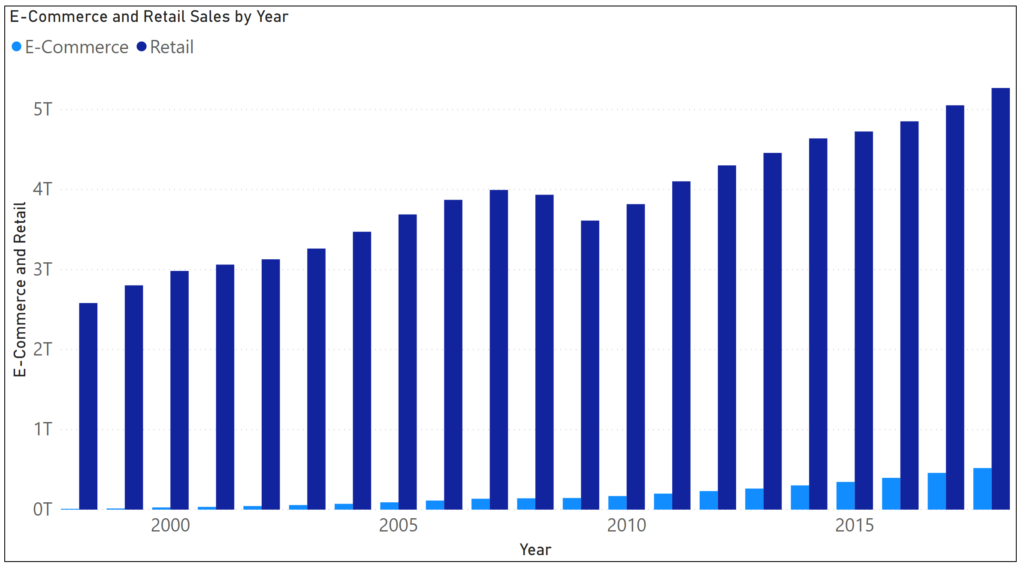
    According to the U.S. Census Bureau, in 2018 total e-commerce sales in America were approximately $520 billion. As the chart below shows, that’s barely 10 percent of overall US retail sales.

    E-commerce as a proportion of retail
    Data via the US Census

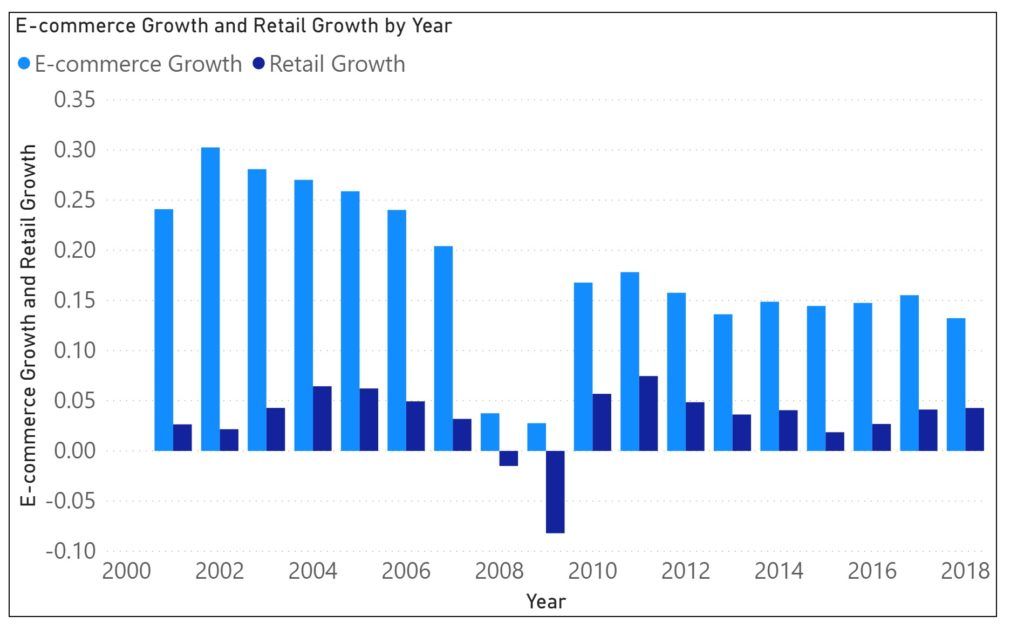
    However, e-commerce is one of the fastest-growing segments of retail. This includes before COVID shifted millions of consumers online.

    Annual Growth: E-commerce vs Retail
    Data via the US Census

    Who are the major players in e-commerce?

    The major players are all household names. While their total market share is unknown, Amazon is by far the largest player in the space. What’s interesting is the subtle differences between leaders in overall retail (via NRF) and e-commerce.

    RankAll RetailE-Commerce
    1WalmartAmazon
    2AmazonWalmart
    3The Kroger CoeBay
    4CostcoApple
    5Walgreens Boots AllianceHome Depot
    6The Home DepotWayfair
    7CVS Health CorporationBest Buy
    8TargetTarget
    9Lowe’s CompaniesCostco
    10Albertsons CompaniesMacy’s

    What channels are there in e-commerce?

    Retailers were forced to specialize in specific channels because of the physical limitations of real estate. No physical store has room to stock a wide selection of furniture and a wide selection of baseball gloves. Looking at the above charts, the major retailers are in fairly straight forward channels: Consumer Staples (Walmart, Kroger, Walgreens), Multi-sector (Target, Costco) and e-commerce (Amazon).

    Drilling into e-commerce is a bit more complicated. It’s best to look not at what e-commerce sites sell, but how they sell it. The major channels in this view are: Marketplaces and Direct-to-Consumer (DTC).

    Marketplaces

    From an outside perspective, e-commerce marketplaces function like traditional retail. Companies buy a variety of brands and products, store them in warehouses, sell them online to consumers, and ship them out. Examples include Amazon.com, Wayfair.com, and Crutchfield.

    Direct-to-Consumer

    When a manufacturer sells directly to consumers through a website. Traditionally, this was the domain of big-ticket items, like apparel (Nike) but has recently moved into smaller and cheaper fast-moving consumer goods (Clif Bar, Pepsi). It was recently a focus of P&G’s latest investor call.

    What’s the e-commerce business model?

    This is where things get interesting. E-commerce often functions as both a retailer and a platform. It allows them to make money in a variety of ways. Here are a few.

    Direct-to-consumer

    Here, consumers are buying a good, directly from a manufacturer’s website. In theory, the direct-to-consumer model is incredibly appealing for all manufacturers. It allows companies to capture more margin or offer lower prices by bypassing retailers, and the wholesalers who service them, and selling directly to consumers. In practice however, it doesn’t always work that way. That’s because manufacturers must manage existing retailer relationships and direct-to-consumer website shoulder all the customer acquisition costs.

    Traditional Wholesale Mark-Up

    A company buys a good from a manufacturer, stores it in a warehouse, and sells it to a consumer at a higher price through a website. Example: Crutchfield, NewEgg, Amazon

    Third-Party Market Place

    A company never takes physical ownership of a good, rather, it offers a platform for independent sellers who shoulder the inventory and storage costs. In exchange for access to the network, independent sellers pay the e-commerce site a percentage of the final sales price. Example: Ebay and Amazon.

    Logistic Services

    For traditional retail, getting the goods to a physical store is a significant cost center for both manufacturers and retailers. In e-commerce, merchants like Amazon have shifted that cost to third-party sellers and internalized the profit. In Fulfillment by Amazon, third-party sellers store their goods in Amazon’s warehouses. Amazon handles all fulfillment processes and distributes the item to buyers. In exchange, third-party sellers pay Amazon a portion of the sale.

    Membership

    Like Sam’s Club and Costco, some e-commerce requires a paid membership in order to purchase. The membership is both a significant revenue driver and “lock-in” device—driving loyalty and increasing the long-term value of the consumer to the company.

    Sales and Marketing Expenses

    In traditional brick-and-mortar retail, this is commonly referred to as “trade.” It is mostly promotional expenses that help drive volume for both retailers and manufacturers. Think price reductions, coupons and buy-one-get one deals. The function is still evolving in e-commerce, but sales and marketing expenses typically relate to better product placement within a store’s search returns. The Congressional Investigation on Digital Markets explains:

    Amazon generates a significant amount of revenue from the fees that it charges third-party sellers. According to a recent SEC filing, net sales for services provided to third-party sellers increased from $23 billion in the first six months of 2019 to $32 billion over the same period in 2020—an increase of 39%. For the ability to sell a product on the platform, a seller might pay the company a monthly subscription fee, a high-volume listing fee, a referral fee on each item sold, and a closing fee on each item sold. Amazon charges additional fees for fulfillment and delivery services, as well as for advertising.

    If a website is suggesting that you buy something, there’s a good chance someone paid for that suggestion.

    Where does Amazon fit into e-commerce?

    Amazon is the dominant force in American e-commerce. A recent Congressional report estimates the company controls 50% of online retail. In fact, 60 percent of all online purchases start on Amazon.

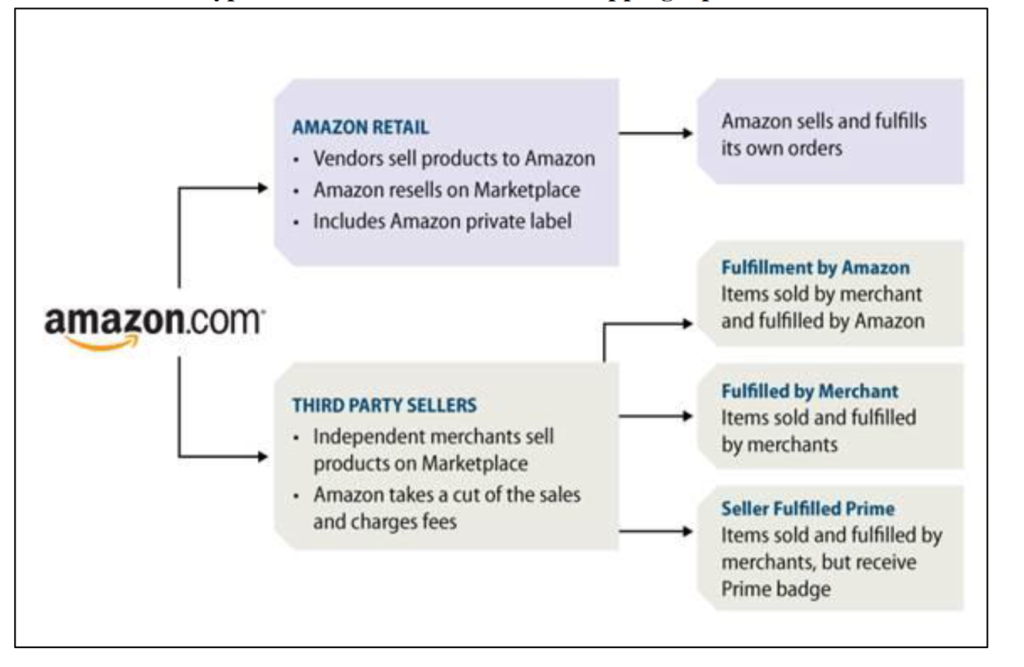
    The Competition in Digital Markets report provided a useful graphic to understand Amazon’s structure.

    Image via the Competition in Digital Markets Report

    As you can see, Amazon’s business model is a hybrid of all six outlined above. In fact, third party sellers on Amazon are both customers and suppliers.

    In conclusion, what is e-commerce?

    At a high level, e-commerce is when a good or service is sold through the internet. It’s a small segment of the overall retail market but is growing in both size and impact. Since e-commerce is unrestricted by shelf space, online stores can offer nearly limitless products—meaning the best way to view them from a channel perspective is if they are vertically integrated (direct-to-consumer) or serve as a platform for commerce. E-commerce makes money in traditional and untraditional ways, with the most successful companies functioning as hybrid platforms.

    Photo by 🇨🇭 Claudio Schwarz | @purzlbaum on Unsplash

  • Dollar General looks to move up the wheel of retail with Popshelf.

    Dollar General looks to move up the wheel of retail with Popshelf.

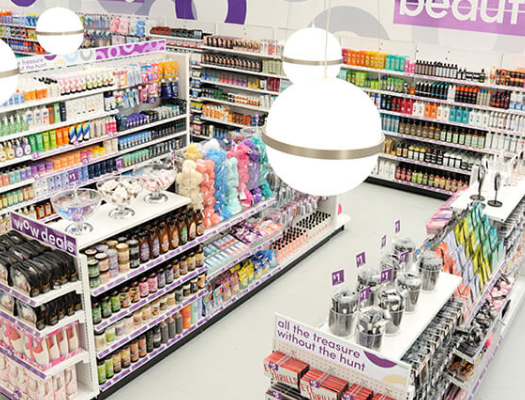
    Dollar General, one of the few major bright spots in all of retail, is looking to move up the wheel of retail. Earlier this week it announced popshelf, a new adjacent store offering targeted at middle income households.

     From the Wall Street Journal

    The company plans to open a new brand of stores called Popshelf that mostly sells things shoppers don’t need but might want, such as party supplies, home decor or beauty products. Stores will be in the suburbs of larger cities, with two planned for the Nashville, Tenn., area in the next few weeks and 30 by the end of next year. Items will be priced low, mostly under $5, but designed to appeal to women from households that earn as much as $125,000 a year.

    Let’s unpack the wheel of retail theory and the strategy behind Dollar General’s move.

    The Wheel of Retail theory

    The wheel of retail theory is fairly straight forward. Basically, discounters enter new markets and grab share by undercutting the competition. Razor thin margins and a bare bones operating model mean that discounters are somewhat restricted in their real estate choices. They can’t directly compete with other discounters, because it would be a race to the bottom. Since there is only so much real estate in America, discounters eventually run out of expansion territory and look for growth by offering higher quality goods.

    For proof of the theory, look no farther than Walmart.

    Earlier I wrote:

    Founded in 1962 on the mantra of “Always Low Prices,” the company spread like wildfire when fair trade laws left America. Manufacturers were no longer able to control the retail pricing of their products, and Walmart took advantage. It used its size to demand steep discounts and passed the savings to consumers. This newfound pricing power was supported by cutting edge real estate strategies, operations, and logistics—leading to it becoming the most dominant retailer of a generation. 

    In the late 2000s, Walmart’s strategy switched. Walmart entered grocery and created “superstores.” Low prices were still important to the company’s strategy, but so was the overall shopping experience. In 2019, the company announced plans to invest $11 billion updating over 500 storefronts, which includes redesigning automotive and cosmetics. They aren’t selling the cheapest or the best—but somewhere in between. The company’s mantra is now “Save Money. Live Better.” 

    As Walmart moved up the wheel of retailing, a new discounter followed in its wake—Dollar General. Like Walmart in the 1960s, Dollar General offers low prices. The low prices are profitable because of their operations. Consider assortment. A typical Walmart superstore carries about 120,000 items. That’s 10x as many items as a Dollar General. From a staffing perspective, Walmart averages one associate per 475 square feet of sales space. Dollar General averages one to about 777 square feet. Dollar General offers less selection, with less customer service, but lower prices.

    The article had two key arguments:

    1. It’s hard to move up the wheel of retail because discounter operations are drastically different than high-end retail
    2. Because of rising income inequality, Dollar General would never need to move up the wheel of retail.

    Despite today’s announcement, I still think I was mostly correct in this analysis. The flagship Dollar General stores will continue the discounter strategy. What I missed is that the company itself would launch an entirely new brand to move up the wheel of retail. Reading through their investor remarks it’s clear that Dollar General understands the challenge ahead and has built a strategy to avoid the pitfalls.

    Product Mix and the Wheel of Retail

    The first pitfall is the operating model generated by Dollar General’s product mix. Discounters are a pure efficiency play. They offer limited merchandising and customer service but make up for it with low prices. From a product mix perspective, what type of goods can you sell with this model?

    Here are the goods Dollar General calls consumables, which constitute around 78% of the company’s total sales.

    CategoryProduct Example
    Paper and Cleaning ProductsPaper towels, bath tissue, paper dinnerware, trash, and storage bags
    Packaged foodsCereals, canned soups and vegetables, condiments, spices, sugar and flour
    PerishablesMilk, eggs, bread, refrigerated and frozen food, beer and wine
    SnacksCandy, cookies, crackers, salty snacks, carbonated beverages
    Health and BeautyOTC medicine, soap, body wash, shampoo, cosmetics, dental hygiene and footcare products
    PetPet Food and Pet Supplies
    Tobacco ProductsCigarettes

    The company’s 2019 Annual Report details the reality of this product mix approach:

    Historically, our sales of consumables, which tend to have lower gross margins, have been the key drivers of net sales and customer traffic, while sales of non-consumables, which tend to have higher gross margins, have contributed to more profitable sales growth and an increase in average transaction amount. Our sales mix has continued to shift slightly toward consumables, and, within consumables, slightly toward lower margin departments such as perishables. While we expect some sales mix challenges to persist, certain of our initiatives are intended to address these trends, although there can be no assurance we will be successful in reversing them.

    Dollar General is boxed into the same operating model that makes it so hard to move up the wheel of retail.

    Popshelf grew out of a piloted approach to innovation

    Knowing the limitations of it’s operating model, Dollar General began to experiment. It launched a non-consumable initiative (NCI) that sought to standardize the merchandising of higher-margin non-consumable products at its stores. (Think home decorations and other knickknacks.) Remember, this was not a small undertaking. Unlike basic consumables, home decorations require a level of proper merchandising–which requires workers to proper stock and display items. Dollar General operates with a barebones labor model. It has 1-2 people working in each store at a time.

    The initiative worked. Stores that were involved with NCI saw incremental growth of 8 percent.

    Here’s where I think Dollar General management is very smart. Instead of trying to move up the wheel of retail across the entire store, they are limiting the upscaling to one category (non-consumables) and expanding the initiative to 5,400 stores by the end of this year. They may be able to pull off better merchandising with limited labor in two aisles. There’s no way they could execute in all ten or so of the store.

    Popshelf may be able to move up the wheel of retail

    By segmenting their offerings Dollar General will be able to take their established logistics and sourcing expertise and layer on a different labor model to offer something new and exciting. It don’t think it would be possible within the confines of an established Dollar General. It seems that the company agrees.

    From the press release:

    Although grounded in the extensive NCI merchandising learnings and real estate and operational excellence at Dollar General, popshelf is a differentiated store and shopping experience. Each approximately 9,000 square foot popshelf store is focused on delivering a combination of continually-refreshed merchandise, seasonal specials and limited-time items while also surpassing price and value expectations. popshelf shelves will also carry a highly-curated crossover assortment of Dollar General’s private brands, many of which have been recently rebranded.